











Casino News
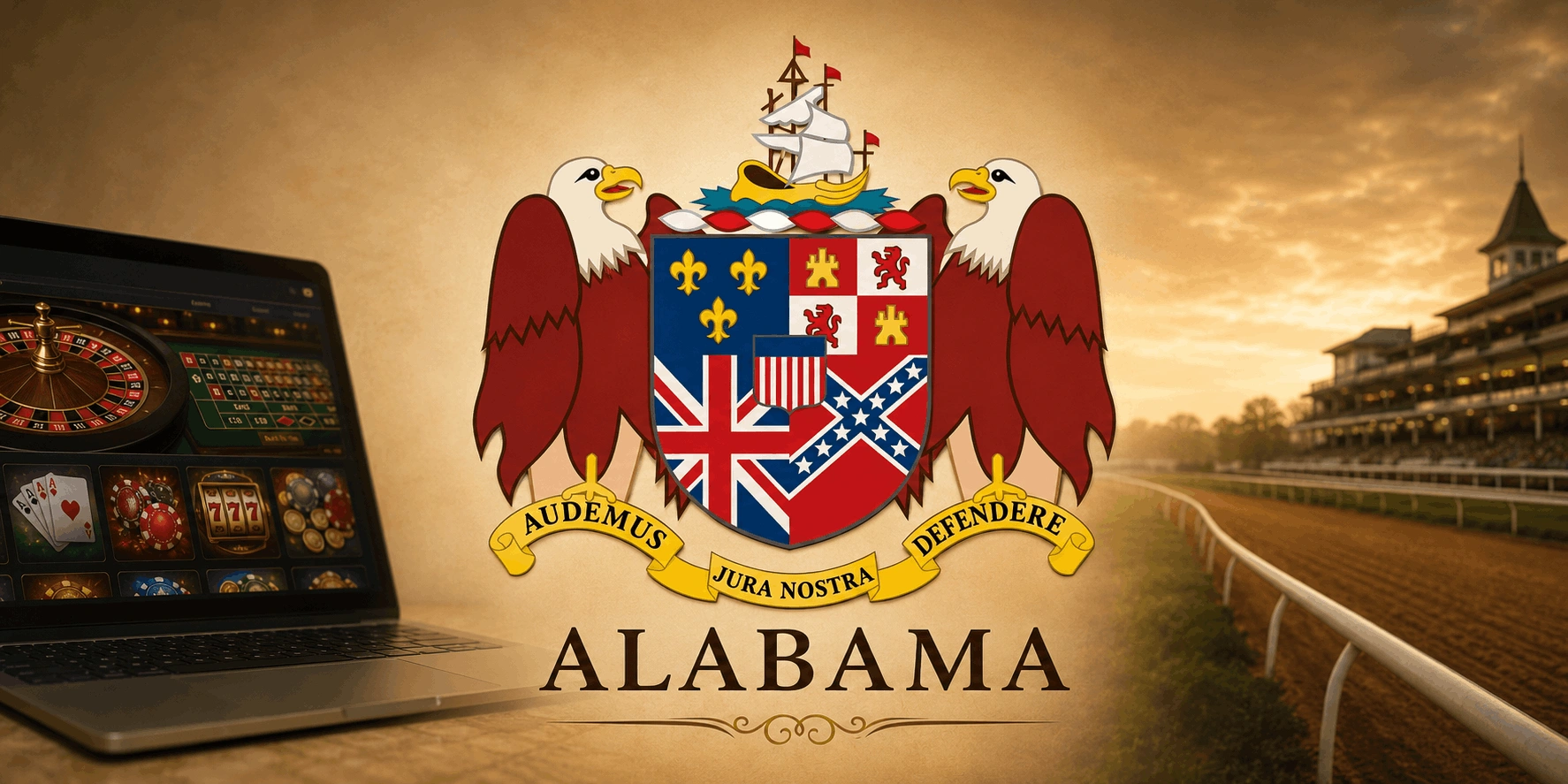
Alabama is one of the most restrictive gambling states in the country. No commercial casinos. No state lottery. No legal sports betting. No licensed online casino market. The Yellowhammer State’s constitution treats gambling with deep suspicion, and decades of legislative gridlock have kept meaningful reform at bay despite growing public appetite and consistent legislative attempts.
What Alabama does have is narrow but notable. The Poarch Band of Creek Indians, the only federally recognized tribe in the state, operates four gaming properties under their Wind Creek brand. Pari-mutuel wagering remains available at select venues. Charitable bingo is legal in certain counties. Daily fantasy sports became legal in 2019. And prediction market platforms like Kalshi operate freely for residents who want regulated access to event-based contracts.
For everyone else, the options are limited — and offshore or unregulated alternatives carry real legal and financial risk. This guide covers everything you need to know about gambling in Alabama in 2026: what’s legal, what isn’t, where to play, and what’s on the legislative horizon.
| Minimum Gambling Age | 21 (casinos, poker) / 18 (bingo, pari-mutuel) |
| Gambling Regulator | Poarch Band Tribal Gaming Commission (tribal); National Indian Gaming Commission (federal) |
| Online Casinos | ❌ Not legal |
| Sports Betting | ❌ Not legal |
| Land-Based Casinos | ✅ Tribal only (Wind Creek properties) |
| Poker | ❌ No legal poker rooms |
| Lottery | ❌ No state lottery |
| Bingo | ✅ Charitable bingo (county-regulated) |
| Pari-Mutuel Wagering | ✅ Legal at licensed venues |
| Daily Fantasy Sports | ✅ Legal since 2019 |
| Sweepstakes Casinos | ✅ Legal (under scrutiny) |
| Prediction Markets | ✅ Federally regulated platforms available |
| Social Gaming | ✅ Legal |


Best Casino Gold
 Rated 97 of 100%
welcome bonus
100% up to €500 + 200FS
Rated 98 of 100%
welcome bonus
325% Up to €2000 + 200 FS

Rated 96 of 100%
welcome bonus
100% / 500€ + 200 FS + 1 Bonus Crab

Rated 95 of 100%
welcome bonus
100% Up to €500 + 200 FS

Rated 98 of 100%
welcome bonus
325% Up to €2000 + 200 FS

Rated 97 of 100%
welcome bonus
100% Up to €700 + 75 FS
Alabama’s constitution broadly prohibits gambling, and that prohibition has teeth. The state’s criminal code, under Title 13A, Chapter 12, classifies most forms of wagering as illegal gambling offences. Penalties apply to both players and operators, though enforcement has historically focused on organisations rather than individuals placing casual bets.
The constitutional barrier is the defining obstacle for any reform. Changing Alabama’s gambling laws does not just require a legislative majority — it requires a three-fifths supermajority in both the House and Senate to place a constitutional amendment on the ballot, followed by a statewide voter referendum. That two-step process has blocked every major push for casinos, a lottery, and sports betting for decades.
Within that restrictive framework, a few forms of gambling do operate legally:
Everything else, commercial casinos, online casino gaming, real-money poker, a state lottery, and sports betting, remains prohibited.
There are no licensed, legal online casinos operating in Alabama. The state has no iGaming framework, no licensing authority for online gambling, and no legislation anywhere near passing that would create one. Any operator offering real-money online casino games to Alabama residents is doing so without state authorisation.
Some offshore operators do accept Alabama players. But playing at an unlicensed offshore casino carries meaningful risks. There is no consumer protection if a site refuses to pay out, mishandles your data, or simply disappears. Alabama law treats illegal gambling as a criminal offence, and while prosecutions of individual players are rare, the state attorney general has demonstrated a willingness to take action against operators it considers to be crossing legal lines — as evidenced by the class action lawsuits filed against sweepstakes operators in 2025.
The honest position is simple: if you want regulated, consumer-protected online casino gaming, you currently have to be physically present in a state that has licensed it — New Jersey, Michigan, Pennsylvania, West Virginia, Connecticut, Delaware, or Rhode Island.
Sweepstakes casinos operate in a legal grey zone that allows them to function in most US states, including Alabama. Platforms like Pulsz, McLuck, and Fortune Coins use a dual-currency model: free coins for entertainment, plus sweepstakes coins that can be redeemed for prizes. Because there is no direct purchase of a chance to win, these platforms avoid the three elements that define illegal gambling under Alabama law — consideration, chance, and prize.
However, Alabama has become an increasingly hostile environment for these platforms. In 2025, class action lawsuits were filed against Blazesoft, High 5 Games, ARB Interactive, and Stake.us, with plaintiffs arguing that these operators were effectively running unlicensed gambling operations dressed up as sweepstakes. The state attorney general has signalled ongoing scrutiny. Sweepstakes casinos remain technically legal for now, but players should monitor developments closely.
Sports betting is illegal in Alabama. As of May 2026, neither retail nor mobile sports wagering has been authorised, and the most recent legislative attempt collapsed before reaching a committee hearing.
 Alabama has been attempting to legalise sports betting since 2019, with every effort failing at some stage of the legislative process. The pattern is consistent: bills pass the House or at least gain traction there, then stall or die in the Senate, where conservative opposition and the need for a three-fifths supermajority have proven an insurmountable obstacle.
The most significant attempt came in February 2024, when House Bills 151 and 152 passed the Alabama House — the first time sports betting legislation had cleared a full chamber. HB 151 was the constitutional amendment, and HB 152 established the framework for an Alabama Gaming Commission, online sports betting, up to seven casinos, and a state lottery. The Senate stripped sports betting and casino provisions entirely and advanced a lottery-only compromise. Even that watered-down version failed before the session ended in May 2024, losing by a single vote in the Senate.
The 2025 session saw further attempts. House Bill 490, introduced by Rep. Jeremy Gray in April 2025, proposed legalising sports betting with a 10% tax rate and establishing an Alabama Gaming Commission. Senate Pro Tem Garlan Gudger declared in April that neither that bill nor Sen. Greg Albritton’s more comprehensive alternative had the votes to advance. The session ended in May with no change to the law. Sen. Albritton, a key gambling expansion proponent, told reporters that the 2025 failure likely set the issue back by 20 years.
The most recent attempt was Senate Bill 257, introduced by Sen. Merika Coleman in February 2026. It would have put a constitutional question to Alabama voters authorising a lottery, casino gaming, and both retail and online sports wagering. SB 257 never received a committee hearing before the session ended on March 27, 2026.
Every Alabama sports betting bill faces the same structural problem. Because the state constitution prohibits gambling, legalisation requires a constitutional amendment — and that requires a three-fifths majority in both chambers before voters can even weigh in. That threshold has proven out of reach despite considerable public support for reform, primarily due to resistance from conservative senators and religious opposition groups.
The Poarch Band of Creek Indians is central to any realistic path forward. As the only federally recognised tribe in Alabama and the operator of all four of the state’s gaming venues, any sports betting framework would almost certainly involve a tribal compact with the Poarch Band. After years of being a passive lobby recipient, the tribe signalled in May 2025 that it wants to take a more active “new approach” to driving legislation — positioning itself as a negotiating partner rather than a stakeholder responding to others’ proposals.
Until sports betting is legalised, Alabama residents have a few regulated options for sports-related financial engagement:
All legal casino gaming in Alabama takes place on tribal land controlled by the Poarch Band of Creek Indians. There are no commercial casinos operating under state law. The Poarch Band, the only federally recognised tribe in Alabama, operates its gaming properties through Wind Creek Hospitality under federal jurisdiction — meaning state gambling law does not apply to their operations.
This is where Alabama’s casino experience diverges sharply from what visitors might expect. All Wind Creek properties in Alabama offer Class II electronic gaming machines under IGRA rules. Class II gaming means games played against other players — think bingo-style slot machines — rather than the house-banked slot machines and live table games found in Nevada or New Jersey.
Live table games, poker rooms, and traditional Vegas-style slots are not available at Alabama’s tribal casinos. There are no blackjack tables, no roulette wheels, and no card rooms. Proposals in the 2024 and 2025 legislative sessions would have upgraded the Poarch Band’s properties to Class III gaming (full Vegas-style casino games) as part of a new tribal compact, but those bills failed.
Beyond the Wind Creek properties, pari-mutuel wagering on horse racing — including simulcast and historical horse racing terminals — is available at a small number of county-licensed venues. HHR machines function similarly to slot machines but base outcomes on archived recordings of past races rather than a random number generator. Victoryland in Macon County (still operated by the McGregor family) also continues to offer HHR gaming and pari-mutuel wagering.
Legal poker in Alabama is extremely limited. There are no dedicated poker rooms at the Wind Creek tribal properties — Class II gaming rules do not permit the kind of house-banked card games found at poker rooms in states like Oklahoma or California. Informal poker games played privately among friends in a home setting occupy a grey area, but organised private games where the house takes a rake are illegal under Alabama law.
There is no legal online poker market in Alabama. The state has no iGaming framework, and online poker has never been introduced as standalone legislation. Any online poker site accepting Alabama players is operating without state authorisation.
Daily fantasy sports contests, which involve player-vs-player competition with a skill component, are sometimes compared to poker in terms of their legal classification. Alabama legalised DFS specifically as a skill-based game in 2019, but that status has not extended to poker.
Sweepstakes casinos and social gaming platforms are the closest thing to online casino gaming currently available to Alabama residents. The legal basis is the sweepstakes promotional model: players receive free virtual currency to play games and can acquire additional currency through optional purchase, but they can also request free entries by mail without any purchase. This no-purchase-necessary provision takes the model outside the definition of illegal gambling under most state laws.
Platforms like Pulsz, McLuck, Fortune Coins, and Global Poker operate with two currencies. Free play currency (Gold Coins or equivalent) is used for entertainment only with no redemption value. Sweepstakes currency (Sweeps Coins or equivalent) can be accumulated and redeemed for cash prizes or gift cards. The sweepstakes coin redemption is what makes these platforms function as a practical real-money alternative.
Alabama has no state agency specifically regulating sweepstakes casinos. Oversight, to the extent it exists, comes through consumer protection law and the attorney general’s office.
Alabama’s tolerant-by-default stance toward sweepstakes operators hit a wall in 2025. Class action lawsuits were filed against several major platforms including Blazesoft (operator of Chumba Casino and LuckyLand Slots), High 5 Games, ARB Interactive, and Stake.us. The lawsuits argued that these operators were running de facto gambling businesses disguised as sweepstakes promotions, drawing parallels with the illegal internet café gambling model that Alabama successfully shut down in the 2010s. The state’s aggressive legal posture has created real uncertainty for players and operators alike. The outcome of these cases will likely shape the future of sweepstakes gaming in Alabama significantly.
Daily Fantasy Sports are fully legal in Alabama. Gov. Kay Ivey signed HB 361 into law on May 31, 2019, making Alabama one of several states to explicitly authorise DFS through dedicated legislation. The law classifies DFS as a game of skill rather than a game of chance, removing it from the state’s broad gambling prohibition.
All major DFS platforms are active in Alabama:
The minimum age for DFS in Alabama is 19, which is higher than the standard 18 floor in many other states. Some platforms set their own age threshold at 21.
Alabama’s attorney general has taken an increasingly watchful view of gaming-adjacent products. While DFS has clear legal footing through the 2019 statute, the state has demonstrated a willingness to challenge operators it considers to be straddling the line — as the 2025 sweepstakes lawsuits showed. Players should stick to the established, licensed DFS operators and avoid newer platforms whose legal classification is less clear.
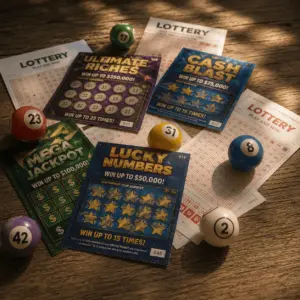 Alabama has no state lottery. It is one of just five states in the country — alongside Alaska, Hawaii, Nevada, and Utah — with no lottery programme of any kind. There are no scratch cards, no in-state draw games, and no official participation in Powerball or Mega Millions.
The lottery question has been debated in Alabama for decades. A 1999 referendum on a state lottery failed at the ballot box, and subsequent attempts to revive the idea have consistently stalled in the Senate. Lottery proposals have been bundled into broader gambling expansion packages in 2021, 2022, 2024, and 2025 — and each time, the package collapsed before reaching a voter referendum.
The 2024 session came closest. HB 151 passed the Alabama House with lottery provisions intact, but the Senate stripped the bill down before that version also failed. A lottery without accompanying casino and sports betting provisions was unable to clear the Senate either — partly because some senators saw the lottery as a stepping stone to broader gambling expansion they opposed, and partly because the revenue projections for a lottery alone (~$270-386 million annually) were considered insufficient justification for constitutional change by some legislators.
Alabama residents who want to participate in Powerball or Mega Millions must physically travel to a neighbouring state to purchase tickets. Tennessee, Georgia, Florida, and Mississippi all offer full lottery services. There is no legal mechanism for Alabama residents to purchase lottery tickets online or through apps.
Prediction markets are a relatively new category of regulated financial instruments that allow participants to take positions on the outcome of real-world events — including sports outcomes, economic data releases, election results, and more. They are federally regulated through the Commodity Futures Trading Commission (CFTC) rather than state gambling commissions, which means they operate legally in Alabama regardless of the state’s otherwise restrictive gambling laws.
Prediction markets differ from sports betting in important ways. You are trading contracts based on probability rather than placing a traditional wager. Positions can be exited before the event concludes. Markets reflect consensus probability rather than fixed odds. For Alabama residents who want regulated financial engagement with sports outcomes, prediction markets are currently the most direct legal option.
Alabama’s limited legal gambling landscape does not mean problem gambling is not a real concern for its residents. Travel to neighbouring states, DFS platforms, sweepstakes casinos, HHR venues, and tribal gaming all represent access points where gambling behaviour can become problematic. An estimated 2.2% of Alabama adults are believed to experience gambling-related harm at some level.
 Key Resources
Alabama does not have a statewide centralised self-exclusion programme. Because legal gambling is limited to tribal venues, self-exclusion where available is managed at the individual property level through Wind Creek Hospitality. Players who believe their gambling has become harmful can contact Wind Creek directly to request exclusion from their Alabama properties.
If you are concerned about your gambling behaviour, or the behaviour of someone you care about, contact the ALCCG or the National Helpline. Support is always available, and reaching out is always the right call.
Alabama's gambling laws are rooted in the state constitution, which broadly prohibits lotteries and most forms of wagering. The criminal code under Title 13A, Chapter 12, Article 2 defines and prohibits illegal gambling, advancing stakes, and operating gambling enterprises. Penalties range from a Class B misdemeanour for a first illegal gambling offence to a Class A misdemeanour for repeat violations. Gambling devices — including computers or mobile devices with gambling software installed — can be seized under state forfeiture law.
The Poarch Band of Creek Indians operate entirely outside state jurisdiction. Their gaming activities are governed by the Indian Gaming Regulatory Act of 1988 at the federal level, and overseen by the Poarch Band’s own Tribal Gaming Commission and the National Indian Gaming Commission. The state of Alabama has no regulatory authority over Wind Creek properties.
Bingo sits in a legally fragmented position. The state constitution does not explicitly authorise bingo, but individual counties have passed local constitutional amendments permitting charitable bingo within their borders. The games are regulated by county-level commissions, not the state. Prize caps, game frequency limits, and eligibility rules vary by county. Several counties do not permit bingo at all.
Alabama Code Section 8-38-1 et seq. establishes the legal framework for daily fantasy sports. Under the statute, DFS is classified as a game of skill exempt from the state’s gambling prohibitions. Licensed operators must register with the state, implement age verification, and offer responsible gaming tools including deposit limits and self-exclusion options.
Any expansion of commercial gambling — whether a lottery, commercial casinos, or sports betting — requires a constitutional amendment. That process requires a three-fifths supermajority in both the House and Senate, followed by a statewide voter referendum. This double threshold is why reform has failed repeatedly even when public polling suggests majority support for specific measures. The 2024 session came within one Senate vote of placing a referendum on the ballot. The 2025 and early 2026 sessions produced no actionable legislation.
Alabama remains one of the most closed gambling markets in the United States, but the pressure for change is not going away. The state loses hundreds of millions in potential tax revenue annually as residents travel to Tennessee, Georgia, and Mississippi to spend money that could fund Alabama schools, roads, and infrastructure. The Poarch Band of Creek Indians — now operating four properties across the state — has signalled a more active approach to lobbying for legislative change. Governor Kay Ivey has consistently supported letting Alabamians vote on the issue. And public sentiment across successive polls shows majority support for at least a state lottery.
The obstacles are real but not immovable. The constitutional amendment requirement means that any path forward needs sustained political will, cross-partisan coalition building, and careful stakeholder alignment — particularly between the tribe, commercial gaming interests, and a fractious Senate. The failure of Sen. Albritton’s 2025 proposals prompted his frank assessment that the issue may have been set back by two decades. But Alabama’s legislative calendar resets every session, and the economic arguments for reform grow stronger each year that neighbouring states capture the revenue.
For now, Alabama residents have a narrow set of legal options: Wind Creek’s tribal properties for casino-style gaming, pari-mutuel venues for horse racing and HHR, DFS platforms for sports engagement, federally regulated prediction markets, and sweepstakes casinos (with the caveat that these face growing legal challenge in the state). None of these represent the full regulated gambling environment that players in more progressive states enjoy — but they are the lawful alternatives while reform continues its slow, contested journey through Montgomery.
No. Alabama has no licensed online casino market and no iGaming legislation in progress. Real-money online casinos operating without state authorisation do not provide the consumer protections of a licensed market. Sweepstakes casinos are legal under promotional gaming laws but face increasing scrutiny from the state attorney general.
No. Alabama is one of just five US states with no lottery programme. Legislation to authorise a state lottery has been proposed repeatedly but has never cleared the Senate. Residents must travel to a neighbouring state to purchase Powerball or Mega Millions tickets.
Not through any regulated sportsbook. Sports betting remains illegal in Alabama as of May 2026. Daily fantasy sports are legal under the 2019 DFS law, and federally regulated prediction markets like Kalshi are available as legal alternatives.
All of Alabama’s casinos are operated by the Poarch Band of Creek Indians under the Wind Creek brand: Wind Creek Wetumpka, Wind Creek Montgomery, Wind Creek Atmore, and the recently acquired Wind Creek Birmingham (Birmingham Race Course). All four offer Class II electronic gaming machines, not Vegas-style slots or live table games.
It depends on the activity. The minimum age is 21 for casino gaming and poker, and 18 for bingo and pari-mutuel wagering. Most DFS platforms require players to be at least 19, and some set their threshold at 21.
Sweepstakes casinos have historically operated legally in Alabama under promotional gaming laws. However, the state attorney general’s office has filed and supported class action lawsuits against several major sweepstakes operators since 2025, arguing they effectively function as unlicensed gambling platforms. The legal landscape for these platforms is evolving, and players should stay informed about developments before using them.

The Author
The Author
Content Expert