










Bally’s Chicago Casino Opening Faces Possible Delay Until 2027


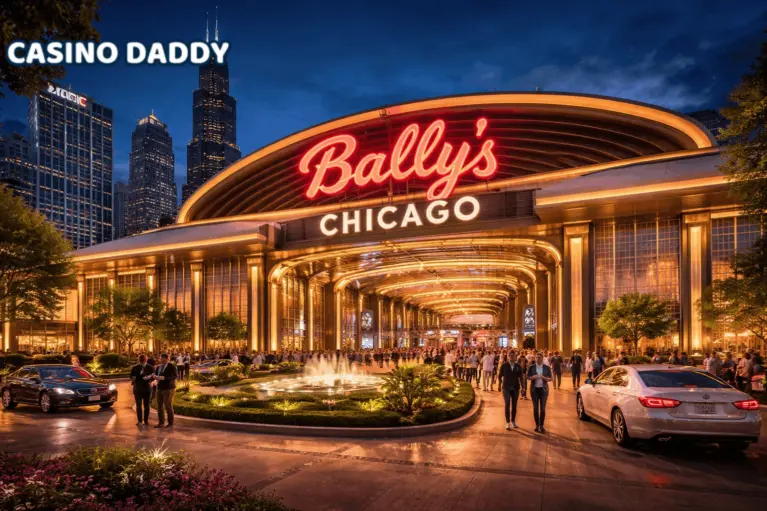
Plans for Bally’s Chicago casino are facing renewed uncertainty as construction delays raise the possibility that the long-awaited venue may not open until 2027. The project, which is central to Chicago’s long-term budget planning, was originally expected to welcome visitors in late 2026. That timeline now appears increasingly difficult to meet as work at the permanent River West site continues to encounter setbacks.
The potential delay matters because the casino is more than a private development. City leaders have already factored casino tax revenue into future budgets, tying those funds to public services and infrastructure spending. Any slip in the opening date increases pressure on lawmakers to prevent a gap between expectations and reality.
Construction Challenges Slow Momentum
The revised outlook follows a series of issues that slowed progress early in the build. Demolition and site preparation took longer than projected, pushing back the start of major construction phases. Those early delays created ripple effects that became harder to absorb as the project moved forward.
Regulatory pauses also contributed to the slower pace. Certain portions of work were temporarily halted while compliance concerns and subcontractor disputes were addressed. These interruptions added complexity to a project already navigating tight urban construction conditions.
Infrastructure challenges around the River West location further complicated the schedule. Work near major roadways and bridges requires additional planning, approvals, and safety checks. Each adjustment extended timelines and reduced flexibility in the overall construction plan.
Temporary Casino Extension Enters the Spotlight
As questions around the permanent opening grow, attention has shifted to the future of the temporary casino currently operating in the city. State lawmakers are now considering legislation that would allow Bally’s to keep that facility open longer than originally planned.
Without an extension, the temporary casino would close before the permanent site is ready. That outcome would create a revenue gap at a time when the city is already counting on casino income. The proposed legislation would allow an initial six-month extension, with options for additional short renewals that could stretch operations into 2027.
Supporters of the measure argue that it provides necessary financial continuity. Opponents have raised concerns about setting precedents for repeated extensions. Even so, momentum behind the proposal reflects the city’s desire to avoid losing an established source of funds while construction continues.
Budget Implications for the City
Bally’s Chicago casino plays a defined role in Chicago’s financial planning. Revenue from gaming taxes has been earmarked to support essential services, including public safety and municipal programs. A delayed opening increases uncertainty around those projections.
City officials have acknowledged that longer delays could require adjustments to spending plans. While the temporary casino helps soften the impact, it does not fully replace the scale of revenue expected from the permanent resort.
This financial backdrop explains why lawmakers are focused on keeping interim solutions in place. The goal is stability, not just for Bally’s, but for the broader city budget tied to the project’s success.
Mixed Reactions From City Leaders
Reactions among city leaders have varied. Some have criticized the project’s planning and oversight, questioning whether timelines were too optimistic from the start. Others stress that large-scale urban developments often face unforeseen hurdles and that quality construction should take priority over speed.
Bally’s representatives maintain that progress continues and that significant construction milestones are still expected to be completed within the current year. At the same time, they have acknowledged that remaining unknowns make a 2027 opening more realistic than earlier projections suggested.
What Happens Next
The immediate focus is on two parallel tracks. Lawmakers must decide whether to approve an extension for the temporary casino. Construction teams must also demonstrate steady progress to rebuild confidence in the revised timeline.
For now, Bally’s Chicago casino remains a project defined by its potential and its delays. If the extension legislation passes, the city can avoid a short-term revenue gap. The longer-term question is whether the permanent casino can regain momentum and deliver on expectations before further delays reshape the timeline again.
The coming months will be critical. Decisions made now will determine not only when the casino opens, but how smoothly Chicago navigates the financial and political consequences of waiting longer than planned.

The Author
The Author
Slots and News Reviewer