









Dutch Black Market Gambling Overtakes Licensed Operators


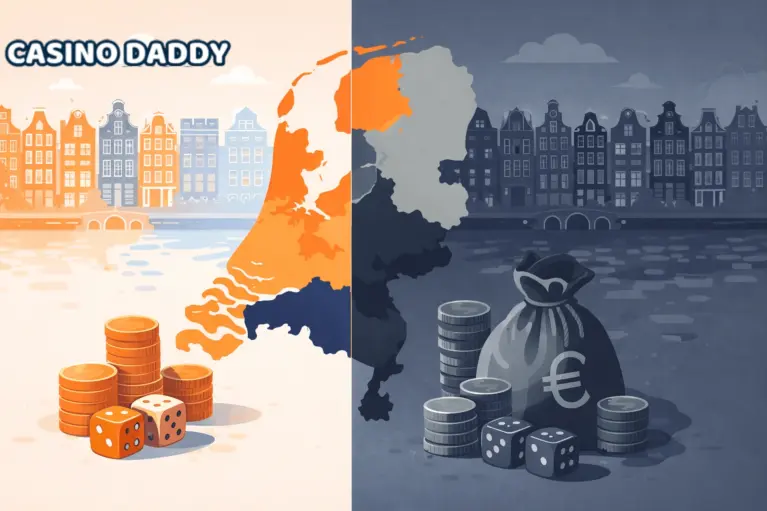
When the Netherlands legalised online gambling in October 2021, the goal was simple. Bring players into a licensed, regulated environment and away from unregulated sites. That goal has now taken a serious hit. For the first time since the market opened, Dutch black market gambling is generating more revenue than the licensed sector.
The industry has responded with a coordinated push for action. Trade body VNLOK, alongside fellow association VAN and state-backed operators Holland Casino and Nederlandse Loterij, sent a joint letter to the government this week. It calls for an urgent review of the current tax regime, timed ahead of a parliamentary tax committee debate on 12 March 2026.
How Tax Hikes Fuelled Dutch Black Market Gambling
The Netherlands has pushed through two major tax increases in just over a year. The rate on gross gaming revenue rose from 30.5% to 34.2% in January 2025. It then climbed again to 37.8% at the start of 2026. That places the country among the most heavily taxed regulated gambling markets in Europe.
The stated aim was to raise more public revenue. The result was the opposite. Gambling tax income dropped by €43.5 million in 2025 compared to the year before. Licensed GGR in the first half of 2025 fell by roughly 25% year-on-year. The money did not disappear. It moved to unlicensed platforms.
KSA data confirmed it. Black market sites recorded higher GGR than licensed operators in the first half of 2025. Channelisation, the share of gambling activity within the licensed market, dropped below 50% for the first time since legalisation. The tax hikes meant to fund the regulated system are weakening it instead.
Licensed Operators Are Walking Away
The financial pressure has gone beyond player behaviour. Several licensed operators left the Dutch market entirely after the increases were announced. At 37.8% on GGR, running a fully compliant business in the Netherlands is a difficult proposition for many companies.
VNLOK and VAN have urged the government to connect the dots. Their letter calls for future tax decisions to weigh the relationship between tax burden, illegal supply, and player protection. The message is direct. Policy choices have real consequences for where players end up.
The Regulator Is Going After Black Market Infrastructure
The KSA has not been sitting still. Its 2026 supervisory agenda targets the infrastructure keeping illegal gambling accessible in the Netherlands. That means going after payment providers, internet providers, and marketing partners, not just the operators themselves. The regulator’s stated goal is to keep at least 90% of players within the licensed market.
Recent enforcement has been significant. The KSA issued a record €25 million fine against Novatech for running illegal operations targeting Dutch players. Fortaprime was separately penalised for using Dutch influencers to promote an unlicensed offer. Influencer advertising for gambling is entirely prohibited in the Netherlands. The KSA chairman noted that without the legal cap tying fines to 10% of global turnover, the Novatech penalty would have exceeded €100 million.
Enforcement has limits, though. Unlicensed sites based outside the Netherlands remain hard to shut down. New ones keep appearing.
A New Government With a Harder Stance
The coalition government that took office earlier in 2026 has made its position clear. It wants a full ban on online gambling advertising. It is also pushing tougher duty-of-care requirements and exploring a cap on the total number of licences.
The tension in that approach is hard to ignore. Tightening rules on licensed operators while Dutch black market gambling grows freely puts more pressure on the regulated sector. Licensed operators face higher taxes, stricter obligations, and shrinking advertising options. Unlicensed sites face none of that.
What Happens Next
The parliamentary tax committee debate on 12 March is the immediate pressure point. The industry letter is clear. A review is needed now, before further decisions deepen the problem.
The Netherlands built its regulated gambling framework with real ambition. But the black market it was designed to reduce has grown under current policy. The government now faces a clear choice. Fix the conditions driving players away from licensed operators, or watch channelisation fall further and take the tax revenue down with it.

The Author
The Author
Slots and News Reviewer