









Illegal Online Gambling Data-Sharing Takes Off in Europe


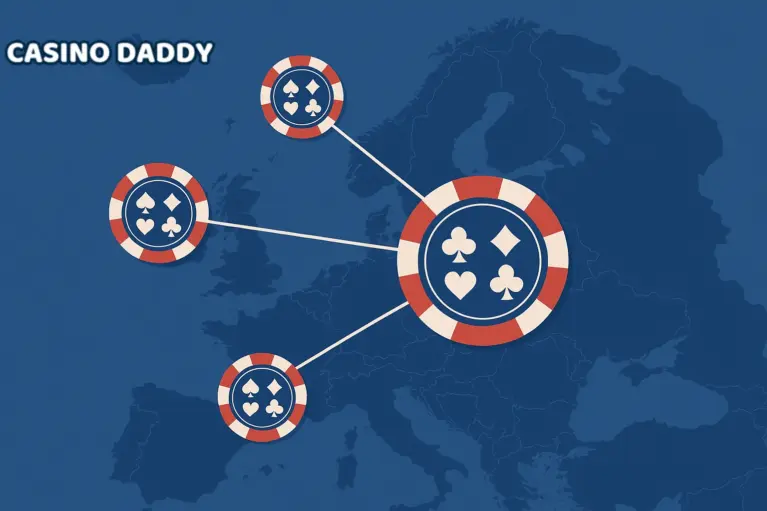
Illegal online gambling data-sharing is now a central priority for Europe’s leading regulators. Seven major authorities have agreed to coordinate investigations, exchange intelligence and reinforce consumer protections. The initiative reflects how illegal online gambling has grown more aggressive, more sophisticated and far more international. Regulators now aim to close the gaps that allowed unlicensed platforms to exploit fragmented oversight across the continent.
Forming a Unified Strategy
Regulators from Germany, Austria, France, Great Britain, Italy, Portugal and Spain met in Madrid to formalise a joint enforcement strategy. The cooperation focuses on building a shared view of illegal activity, particularly in areas where unlicensed operators rely on cross-border infrastructure. The agreement establishes a structured model for exchanging intelligence, assessing risks and tracking operators who shift domains or marketing channels to avoid individual watchdogs.
The unified strategy targets digital advertising networks, affiliate channels and social platforms frequently used by illegal sites. Regulators will forward coordinated complaints to those platforms, pushing for faster removals and stricter oversight. The plan also encourages joint analysis of recurring threats, including groups that target vulnerable players or advertise on channels popular with minors.
Why Cross-Border Action Became Necessary
Illegal operators have grown more agile, and national enforcement efforts have struggled to keep pace. Unlicensed platforms often use servers in one country, marketing in another and payment channels in a third. Single-country action rarely disrupts their full networks. Illegal online gambling data-sharing gives regulators a way to track these operators across their entire footprint.
Regulators also observed a rise in offshore activity despite tighter national regulations. With many illegal sites advertising aggressively and offering no safety standards, consumer-protection risks increased. Vulnerable players were exposed to unverified products, non-existent safeguards and markets with no responsible-gambling rules. Authorities now aim to create a uniform enforcement base that limits the advantage enjoyed by unlicensed brands.
Expected Impact on the Gambling Sector
The joint approach may shift competitive conditions. Licensed operators could gain stability as unlicensed competition faces more pressure. Advertising networks that previously accepted illegal promotions might face stricter requirements. Affiliates may also need to strengthen compliance procedures, especially those operating across multiple European markets.
The move could also improve detection of recurring threats. With shared intelligence, regulators can identify the same operator appearing under different names or domains. Over time, this may lead to coordinated enforcement actions that remove entire networks rather than single sites.
Industry and Consumer Implications
For consumers, stronger oversight means greater protection from scams, misleading offers and unsafe gambling environments. For the industry, the initiative sets a clearer standard for compliance, transparency and responsible operation. It also signals that regulators intend to confront illegal competition collectively, reducing opportunities for operators who exploit jurisdictional gaps.
Final Thoughts
Illegal online gambling data-sharing strategy marks a decisive change in Europe’s regulatory landscape. By uniting their efforts, seven authorities aim to build a stronger defence against unlicensed gambling activity and protect players across national borders. The initiative reinforces the value of collaboration in a digital market where illegal operators rarely stay confined to one jurisdiction. As regulators expand their coordinated model, the effects will reach advertising networks, affiliates, licensed operators and consumers throughout Europe.

The Author
The Author
Slots and News Reviewer