











Wisconsin Online Betting Bill Advances Under Tribal Model


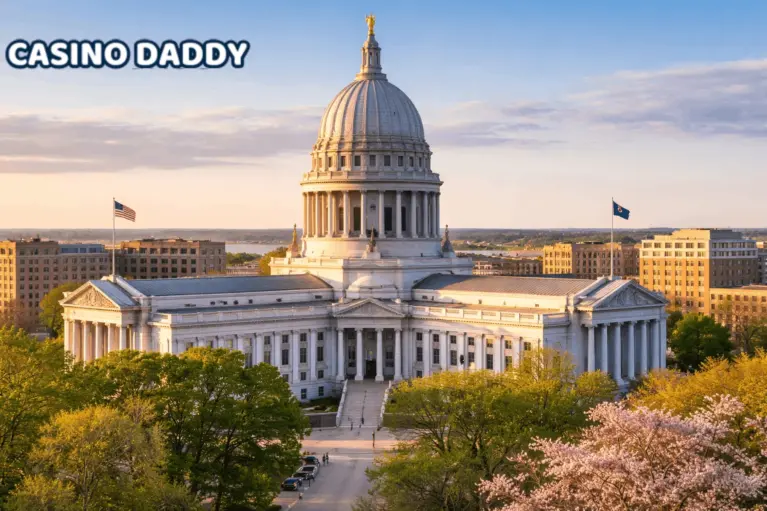
Momentum is building in Madison after lawmakers advanced the Wisconsin online betting bill to the upper chamber. The proposal would authorize statewide mobile sports wagering under a tribal-controlled framework, marking a significant shift in how residents could place bets legally.
Assembly members approved the measure with broad bipartisan support, sending it to the Senate for further consideration. If enacted, the Wisconsin online betting bill would expand wagering access beyond physical tribal casinos while preserving tribal oversight of gaming operations.
Assembly Backs Statewide Mobile Expansion
The Wisconsin State Assembly moved the legislation forward with little floor debate, signaling strong cross-party alignment on the issue. Lawmakers framed the bill as a modernization effort rather than a break from Wisconsin’s existing tribal gaming structure.
Currently, retail sports betting operates only at tribal casinos under negotiated compacts. The new proposal would allow mobile betting anywhere within state borders. However, it would not create an open commercial market. Instead, it would ensure that Wisconsin’s federally recognized tribes maintain primary control.
Supporters argue this approach strengthens consumer protections while respecting long-standing tribal agreements. By keeping regulatory authority tied to tribal entities, lawmakers aim to avoid legal uncertainty and federal conflicts.
How the Hub-and-Spoke Model Works
At the core of the Wisconsin online betting bill is a “hub-and-spoke” model. Under this structure, all wagers placed through mobile devices would route through servers located on tribal land. Even if a bettor places a wager in Milwaukee or Green Bay, the transaction would process through tribal infrastructure.
This design attempts to align statewide mobile wagering with federal Indian gaming law. By treating each bet as occurring on tribal land, the state preserves the integrity of existing compacts.
A similar structure has been implemented in Florida, where statewide mobile betting operates under tribal control. Wisconsin lawmakers appear to be following that template, though final implementation would require compact amendments and regulatory adjustments.
Tribes could partner with commercial sportsbook brands for platform technology and branding support. However, the tribes would retain licensing authority and operational control.
Industry Reaction and Market Debate
The legislation has not moved forward without scrutiny. The Sports Betting Alliance, whose members include FanDuel and DraftKings, has expressed concerns in similar markets about limited commercial access.
Critics argue that restricting direct licenses could narrow competition and affect long-term revenue potential. They contend that broader operator participation may produce higher tax returns and stronger promotional competition for consumers.
Supporters counter that Wisconsin’s gaming landscape has always centered on tribal partnerships. They maintain that the bill strikes a balance between modernization and sovereignty while addressing unregulated offshore wagering activity that already attracts Wisconsin bettors.
Senate Review and Political Outlook
Attention now turns to the Wisconsin Senate, where the bill’s future remains uncertain. Some senators have voiced support for expanding mobile wagering, yet leadership has not committed to a timeline for a floor vote.
Gaming expansion often triggers debate about social impact and regulatory oversight. Lawmakers must weigh economic opportunity against concerns related to problem gambling and accessibility.
If the Senate passes the measure, it would head to Governor Tony Evers for review. The governor has previously supported gaming negotiations with tribal nations, and observers expect careful consideration of compact implications.
What Happens Next
If enacted, the Wisconsin online betting bill would position the state within the growing national mobile wagering market while maintaining a distinct tribal-first structure. Regulators would then begin the process of updating compacts, drafting operational rules, and overseeing digital launch requirements.
That implementation phase could take months, depending on negotiations and federal review. In the meantime, the Senate’s decision will determine whether Wisconsin advances toward statewide mobile wagering or maintains its current casino-limited model.
The coming legislative steps will shape how Wisconsin balances economic opportunity, tribal sovereignty, and consumer protection in a rapidly evolving gaming environment.

The Author
The Author
Slots and News Reviewer