










New Game
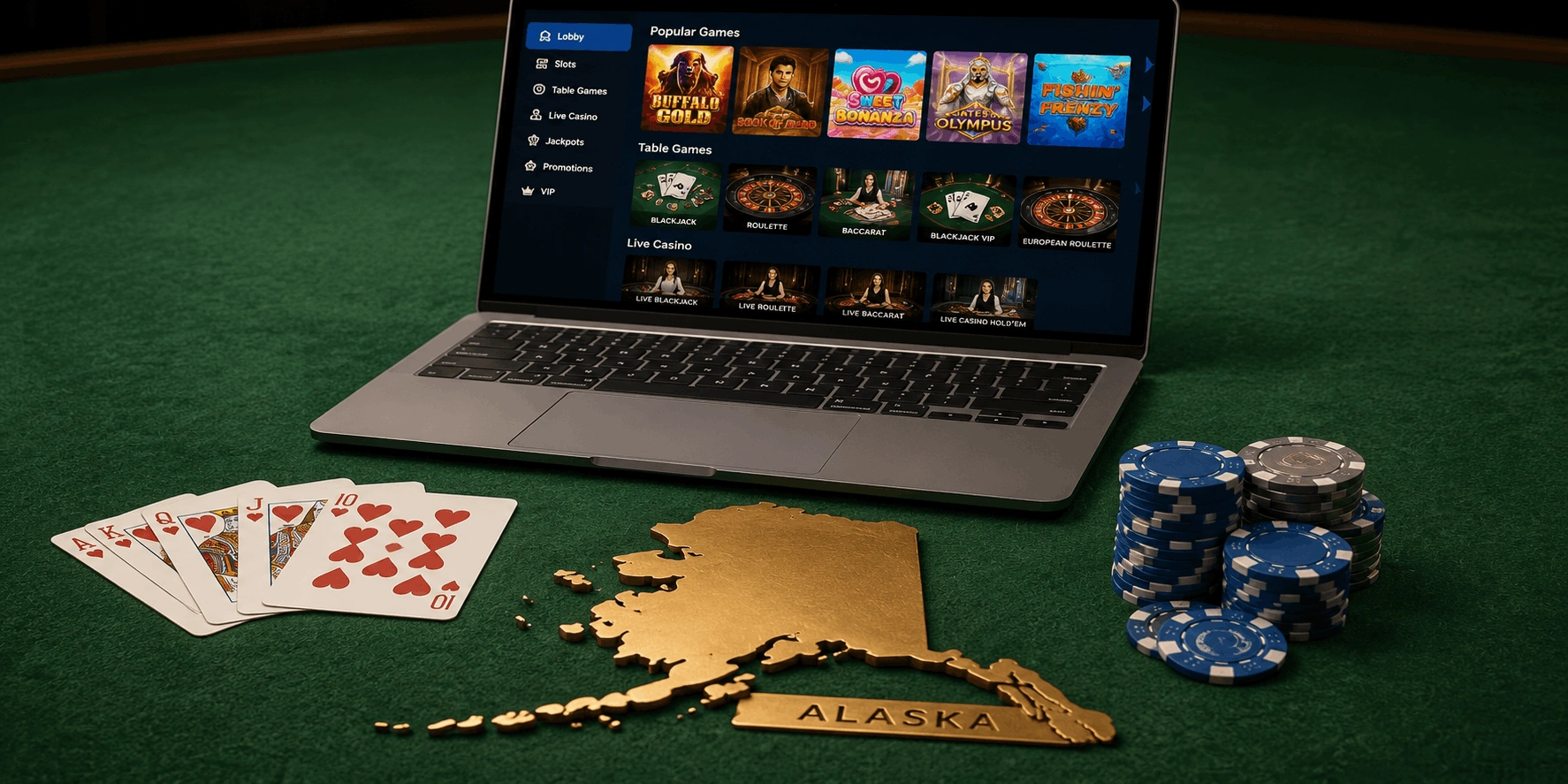
Alaska sits in a category of its own when it comes to gambling in the United States. No commercial casinos. No state lottery. No legal sports betting. The Last Frontier has maintained one of the most restrictive gambling environments in the country since statehood in 1959, and decades of legislative attempts to change that have consistently come up short.
What Alaska does have is a well-established charitable gaming sector, a legal grey zone for online play via offshore sites, and a growing community of residents who clearly want more — GeoComply data presented to the Alaska legislature recorded over 126,900 geolocation checks from Alaskans trying to access legal sportsbooks in other states between January 2024 and May 2025 alone. The demand is real. The legal framework to meet it simply does not exist yet.
Let us guide you through everything Alaskans need to know about gambling: what’s legal, what’s not, what’s pending in the legislature, and where to find support if gambling becomes a problem.
| Minimum Gambling Age | 18 (charitable gaming, DFS) / 21 (proposed for sports betting under HB 145) |
| Gambling Regulator | Alaska Department of Revenue, Tax Division |
| Online Casinos | ❌ Not legal (offshore grey zone) |
| Sports Betting | ❌ Not legal |
| Land-Based Casinos | ❌ No commercial or tribal casinos |
| Poker | ❌ No legal poker rooms |
| Lottery | ❌ No state lottery |
| Bingo | ✅ Charitable bingo (permit required) |
| Pull-Tabs | ✅ Legal via charitable gaming permits |
| Dog Mushing Wagering | ✅ Legal under charitable gaming exceptions |
| Daily Fantasy Sports | ✅ Legal grey area (major operators accepted) |
| Sweepstakes Casinos | ✅ Legal |
| Prediction Markets | ✅ Federally regulated platforms available |
| Social Gaming | ✅ Legal |
Gambling in Alaska is legal only in very specific, tightly defined circumstances. The state permits charitable gaming when conducted by licensed non-profit organisations. Everything else, including commercial casino gaming, a state lottery, and sports betting, is either explicitly prohibited or unregulated.
Alaska’s gambling laws are set out in Title 11, Chapter 66 of the Alaska Statutes. Under that framework, illegal gambling starts as an infraction on the first offence and escalates to a Class B misdemeanour on subsequent offences. Promoting gambling, which includes running an unlicensed game or taking a cut of bets, is a Class A misdemeanour. Possessing a device with gambling software installed can also be treated as a Class A misdemeanour. The state has forfeiture powers, meaning money staked in illegal gambling and the devices used to conduct it can be seized.
That said, there is no Alaska statute that explicitly makes it a crime for individual residents to play at an offshore online casino. The law targets operators and devices more than individual players. The legal picture for individual online players is genuinely grey, and it has remained that way for years.


Quality Brand
 Rated 93 of 100%
welcome bonus
100% up to 120€ + 100 FS

Rated 96 of 100%
welcome bonus
200% Up To 1000€ + 300FS

Rated 94 of 100%
welcome bonus
100%/500 EUR

Rated 94 of 100%
welcome bonus
100%/500€+100FS

Rated 91 of 100%
welcome bonus
100%/500$ + 500 FS
Rated 92 of 100%
welcome bonus
100%/1500€
Rated 92 of 100%
welcome bonus
100%/€550 or 3BTC + 200 FS

Rated 87 of 100%
welcome bonus
450%/800€ + 250 FS

Rated 89 of 100%
welcome bonus
275%/1000€

Rated 92 of 100%
welcome bonus
275%/850€ or 3BTC+ 150 FS
Alaska has no state-regulated online casino market and no legislation in progress to create one. The state does not issue online gambling licences, and no domestic platform operates legally in the state.
The offshore market is what most Alaskan online casino players use. A number of internationally licensed casinos accept Alaskan players, and nothing in Alaska law directly criminalises residents for accessing them. Players use these sites without state consumer protection, dispute resolution mechanisms, or oversight of game fairness from any Alaska authority.
If you choose to play at an offshore casino, the most important filters are licensing and reputation. Look for sites licensed by:
These regulators impose external oversight that gives players a meaningful baseline of protection, even without any Alaska-side enforcement.
Many US-facing banks and card issuers block transactions to offshore gambling sites under the 2006 Unlawful Internet Gambling Enforcement Act (UIGEA). Cryptocurrency has become the most reliable deposit and withdrawal method for many Alaskan players on offshore sites. Bitcoin, Ethereum, and USDT are accepted across most major offshore platforms, with faster settlement and fewer processing complications than card payments.
Given Alaska’s geography, with vast distances and limited urban infrastructure, online play is a practical reality for many residents who would never be close to a physical gambling venue even if one existed. That context matters when thinking about why offshore sites have the foothold they do in the state.
Sports betting is not legal in Alaska as of 2026, and it has never been. The state has no licensed sportsbooks, no retail betting locations, and no regulated online wagering of any kind.
The most substantive legislative effort to change that is House Bill 145, introduced in March 2025 by Rep. David Nelson (R-18) and reintroduced for the 2026 session with additional co-sponsorship from Rep. Mike Prax. The bill proposes a mobile-only sports betting framework with no tethering to physical venues. Key provisions include:
HB 145 received a committee hearing in the House Labor and Commerce Committee during the 2025 session but did not receive a vote before the legislature adjourned. It carried into the 2026 session and picked up a Senate companion bill (SB 194), but as of June 2026 it has not advanced to a committee vote. The 2026 session ended in May with no passage.
The obstacles are structural as much as political. Alaska has a population of roughly 740,000 people, no Division I college sports programmes, and no major professional sports teams. That combination makes the potential tax yield modest at best, with estimates ranging from $15 million to $40 million annually, giving legislators less urgency than in larger markets. The state’s oil revenue has historically reduced fiscal pressure on gambling-related tax income. And the House Labor and Commerce Committee has killed similar bills repeatedly over the years.
The demand from residents is not in question. GeoComply’s data shows 126,900 geolocation checks from 20,000 unique Alaskan accounts, representing a 60% year-over-year increase, making clear that people in the state are actively trying to access legal sportsbooks. Rep. Nelson has pointed to millions in annual spending at offshore and out-of-state platforms as money the state is simply leaving on the table. That argument may eventually land. For now, HB 145 remains in committee.
There are no commercial casinos in Alaska and no tribal gaming casinos either, which makes Alaska a genuine outlier among US states.
The 1988 Indian Gaming Regulatory Act gives federally recognised tribes the framework to operate casinos, but the Alaska Native population chose not to pursue casino-style gaming under that framework. The result is that even the tribal gaming operations common across much of the US are absent here.
What Alaskans do have in-person access to is pull-tabs and bingo, available through licensed charitable organisations. These are not casino venues in any meaningful sense. They are low-stakes charitable gaming events run by non-profits, often in community halls or dedicated bingo facilities. Anchorage accounts for the largest concentration of these, but they exist across the state wherever a qualifying non-profit holds a permit.
Ships that depart Alaskan ports, primarily in Juneau, Ketchikan, and Skagway, operate casinos once they are in international waters. Those casinos are not Alaska-regulated and fall outside state gambling law entirely. For some Alaskans, that is genuinely the closest thing to a casino experience available without leaving the state on a plane.
There has never been a serious mainstream push to build land-based commercial casinos in Alaska. The population density is too low, the infrastructure too dispersed, and the political appetite too limited for it to gain traction.
Sadly, poker in Alaska occupies the same restrictive space as the rest of casino gaming. There are no legal poker rooms, no cardrooms, and no licensed poker clubs operating in the state.
Home games exist in a grey area. Alaska law does not specifically exempt social or home poker from its gambling statutes, and the state has a history of enforcing anti-gambling laws against individuals, not just organisations. Players who run regular home games for real money carry some degree of legal risk, even if enforcement is inconsistent.
Online poker is in the same position as online casino play. No Alaska-regulated options exist, and the offshore market is the only route for players who want to participate. The same considerations around offshore licensing, payment processing, and lack of state consumer protection apply here.
Alaska has no established poker culture the way some other states do, and there is no organised lobbying effort pushing for poker-specific legislation. It remains one of the most poker-inaccessible states in the country.
Sweepstakes casinos are the most accessible form of online casino-style play available to Alaskans without the legal ambiguity of offshore sites.
Platforms like Chumba Casino, LuckyLand Slots, and High 5 Casino operate under a sweepstakes model. They use virtual currencies rather than real money deposits, and prizes are awarded through a promotional sweepstakes structure rather than a gambling mechanism. This puts them outside Alaska’s gambling statutes. The dual-currency system works like this:
That last point is what keeps these platforms legally distinct from regulated gambling.
The practical experience closely resembles a real online casino. Slots, table games, and live dealer formats are available on most major sweepstakes platforms. The stakes are lower and the jackpots more modest than offshore real-money sites, but the games come from known providers and the sweepstakes redemption is genuine.
For Alaskans who want a straightforward, legal, and consumer-protected way to play casino-style games online, sweepstakes casinos are currently the only option that fits all three criteria.

Daily fantasy sports occupy a legal grey area in Alaska. In practice, major operators including FanDuel and DraftKings accept Alaskan players and have done so for years. No Alaska statute explicitly bans paid DFS contests, and no Alaska attorney general has issued an opinion classifying them as illegal gambling.
The federal Unlawful Internet Gambling Enforcement Act of 2006 exempts fantasy sports that meet specific criteria:
Major DFS contests generally satisfy those criteria, which gives operators a degree of confidence operating in states without explicit DFS legalisation.
What Alaska lacks is any consumer protection framework specific to DFS. There is no state licensing requirement, no mandatory responsible gambling tools, and no oversight of operator conduct. Players rely entirely on operator-side safeguards and general consumer protection law.
Platforms like Underdog Fantasy and ParlayPlay also operate in Alaska, offering pick’em style contests that blend DFS mechanics with sports prediction elements. For players who want structured sports wagering without using offshore sportsbooks, they are the most legitimate available option.
Alaska has no state lottery. It does not participate in Powerball, Mega Millions, or any other multi-state lottery programme. It is one of only five states in the country with no lottery of any kind, alongside Hawaii, Utah, Nevada, and Alabama.
The arguments against a state lottery in Alaska are structural. The population is small and widely dispersed, and a state-run lottery may simply not generate enough revenue to justify the infrastructure required to operate it. Charitable gaming interests have also historically opposed a state lottery, arguing it would cannibalise revenue from the bingo and pull-tab activities that fund Alaska’s non-profit sector.
The most recent attempt came through Governor Mike Dunleavy’s 2020 companion bills (SB 188 and HB 246), which proposed creating an Alaska Lottery Corporation that would have overseen both a state lottery and potentially sports betting. Those bills expired when the legislature adjourned early due to the COVID-19 pandemic and were not revived in subsequent sessions.
One meaningful development came in 2022. SB 204 amended Alaska statute to allow permitted non-profits to sell raffle and lottery tickets online, provided they verify purchasers are 18 or older and physically located within state lines. That is a narrow but real expansion of legal lottery-adjacent activity. It applies only to charitable organisations operating under a permit, not to any commercial lottery product.
Alaskans who want to buy lottery tickets can only do so by physically travelling to a state that sells them.
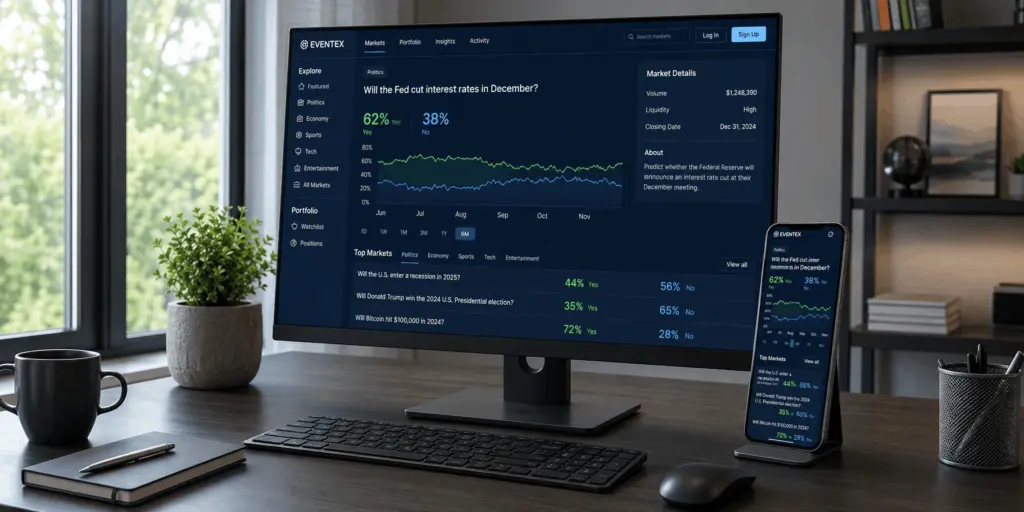
Prediction markets have emerged as a federally regulated alternative to sports betting for residents in states where wagering remains illegal.
Platforms including Kalshi and Crypto.com Markets offer event contracts on sports outcomes that operate under oversight from the Commodity Futures Trading Commission (CFTC) rather than state gambling regulators. Because they are classified as financial instruments rather than gambling products, they are accessible in states like Alaska where sports betting is prohibited. You are buying and selling contracts on outcomes rather than placing a traditional wager, but the underlying activity for most users is functionally similar to sports betting.
Which Platforms Are Available in Alaska
Prediction markets are not a substitute for a full-scale legal sportsbook. The markets for niche sports or local events are thin. But for major leagues and events, they offer real liquidity and legitimate federal oversight.
Industry News
Alaska does not have a state gambling commission, a dedicated problem gambling council with a state helpline, or a centralised self-exclusion programme. The extremely limited scope of legal gambling in the state means that the infrastructure common to regulated markets simply does not exist here.
Support is available through national organisations that serve Alaskans:
Because there is no state self-exclusion registry, Alaskans who want to limit their access to offshore or sweepstakes platforms must use the tools provided by individual operators. These include:
Reputable offshore casinos and sweepstakes platforms offer these tools. Using them proactively, before a problem develops, is the most effective approach.
If gambling is affecting your finances, relationships, or mental health, seeking support early makes a significant difference. The national helpline is the right starting point for anyone in Alaska who needs it.
Gambling in Alaska is governed by Title 11, Chapter 66 of the Alaska Statutes, which covers sections 200 through 280. The framework is broadly prohibitive. Gambling is defined as betting something of value on a game of chance or a contest where the outcome is uncertain, and the statute covers both the act of gambling and the promotion or operation of gambling activities.
Penalties operate on an escalating scale. A first illegal gambling offence is an infraction. A second or subsequent offence becomes a Class B misdemeanour. Promoting gambling, which includes running an unlicensed game, taking a cut of bets, or otherwise operating a gambling enterprise, is a Class A misdemeanour. Possessing a device with gambling software installed can also be classified as a gambling device offence at the same level. On top of that, Alaska’s forfeiture statute gives the state authority to seize both the devices used and any money wagered under illegal circumstances.
The charitable gaming exception sits under Title 5, Chapter 15 of the Alaska Statutes, which creates a permit system administered by the Alaska Department of Revenue’s Tax Division. Qualifying non-profit organisations can apply for permits to conduct bingo, pull-tabs, raffles, lotteries, dog mushing contests, and a range of outdoor sporting competitions for money. The permit system includes annual reporting requirements and fees tied to net proceeds, so there is ongoing oversight even within the legal charitable sector.
The most recent substantive change to Alaska gambling law came in 2022, when SB 204 amended Title 5, Chapter 15 of the Alaska Statutes to allow permitted non-profits to sell raffle and lottery tickets online. Purchasers must be verified as 18 or older and physically located within state lines at the time of purchase. It is a narrow update, but it reflects the only meaningful expansion of legal gambling activity Alaska has seen in years.
Beyond HB 145, no significant gambling expansion legislation is active in Alaska as of mid-2026. The state’s conservative political environment, small and dispersed population, and historically limited commercial gambling infrastructure all work against rapid change.
Alaska is one of the most restricted gambling states in the US, and that has been true for its entire history as a state. No casinos, no lottery, no legal sports betting. The baseline for Alaskans is thin compared to most of the country.
What exists is meaningful in its own way. Charitable gaming generates over $35 million annually for Alaskan non-profits and represents a genuine community institution across the state. Sweepstakes casinos offer a legitimate, consumer-protected alternative to offshore gambling for players who want casino-style entertainment without regulatory ambiguity. Daily fantasy sports and prediction markets give sports fans an outlet, even if they fall short of a full-scale legal sportsbook.
The legislative picture around sports betting is the most interesting moving part. HB 145 has now been introduced, heard in committee, carried over, reintroduced, and stalled twice. The demand data is compelling, the fiscal argument exists, and the bill’s sponsors are not giving up. At some point the arithmetic shifts. Whether that happens in the next session or several cycles from now is genuinely uncertain.
For now, Alaskans who gamble are navigating a landscape shaped by decades of conservative policy and a state that has never built the commercial gambling infrastructure that would make expansion feel natural. That is unlikely to change overnight. But it is changing, slowly and incrementally, with more momentum than at any previous point.
There is no Alaska law that explicitly bans residents from playing at offshore online casinos, but there is also no state-regulated online casino market. Alaskans who play at offshore sites are in a legal grey zone, not clearly criminally liable, but without any state consumer protection. Sweepstakes casinos are the only online casino option that is straightforwardly legal under Alaska law.
No. Sports betting is not legal in Alaska. There are no licensed sportsbooks operating in the state. HB 145, which would legalise mobile sports betting, has been introduced and reintroduced but has not passed. Prediction markets such as Kalshi and FanDuel Predicts offer a federally regulated alternative for sports outcome wagering and are accessible to Alaskans.
No. Alaska is one of only five states with no lottery of any kind. It does not participate in Powerball or Mega Millions. The only lottery-adjacent activity permitted in the state is charitable raffles and lotteries run by licensed non-profit organisations, which can now sell tickets online under the 2022 SB 204 amendment.
The minimum age for charitable gaming activities including bingo is 18. If sports betting is ever legalised under the HB 145 framework, the proposed minimum age for that activity is 21.
Yes. Sweepstakes casinos like Chumba Casino and LuckyLand Slots operate legally in Alaska because they use a promotional sweepstakes model rather than real-money gambling. No purchase is required to participate, and prizes are redeemable for cash through a sweepstakes mechanism. They fall outside Alaska’s gambling statutes.
Alaska does not have a state-run problem gambling helpline or centralised self-exclusion programme. The National Problem Gambling Helpline is available 24/7 at 1-800-522-4700 by call or text. SAMHSA’s National Helpline (1-800-662-4357) also provides free, confidential treatment referrals. Both services are free and accessible to all Alaskans.
The Author
The Author