








New Game

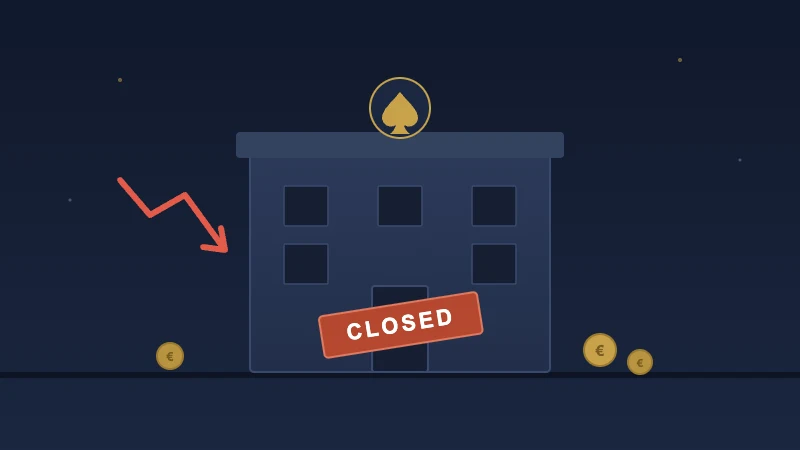
Bankrupt or closed online casinos are a normal part of a fast moving and crowded industry. New casinos launch almost every week and the competition is fierce, so many of them never establish a foothold and either go bankrupt, close their doors, or get acquired by larger groups. Some simply run out of money, others have a weak business model or poor execution, and a few struggle with their technology and their customers.
Closures happen in every maturing market. The responsible way to wind down a casino is to warn players and partners well in advance, yet many operators have shut down suddenly with no notice at all. On this page we explain why bankrupt or closed online casinos fail, what it actually costs to run one, and how to protect yourself by sticking to trusted, licensed brands.
 Reviewed byFred Anderson

Closed Casino
 Rated 91 of 100%
welcome bonus
200% up to €1,000 + 10% CashBack

Closed Casino
Rated 70 of 100%
welcome bonus
450% up to €4,500 + 60 FS

Closed Casino
Rated 76 of 100%
welcome bonus
200% up to €500

Closed Casino
Rated 1 of 100%
welcome bonus
100% up to €1,000

Closed Casino
Rated 87 of 100%
welcome bonus
400% up to €1,000 + 200 FS

Closed Casino
Rated 97 of 100%
welcome bonus
Deposit €20 - Get 100 FS

Closed Casino
Rated 82 of 100%
welcome bonus
200% up to €2,000 + 500 FS

Closed Casino
Rated 89 of 100%
welcome bonus
100% up to €1,000 + 150 FS

Closed Casino
Rated 92 of 100%
welcome bonus
150% up to €1,500 + 200 FS

Closed Casino
Rated 91 of 100%
welcome bonus
100% up to €3,000 + 150 FS

Closed Casino
Rated 93 of 100%
welcome bonus
200% up to €200 + 50 FS

Closed Casino
Rated 92 of 100%
welcome bonus
100% up to €750 + 200 FS
Closed Casino
Rated 91 of 100%
welcome bonus
100% up to €2,000 + 225 FS

Closed Casino
Rated 89 of 100%
welcome bonus
275% up to €3,000 + 400 FS

Closed Casino
Rated 89 of 100%
welcome bonus
350% up to €3,000

Closed Casino
Rated 1 of 100%
welcome bonus
280% up to €1,200 + 150 FS

Closed Casino
Rated 95 of 100%
welcome bonus
700% up to €2,300 + 300 FS

Closed Casino
Rated 1 of 100%
welcome bonus
100% up to €1,500 + 200 FS + 1 Bonus Crab

Closed Casino
Rated 94 of 100%
welcome bonus
200% up to €1,000 + 10% CB

Closed Casino
Rated 1 of 100%
welcome bonus
100% up to €500 + 200 FS + 1 Bonus Crab
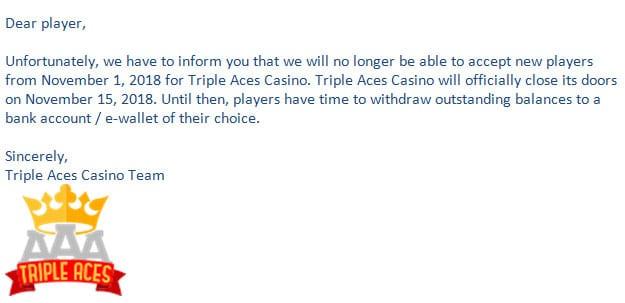
When an operator realises it is losing money and will have to shut down, the responsible decision is to warn both players and affiliates several months in advance. Players need a long enough window to withdraw their balances in full before operations stop. A well run closure sends clear, early notice and honours every pending withdrawal.
Unfortunately, we have seen many cases where a casino simply closes its doors with no warning whatsoever. It declares bankruptcy and players are rarely able to recover their cash. This is exactly why we recommend sticking to established, trusted casinos with a solid track record.
The most common reason is simple: they run out of money, usually because they fail to attract enough players. To understand why, it helps to look at what it actually costs to start and run an online casino.
Almost anyone can launch an online casino today, and many investors are tempted to try. To start a casino of a decent size, an investor typically needs a budget of around €2.5 to €3 million. Business plans are usually built to recover the investment in roughly two years and turn a profit after that. Success depends on attracting enough players, which is increasingly hard in such a competitive market.
Costs vary by jurisdiction. The most popular licensing locations are Malta, Curacao, Gibraltar, and the UK. A Malta licence runs about €50,000 per year before tax. You also need a registered company and a business address, with standard office setup adding around €5,000.
To appeal to players, a casino needs a strong, trusted game library from day one, combining the latest slots with blackjack, roulette, baccarat, poker, bingo, and live tables from top developers such as Microgaming, NetEnt, or Playtech. Initial integration costs are about €200,000, and providers then take a percentage of revenue. Some, such as Microgaming, also require operators to hold reserves of roughly €300,000 to €500,000 to guarantee player payouts.
Template solutions let operators launch with just a logo, colour scheme, and promo graphics, costing around €5,000 to €10,000, but they make the casino look like every other site on the market. More sophisticated builds with gamification and custom back end work cost considerably more.
Winning new players is one of the toughest challenges in the industry. Acquisition is expensive and capital intensive. Some operators hire specialised agencies to run promotional campaigns, while many newcomers pour money into large scale advertising from day one.
The problem is the company you are up against. New casinos compete with large, experienced operators that run enormous marketing budgets across TV, radio, and digital. As an illustration, some established brands have spent in the region of €7 million in a single quarter on heavy advertising. Smaller casinos face constant pressure to keep pace, and most cannot.
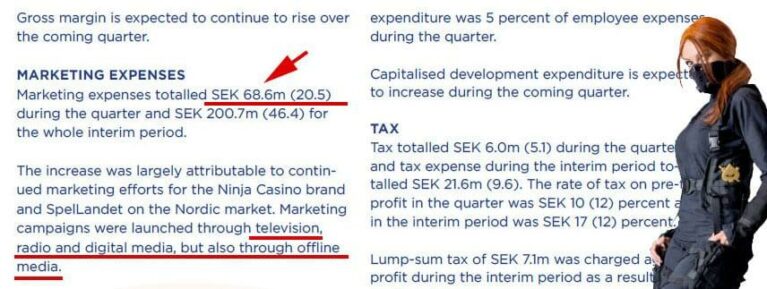
A reliable casino depends on a help desk that can cover shifts and answer every player query. That means an office, staff, and the cost of looking after them, or outsourcing support to a specialist provider, which is an increasingly popular option. Programmers, hosting providers, designers, and marketers all need to keep the site fast, polished, and always online. Downtime and maintenance are costly, because players quickly move to another casino when a site is unavailable.
The more deposit and withdrawal methods a casino offers, the better players like it, but each method must be funded with reserve money and integrated. Many new operators use a single payment processor to handle every method and save time, which typically costs between $15,000 and $40,000 per month.
| Cost item | Approx. annual cost |
|---|---|
| Casino software | $250,000 |
| Malta licence | $35,000 |
| Website costs | $10,000 |
| Payment providers | $240,000 |
| Staff | $150,000 |
| Cash balance requirement | $500,000 |
| Marketing budget (moderate) | $600,000 |
| Total per year | $1,785,000 |
There you have it. Casinos go bankrupt because they execute poorly, run out of money, or simply get out-competed.
Not every operator that disappears has failed. Ownership changes constantly, and mergers and sales are common. Once a casino grows large and popular, it becomes an attractive acquisition target for bigger companies. A well known example is the acquisition of the high quality Mr Green casino by William Hill. For players, an acquisition usually means continuity rather than closure, but it is always worth checking that licensing and account terms carry over.

The best way to avoid bankrupt or closed online casinos is to lean on independent research before you deposit. Read our online casino reviews and analysis, follow our recommendations, and check that any brand holds a valid licence. A casino regulated by a respected authority such as the Malta Gaming Authority or the UK Gambling Commission is far less likely to disappear overnight.
You can also compare operators by their casino licences and stick to established names with a long track record. We work with experienced players and enthusiasts who know how to spot a trustworthy operator, and we act firmly against scammers and cheats. Sticking to licensed, well reviewed casinos is the single most effective way to keep your money safe.
Most failures come down to running out of money. Player acquisition is expensive, competition from large established brands is fierce, and a casino that cannot bring in enough players quickly burns through its reserves. Poor execution, weak business models, and high running costs all speed up the process.
It depends entirely on how the operator handles the closure. A responsible casino warns players months in advance and lets you withdraw your full balance. Unfortunately, some simply declare bankruptcy and shut down with no notice, and in those cases players rarely recover their cash. This is why we only recommend trusted, licensed brands.
For a modest operation, total running costs are typically around 1.8 million dollars per year once you add up software, licensing, website, payment providers, staff, cash reserves, and marketing. Marketing and the required cash balance are usually the two biggest line items.
There is no guaranteed warning sign, but slow or blocked withdrawals, sudden bonus or game removals, poor support responses, and missed licensing renewals are red flags. Checking that a casino holds a valid licence from a respected regulator is the single best safeguard.
Usually, yes. An acquisition by a larger company normally means continuity rather than closure, and your account often carries over. Still, it is worth confirming that the licensing and account terms remain in place after the change of ownership.
Stick to well established, licensed casinos with a long track record and strong reviews. Avoid brand new operators with aggressive bonuses and little history, read independent reviews, and check the regulator. Our reviews and recommendations are built to help you make that call.
The Author
The Author
Site Admin