Monero casinos accept XMR, the one coin here where privacy is built into the protocol rather than added on top. Sender, receiver and amount are all hidden, so the public ledger records that a transaction happened without revealing anything about it. No other coin on this site does that by default.
The trade off is reach. Monero has the narrowest casino acceptance of any coin we cover, several large exchanges have delisted it, and deposit only support is common. It rewards knowing what you are doing before you start rather than after.
Below you will find the operators we currently rate highest for Monero play, followed by a full guide to how XMR deposits and withdrawals work, what privacy does and does not protect you from, and why the licence matters more on this page than on any other.
9 of the casinos we track accept Monero. Every one has been checked for its licence, its payout record and the small print on its bonuses.
 Reviewed byFred Anderson

New Casino
 Rated 80 of 100%
welcome bonus
200% up to €1500 + 150 FS


Exclusive Bonus
Rated 88 of 100%
welcome bonus
400% up to €4,000 + 400 FS


Crypto Casino
Rated 94 of 100%
welcome bonus
150% up to €4,000 + 400 FS

Rated 85 of 100%
welcome bonus
150% up to €500 + 50 FS

Rated 92 of 100%
welcome bonus
250% up to €1,000

Rated 87 of 100%
welcome bonus
125% up to €300 + 150 FS

Rated 89 of 100%
welcome bonus
250% + 125 FS


Quality Brand
Rated 89 of 100%
welcome bonus
100% up to €120 + 100 FS
Monero casinos accept XMR, the one coin on this site where privacy is the default rather than an option. On Bitcoin or Ethereum, anyone can look up an address and see every transaction it has ever made. On Monero the sender, the receiver and the amount are hidden at the protocol level, so the public ledger shows that something happened without showing what.
That design has consequences beyond the technical. Acceptance is the narrowest of any coin we cover, buying XMR takes more effort than it used to, and a casino advertising Monero alongside promises of total anonymity is usually telling you something about itself rather than about the coin.
What is a Monero casino?
A Monero casino is an online casino that accepts XMR for deposits and withdrawals. The blockchain side keeps your transaction details private, but the casino itself still knows who you are if it is licensed and asks for identity documents.
The 8 highest rated casinos accepting Monero, side by side.
| Casino | Rating | Licence | Min deposit | Min withdrawal | Withdrawal limit |
|---|---|---|---|---|---|
| JB Casino | 94/100 | Curacao | €5 | €10 | €30,000 Monthly |
| Stupid Casino | 92/100 | Anjouan | €25 | €100 | €10,000 monthly |
| Booi Casino | 89/100 | Curacao | 5$ | 10$ | 3000€ to 7500€ per day |
| 20Bet Casino | 89/100 | Curacao | €20 | €20 | 40,000€ Monthly |
| BC.Game Casino | 88/100 | Anjouan | 0.01$ | €10 | Unlimited |
| Mad Money Casino | 87/100 | Curacao | 20$ | 50$ | 5,000 EUR weekly |
| Rolletto Casino | 85/100 | Curacao | €20 | €20 | $/€7,500 weekly; $/€15,000 monthly |
| Planbet Casino | 80/100 | Curacao | 10 EUR | 10 EUR | No casino-imposed limits |
Minimum withdrawal is not always the same as minimum deposit. Where it is higher, a small balance can sit stranded until you top it up.
A Monero casino treats XMR as a payment method. The games are the same as anywhere else. What changes is that the record of your deposit is not readable by anyone who happens to know your address.
Monero hides three things automatically: who sent the funds, who received them, and how much moved. There is no transparent mode to switch to. This differs from coins where privacy is an add on, and it is the reason the network exists.
The practical benefit at a casino is straightforward. With Bitcoin, if anyone ever links an address to you, your entire gambling history on that address becomes visible to them. Monero removes that link by design.
It does not make you anonymous to the casino. A licensed operator runs the same identity checks regardless of which coin you funded with, and it will ask for documents before a significant withdrawal. It also does not exempt you from tax or from local law.
Anyone selling Monero as a way to gamble without ever identifying yourself is describing an unlicensed site, and an unlicensed site is one with no regulator to complain to when a payout does not arrive. That is a far bigger risk than a visible transaction.

Monero attracts a particular kind of operator, so the checks matter more here than on any other coin page.
The full method is on our how we rank casinos page.
Most guides stop at the word private. Here is what actually determines how an XMR deposit behaves at a casino cashier.
Live EUR price from the Kraken exchange. Shown for reference only, not financial advice.
XMR
About 2 minutes
Around 20 minutes, since casinos usually wait for several confirmations
Sender, receiver and amount are hidden at the protocol level. There is no transparent mode to switch to
Starts with 4 and is long. Some casinos issue an integrated address with the payment identifier built in
Most casinos now use subaddresses and do not need one. Where it is requested, omitting it means a support ticket
Delisted by several large exchanges, so acquiring and converting XMR takes more planning than for other coins
Monero works well once you have it. Two minute blocks, low fees and no address reuse concerns make the actual payment experience clean. The friction is everywhere else: fewer casinos accept it, several large exchanges have delisted it, and in some countries acquiring it takes real effort.
If privacy is genuinely what you want from a payment method, nothing else on this site comes close. If it is not, one of the widely accepted coins will give you a smoother experience with more places to spend it.
Depositing XMR is simple, though the addresses are long and the wallet needs to sync before it can spend.
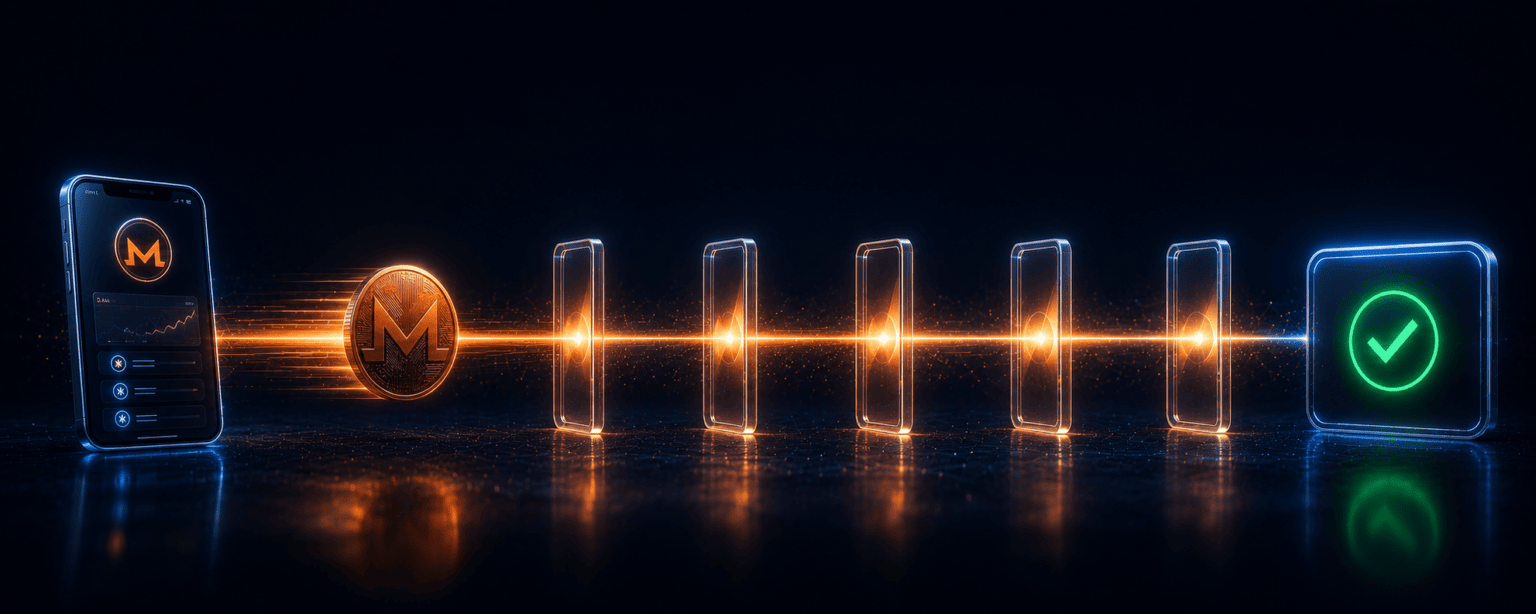
XMR withdrawals work like any other, with one difference worth planning around: fewer casinos hold deep Monero reserves, so large cashouts can take longer to process.
Approval is the usual bottleneck, as with every coin. With Monero there is a second factor: the casino may need to source XMR to pay you, which some do manually. Sites that process crypto automatically for Bitcoin sometimes handle Monero by hand.
Because the sums are private, resolving a disputed payout relies entirely on the casino’s own records rather than on a public ledger you can point to. That is another reason the licence matters more here than anywhere else.
There is no separate Monero lobby. You get whatever library the casino runs, and since fewer sites accept XMR, the choice of site matters more than the choice of games.
Crypto casinos popularised a family of in house titles you will not find at traditional operators: dice, mines, plinko and the rest. The whole category is covered on our casino originals page.
The best known are crash games, where a multiplier climbs until it crashes and you try to cash out first. Monero handles them fine, though the longer confirmation time means topping up mid session is less immediate than with BNB or Litecoin.
Many of these titles are provably fair, meaning the result can be verified afterwards. That pairs well with Monero: you can check the game was fair without the casino being able to publish your transaction history.
Bonus offers at Monero casinos look much like those anywhere else, with one caveat worth knowing before you claim.
Bonus abuse rules rely on the casino identifying duplicate accounts. Because Monero gives it less to work with on the payment side, some operators compensate with stricter verification before releasing bonus winnings. That is not unfair, but it does mean the identity check tends to arrive earlier than it might with a card deposit.
Beyond that, read the wagering multiplier and what it applies to, the maximum bet allowed while wagering, and whether crypto deposits qualify for the offer at all. Offers built around cryptocurrency are collected on our crypto casino bonuses page.
Monero is the only coin here chosen for what it hides rather than for speed or cost. It is slower than most of this list, accepted at fewer sites, and harder to buy than it used to be after several large exchanges delisted it. In exchange it gives you something none of the others do at the protocol level.
Use Monero if transaction privacy is the reason you are choosing a coin at all, and you are willing to accept fewer casinos and a slower purchase process to get it. Use Bitcoin or Ethereum if you want to play anywhere. Use Litecoin or Dogecoin for the cheapest frequent transfers. Use Tether if you want the balance to hold its value between sessions.
Whichever you pick, the licence and the payout record matter far more than the coin, and on this page they matter most of all. Our full crypto casinos hub covers every coin we have a page for.
Monero rewards a bit of preparation. These are the points that catch people out.
Privacy can make it easier to lose track of what has been spent, because there is no transaction history sitting in a bank statement to remind you. Set deposit limits, decide the amount before you start, and treat gambling as entertainment rather than income. For free and confidential support, visit BeGambleAware or read our responsible gambling guide.
A licensed Monero casino with proper encryption is as safe as any other online casino. The licence and the payout record decide that, not the coin. Monero attracts more unlicensed operators than other coins because privacy marketing sells, so checking the regulator matters more here than anywhere else on this site.
No. Monero hides your transaction on the blockchain, not your identity from the casino. A licensed operator still runs identity checks and will ask for documents before a significant withdrawal. Any site promising you can play with no verification at all is unlicensed, and that is a payout risk rather than a benefit.
Around twenty minutes is normal. Blocks arrive about every two minutes and casinos typically wait for several confirmations, so Monero is slower than most coins we cover. That is expected behaviour rather than a sign something has failed.
It is a code that lets a casino match your deposit to your account. Most casinos now use subaddresses instead and do not ask for one. Where a cashier does request it, include it exactly as given. Sending without it means the casino cannot identify your payment and you will need to contact support.
Several large exchanges have delisted it in response to regulatory pressure on privacy coins. It is still widely available, but you may need to use a different exchange than usual, and converting back to cash later takes the same planning. Work out both ends before you commit to using it.
It has the narrowest acceptance of any coin we cover. A dedicated group of crypto casinos support it, and deposit only support is fairly common, meaning the site takes XMR but pays out in something else. Check that withdrawals in Monero are actually offered before you deposit.
The Author
The Author
Site Admin