












New Game
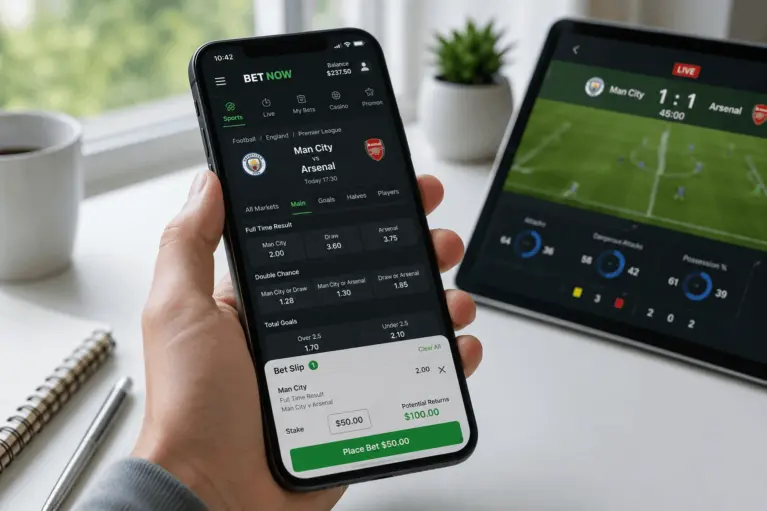
A casino can nail everything else and still bolt on a sportsbook that feels like an afterthought. Thin markets. Odds that lag half a second behind everyone else. A live betting screen that freezes right as the goal goes in. None of that shows up on a flashy homepage, but it shows up the moment you try to place a bet during a match. That’s why we’re here to bring you the best sports betting sites in 2026!
This list ranks the sites that get the sportsbook side right, not just the casino side. Every entry pairs a genuinely solid casino with betting markets, pricing, and live coverage worth using on their own merits. We test each one the same way: real bets, real live markets, real withdrawals after a win.
2026 is a loaded year for anyone who bets on sports. A World Cup is pulling in bettors who’ve never placed a wager before, and sportsbooks are racing to keep up with faster live odds and deeper prop markets as a result. That widens the gap between a sharp sportsbook and a lazy one. Scroll down to see who’s closing that gap, or jump to How We Score to see exactly what we’re testing for.
 Reviewed byNadia Winchester

Crypto Casino
 Rated 90 of 100%
welcome bonus
200% up to €100 + 150 FS

Crypto Casino
Rated 89 of 100%
welcome bonus
100% up to €100,000


Exclusive Bonus
Rated 88 of 100%
welcome bonus
400% up to €4,000 + 400 FS

Crypto Casino
Rated 85 of 100%
welcome bonus
500% up to $10,000


New Casino
Rated 84 of 100%
welcome bonus
100% up to €100

New Casino
Rated 83 of 100%
welcome bonus
250% up to €4,000 + 250 FS

New Casino
Rated 81 of 100%
welcome bonus
100% up to €5,000 + 175 FS

Crypto Casino
Rated 55 of 100%
welcome bonus
150% up to €1,300 + 100 FS
Odds aren’t just a number next to a team name. They tell you two things at once: how likely a result is, and how much a bookmaker pays out if you’re right. Most international sites default to decimal odds, where the number shown is your total return per dollar staked. Odds of 2.50 on a team mean a $10 bet returns $25 if that team wins, your original stake included.
Behind every odds line sits something called the margin, sometimes called the vig or the overround. It’s the bookmaker’s built-in cut, baked into the pricing rather than charged as a separate fee. A sportsbook running tighter margins gives you better value over time, even when the headline odds look similar to a competitor’s at first glance.
This matters more than it sounds. A one percent difference in margin barely registers on a single bet, but it adds up fast across a season of regular betting. It’s also why two of our scoring categories below focus specifically on pricing and market depth rather than welcome offers.
Want the full breakdown of bet types and odds formats, including fractional and American odds? Our complete sports betting guide covers all of it in detail.
| Category | Weight | What We’re Checking |
|---|---|---|
| Odds Competitiveness & Margins | 20% | How lines compare to market average, margin size across sports, pricing on favorites versus underdogs |
| Bet Variety & Market Depth | 20% | Sports covered, markets per match, futures and prop availability, esports coverage |
| Live Betting & Cash-Out Performance | 15% | Odds update speed, line suspension and reopening, cash-out reliability mid-match |
| Licensing & Security | 15% | Sports betting authorization specifically, encryption, match-fixing and integrity monitoring |
| Payments & Withdrawal Speed on Wins | 15% | Settlement speed after a match ends, verification timing, crypto versus fiat payout speed |
| Player Feedback & Reputation | 15% | Stake limiting on winners, disputed settlement calls, community sentiment over time |
We check actual lines against the market average rather than trusting a sportsbook’s own marketing about “industry-leading odds.” Margins vary by sport too, so a tight line on NFL moneylines doesn’t guarantee the same on soccer match totals. We also watch how a site prices favorites against underdogs, since some sportsbooks pad one side of a line more than the other to manage their own exposure.
A site that only covers five sports isn’t competing with one that covers thirty, no matter how clean its app looks. We look at how many markets exist per match beyond the basic moneyline, whether futures and player props are genuinely deep or just bolted on for headline events, and whether esports gets real coverage or a single token category buried in a menu.
This category gets its own deep dive below, since it’s become one of the biggest differentiators between sportsbooks this year. In short, we’re testing how fast odds move during live play and whether cash-out actually executes at the price shown.
Sports betting authorization isn’t always bundled with a casino license. Some jurisdictions license casino games freely but treat sportsbook operations as a separate approval, so we check that a site is actually licensed to take sports bets, not just casino wagers. We also look at how seriously a sportsbook handles match-fixing and integrity monitoring, since that’s a risk specific to betting that a slots library never has to deal with.
A casino withdrawal and a sportsbook settlement aren’t quite the same test. We check how fast a site pays out after a bet actually settles, not just how fast a generic withdrawal request clears. We also watch for verification demands that suddenly appear right after a big sports win specifically, since that pattern shows up more often in betting than in slots.
Sportsbooks have a reputation problem casinos rarely face: limiting stakes on bettors who win consistently. We factor in complaints about this directly, alongside disputed settlement calls on ambiguous bets and how a sportsbook handles those disputes when they happen.
Live betting used to be a minor tab tucked into the corner of a sportsbook’s menu. Not anymore. In-play wagering now accounts for the majority of online sports betting revenue, and the sites getting this right are pulling ahead of the ones still treating it as an afterthought.
The technical gap between sportsbooks shows up in three places. First is latency, meaning how fast a sportsbook updates its odds after something happens on the field. A goal, a red card, an injury timeout, all of these should move the price within seconds. Sites running on older pricing engines often lag noticeably behind faster competitors, and that lag is exactly when sharp bettors find value the sportsbook hasn’t priced in yet.
Second is line suspension and reopening. Every sportsbook pauses betting for a few seconds around a major event to reprice the market. How quickly that market reopens, and how close the new price lands to where it should sit, separates a well-run trading operation from one running on outdated software.
Third is cash-out reliability. Cashing out mid-match should execute at the price shown on screen, not a worse one slipped in after you hit confirm. We test this specifically during volatile in-play moments rather than in a quiet pre-match market where everything tends to work fine anyway.
Some operators now lean on AI-driven pricing models that reprice odds continuously instead of on a fixed schedule, occasionally adjusting based on an individual bettor’s history. That’s a real shift from how sportsbooks priced markets even a couple of years ago, and it’s part of why our live betting score carries genuine weight rather than sitting as a minor footnote category.
Our ranking reflects overall strength, but the sportsbook that suits a casual weekend bettor isn't necessarily the one a serious live bettor should pick. Here's what matters depending on how you actually place your bets.

Pre-match odds barely matter to you. What matters is whether the live betting screen keeps up when the game does, and whether cash-out actually works when you need it most. Prioritize sites that score well specifically on live betting performance rather than just overall ranking, and test cash-out yourself with a small stake before trusting it with anything bigger.
A six-leg parlay is only as good as the markets available to build it from. Look for sportsbooks with genuinely deep same-game parlay options and a bet builder that lets you mix markets freely, rather than restricting combinations to a narrow set of approved categories.
Broad coverage means nothing if your sport gets thin treatment. If you only care about basketball or soccer, check that a sportsbook offers deep markets specifically for your sport rather than judging it on overall sport count. A site with thirty sports and a weak basketball section isn’t better for you than one with ten sports and a brilliant one.
A sportsbook app that loads slowly during a live match is worse than useless, since the odds you’re trying to catch will have moved by the time the screen finishes loading. Prioritize apps built mobile-first with fast load times, not desktop sites that got shrunk down as an afterthought.
Settlement speed becomes the whole game. A crypto-funded sportsbook account lets you react to a line move the instant you see it, without waiting on a bank transfer to clear first. Check coin support and withdrawal speed specifically for sports settlements, since some crypto casinos prioritize their slots cashier over their sportsbook one.
Roughly thirty percent of US sports bets are now props or parlays rather than straight moneyline wagers, and the shift shows up clearly around major events. The vast majority of Super Bowl pre-match bets built through bet-builder tools last year included at least one prop bet. With a World Cup running through the middle of 2026, expect that pattern to repeat on a global scale, with bettors stacking goal totals, card counts, and tournament futures rather than just picking a winner. If you want the full rundown of how the tournament is shaping betting markets, our World Cup 2026 page covers it.
Crypto-native sportsbooks aren’t just attracting bettors with bigger bonuses anymore. They’re winning on execution speed, since a bettor reacting to a line move can settle a bet instantly without waiting on a bank transfer or card processor. One major crypto sportsbook saw basketball betting volume nearly double year over year in early 2026, with soccer and tennis posting strong gains too. Esports has also become a genuine fourth pillar on crypto-native books in a way traditional fiat sportsbooks have been slower to build out.
Sports has overtaken politics as the dominant category on the major prediction market platforms this year, a real shift from how those platforms built their reputation. Several professional sports leagues have struck partnerships directly with these platforms, giving the format a layer of legitimacy traditional offshore betting sites never had. For an end user, placing a sports trade on a prediction market can look and feel almost identical to placing a bet on a sportsbook, even though the regulatory framing behind it is completely different. Curious how prediction markets actually work and where they overlap with traditional betting? Our prediction markets page breaks it down.
This isn’t a list we build once and leave alone. Sportsbooks change constantly, and a score that’s accurate today might not hold up by autumn.
Getting onto this list takes strong performance across every category above. Staying on it means avoiding the patterns below.
A high score on this page reflects sharp odds, deep markets, and reliable payouts. It doesn’t mean a sportsbook is the right choice if betting has stopped feeling like entertainment. That’s a separate question, and one worth taking seriously regardless of where a site lands in our ranking.
Live betting carries its own specific risk. The fast pace of in-play wagering and the temptation to chase a loss mid-match make impulse betting easier than it is with a single pre-match wager placed once and left alone. Before betting live, it’s worth knowing what tools are actually available to keep that pace in check.
If betting on sports stops being fun, or you find yourself chasing losses through live markets on a regular basis, organizations like the National Council on Problem Gambling, GamCare, and Gambling Therapy offer free, confidential support. Reaching out is a sign of control, not a setback.
Sports betting is only one part of what makes a casino worth using, and plenty of readers landing here also want a strong slots library or live dealer tables alongside their sportsbook.

Our Best Casinos 2026 ranking applies the same score-based approach across licensing, game library, bonus fairness, and payments, covering the full casino experience rather than just betting markets.

Our Best Crypto Casinos 2026 ranking does the same for anyone depositing and withdrawing in crypto, with extra weight on coin support and transaction speed.

A great sportsbook doesn’t announce itself with a flashy welcome bonus. It shows up in the half-second it takes odds to update after a goal, the price you actually get when you cash out mid-match, and how fast your winnings land after a bet settles. Those are the things we test, and they’re the things that separate the sportsbooks on this list from the ones that treat betting as a checkbox next to a slots library.
Rankings here will keep shifting as margins tighten, markets expand, and live betting gets retested throughout the year. Use the breakdown that matches how you actually bet, whether that’s chasing live odds, building parlays, or settling everything in crypto, and pick a sportsbook built for that rather than whichever one tops the list overall. We’re here to help you pick the best of the best!
Scores update continuously as sportsbooks change, not on a fixed monthly schedule. If a site’s odds shift, its live betting performance changes, or new player feedback comes in, that gets reflected here as soon as our review catches it.
Every sportsbook builds its own margin into the price, and that margin shifts depending on how much money is coming in on each side of a bet. Two sites can show different odds on the same match simply because their internal risk models and current betting volume don’t match exactly. Shopping the line across a few sportsbooks before placing a bet is one of the simplest ways to capture better value, especially on heavily bet matches where the gap can widen.
Bonus size barely factors into this ranking at all. A sportsbook with tight margins, deep markets, and fast live odds can easily outscore a competitor leading with a flashy sign-up offer but weak pricing underneath it.
Not on this list specifically. A site needs genuine depth on the betting side, not just a token sportsbook tab, to score competitively in our odds and market coverage categories.
No. Placement is based on our scoring criteria across odds, markets, live betting performance, licensing, payments, and player feedback. We do have affiliate relationships with some operators we cover, which is standard for sites like ours, but that has no bearing on where a sportsbook lands in this ranking.
Read the Quick Primer section above first to get comfortable with how odds and margins work, then start with whichever sportsbook ranks highest overall. From there, check Matching a Sportsbook to How You Actually Bet to see if a specific style, like live betting or parlays, points you toward a different pick further down the list.
The Author
The Author
Slots and News Reviewer