









Baltimore Sues Prediction Markets Over Unlicensed Sports Betting


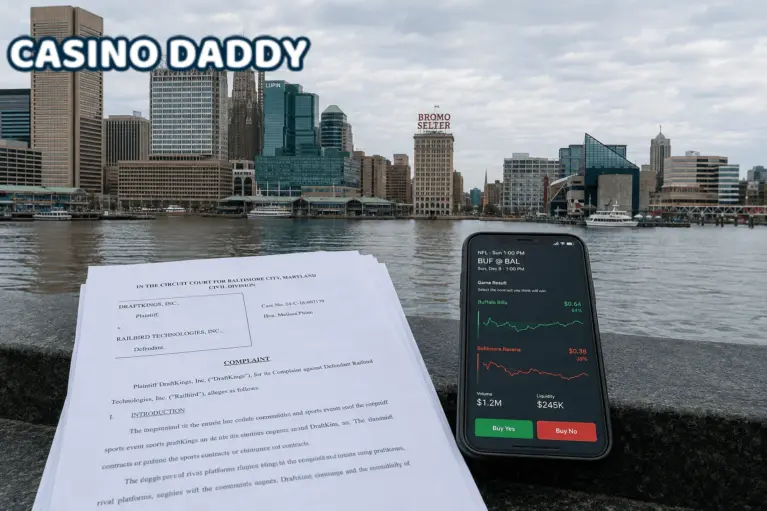
Baltimore has opened a new front in the national fight over prediction markets. The city filed two lawsuits accusing Kalshi and Polymarket of running sportsbooks without a licence. Mayor Brandon Scott and the City Council submitted the complaints on Thursday in Baltimore City Circuit Court. Both actions rest on the city’s own Consumer Protection Ordinance rather than state gambling law. That choice makes this the first serious municipal challenge the sector has faced.
The argument at the centre of both filings is simple. Contracts tied to game winners, point spreads, totals and player statistics work like sportsbook wagers. The city says courts should treat them that way. Officials contend that calling these products event contracts changes the label and little else. Neither company holds authorisation from the Maryland Lottery and Gaming Control Agency.
Baltimore Puts Prediction Markets Under a City Ordinance
Until now, every major clash in this sector has pitted a state regulator or an attorney general against a platform. Baltimore has taken prediction markets to court using municipal consumer protection powers instead. That is a far smaller unit of government than the industry expected to move. The ordinance covers deceptive and unfair trade practices inside city limits, and city lawyers say the way these platforms present themselves falls squarely within that definition.
The complaints claim both companies market their products in a way that implies proper licensing and oversight. That perception matters because ordinary users have no simple way to verify it. Officials also raised the risk to young adults and to people already showing signs of problem gambling. Licensed sportsbooks in Maryland must actively protect both groups.
“These companies are running sportsbooks without licenses and betting that a new label will put them above the law,” Scott said. He added that the city would not let multibillion-dollar firms profit at the expense of its communities. City Solicitor Ebony M. Thompson framed the case as a test of local authority. Repackaging gambling, she argued, does not place a company beyond the reach of Baltimore law.
Kalshi Case Pulls In Robinhood, Webull and Coinbase
The Kalshi complaint reaches well past the exchange itself. Baltimore named Kalshi Inc. and KalshiEX LLC in the same filing. It then added Robinhood Markets, Robinhood Derivatives, Webull Corporation, Webull Financial and Coinbase Financial Markets. Baltimore says each of those brokerages runs a prediction market section where customers can trade Kalshi sports contracts directly.
That decision turns a narrow dispute into something much larger. Retail brokerages have treated sports contracts as a growth product. The city now argues that distributing them carries the same legal exposure as issuing them. The complaint also singles out bundled positions marketed as combos, which city lawyers compare to the parlay bets that licensed sportsbooks sell every day.
Baltimore Accuses Polymarket of Trading Against Users
The second lawsuit names QCX LLC, Blockratize Inc. and QC Tech LLC, the entities behind Polymarket. Baltimore alleges that Polymarket runs an internal market-making operation capable of taking positions opposite its own customers. If that claim holds up, users may at times be trading against the platform itself rather than other participants.
Baltimore’s argument cuts at the core defence used across the prediction market sector. Platforms have long said they simply host a marketplace and collect fees, unlike a sportsbook that profits when customers lose. This filing challenges that separation head on. The city further claims that Polymarket’s marketing feeds a misleading picture of the platform’s regulatory status.
The Platforms Fall Back on Federal Cover
Both companies rejected the claims quickly. Kalshi described the case as political theatre and an attempt to relitigate a dispute already on appeal. The company insists it operates lawfully under the exclusive jurisdiction of its federal regulator. Polymarket argued that city-level action conflicts with the framework the Commodity Futures Trading Commission has built. Registered exchanges, it says, answer to federal law rather than a patchwork of local rules.
That patchwork warning now looks less theoretical. Baltimore is far from alone in pressing prediction markets on this point. Courts in New York, Wisconsin and Utah recently denied injunction requests from operators trying to block enforcement. Maryland regulators had already signalled where they stand. Lottery and Gaming Control Commission Secretary John Martin warned licensed operators last December about the sector, and joining it, he said, could put their gaming licences at risk.
What Baltimore Wants From the Court
The city is seeking civil penalties, restitution for affected residents and disgorgement of proceeds it describes as unlawful. It also wants injunctive orders barring both companies from offering sports contracts to anyone in Baltimore. Adam Levitt, founding partner at law firm DiCello Levitt, backed that position. Letting these firms sidestep gambling law would set a precedent reaching far beyond one city, he said.
A ruling for Baltimore would hand prediction markets a genuinely new problem. Compliance state by state is difficult but manageable. A model where individual cities can bring consumer protection claims creates something far messier. Kalshi and Polymarket have built their expansion on the idea that federal registration settles the question for good. Baltimore has now asked a court to say otherwise, and the answer will shape how far prediction markets can stretch.

The Author
The Author
Slots and News Reviewer