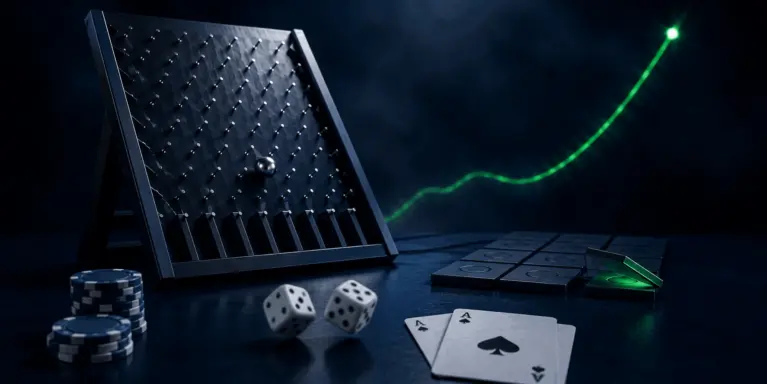
Somewhere between slots and live tables, a whole genre of casino games decided rules were overrated and speed was everything, and that’s exactly what Casino Originals are. Plinko turns a peg-filled board into pure suspense as your ball bounces toward its payout. Mines dares you to keep flipping tiles even after your gut starts screaming to cash out. Dice, Limbo, Keno, and Hi-Lo strip things down further still, each one built around a single decision and a single outcome, while Crash games hand you a rising multiplier and a cash-out button that gets genuinely harder to press the longer you let it climb.
None of this came from a casino boardroom trying to reinvent roulette. In-house studios and crypto casinos built these games from the ground up because players wanted something that didn’t ask for patience, and it worked so well that Originals now show up in nearly every serious online casino lobby, crypto-native or not.
What follows covers how each game actually works, where the real odds sit, who’s building them behind the scenes, what “provably fair” genuinely means beyond the badge on the loading screen, and which casinos are worth trusting with your money when you’re ready to play.


Exclusive Bonus
 Rated 88 of 100%
welcome bonus
400% up to €4,000 + 400 FS


New Casino
Rated 83 of 100%
welcome bonus
250% up to €4,000 + 250 FS


Crypto Casino
Rated 76 of 100%
welcome bonus
200% up to €500

New Casino
Rated 81 of 100%
welcome bonus
100% up to €5,000 + 175 FS

Crypto Casino
Rated 85 of 100%
welcome bonus
500% up to $10,000

Crypto Casino
Rated 89 of 100%
welcome bonus
100% up to €100,000

Crypto Casino
Rated 90 of 100%
welcome bonus
200% up to €100 + 150 FS

Crypto Casino
Rated 55 of 100%
welcome bonus
150% up to €1,300 + 100 FS

Crypto Casino
Rated 87 of 100%
welcome bonus
100% up to $1,500 + 150 FS

Crypto Casino
Rated 82 of 100%
welcome bonus
200% up to €2,000 + 500 FS

Crypto Casino
Rated 94 of 100%
welcome bonus
150% up to €4,000 + 400 FS

Rated 91 of 100%
welcome bonus
305% up to €1,200

Rated 89 of 100%
welcome bonus
305% up to €1,200

Crypto Casino
Rated 91 of 100%
welcome bonus
100% up to €500 + 50 FS

Rated 91 of 100%
welcome bonus
200% First Deposit Bonus

Rated 90 of 100%
welcome bonus
NO KYC REQUIRED

Rated 93 of 100%
welcome bonus
100% up to €100 + 100 FS


Hot Casino
Rated 95 of 100%
welcome bonus
243% up to €5,555 + 243 FS
A slot machine spins reels and pays out based on where symbols land across a set number of lines. A Casino Original skips that mechanic entirely. You drop a ball, flip a tile, guess a number, or watch a multiplier climb, and the round resolves in a single decision instead of a spin cycle.
Almost none of these mechanics were invented for gambling. Plinko’s peg-and-ball drop traces back to the Galton board, a 19th-century device built by scientist Francis Galton to demonstrate probability, and its visual style borrows from Japanese pachinko machines, which themselves grew out of a children’s toy from the 1920s. Mines is a direct gambling twist on Minesweeper, the classic tile-clicking computer game most people played long before they ever placed a bet. Dice, Keno, and Hi-Lo are older still, simple prediction formats that have existed in various forms for generations.
This matters because none of these game concepts belong to any single company. They’re generic and public, the way “blackjack” or “roulette” don’t belong to whichever casino happens to run them. That’s exactly why you’ll find a “Plinko” or a “Mines” at nearly every casino that offers Originals, built independently by different teams, all working from the same public concept rather than sharing one company’s code.
Knowing where a specific game came from tells you more than the name on the button does. There are two main paths a Casino Original can take to reach your screen.
| Path | How It Works | Example |
|---|---|---|
| Licensed from a studio | A software studio builds a game once and licenses it to any casino that wants to run it, the same model slot studios use | BGaming’s game library, including its own Plinko, is used by more than 3,000 operators worldwide |
| Built in-house | A casino’s own development team builds the game and keeps it exclusive to that one platform | BC.Game’s in-house team builds every BC Original, including Crash, Plinko, Limbo, and Mines, and none of them run anywhere else |
If two casinos both list “Plinko,” they might be running the exact same BGaming build under different branding, or they might be running two completely separate versions built by two separate in-house teams. Same name, same public concept, different odds, different features, different builds underneath.
Licensed slots get tested and certified by independent labs before they go live, and players trust the result because a certificate says so. Most Casino Originals, whether licensed or built in-house, take a different approach and let you check the game’s honesty yourself, after every round if you want. This is called “provably fair.” Before you place a bet, the casino already knows what the outcome would be if you played right now. Instead of just telling you and hoping you trust it, the casino locks that answer away in a way it can’t change later, and shows you proof that it’s locked. Picture someone writing down a prediction, sealing it in a box in front of you, and handing you that box before the game even starts. They can’t swap the paper inside once you’re holding it.
| Part | Where It Comes From | Why It Matters |
|---|---|---|
| The casino’s locked answer | The casino | Shown to you before you bet, so the casino can’t quietly change the result once it sees what you’re doing |
| Your own random input | You | Something the casino has no way of knowing in advance, so it can’t rig the locked answer around it |
| A round counter | The system | Makes sure every bet gets a fresh result, so the same setup can’t repeat the same outcome twice |
Once the round ends, most Casino Originals let you open the box and check. A button built directly into the game reveals the original answer, compares it against the proof you were shown at the start, and confirms whether they match. Realistically, most players never click that button. The point isn’t that everyone verifies every round. The point is that the option sits right there, for anyone who wants proof instead of a promise.
Instant-win describes how a game plays: one decision, one immediate result, no spinning or waiting around. Provably fair describes something different entirely, the proof system sitting behind that result. A game can be fast without being provably fair. Most Casino Originals happen to be both, but the two words aren’t describing the same feature.
Provably fair technology didn’t come from traditional casinos. Early crypto-native platforms built it to prove honesty without holding the expensive, heavily regulated licenses that established operators lean on for trust. Dice and simple number games got the treatment first, chosen because the math behind them was easy for anyone to check, and the system spread into crash, mines, and keno as crypto casinos grew. That history still shows in where these games live today. Provably fair Originals stay heavily concentrated on crypto-first platforms, largely because crypto payments and cryptographic verification run on the same logic: check the math yourself instead of trusting the institution.
Numbers vary from one casino’s build to the next, since a BGaming Plinko and a BC.Game Plinko are two entirely different pieces of software running the same public concept. But real ranges from across the industry give you a solid baseline for what to expect before you sit down to play.
| Game | Mechanic | House Edge | RTP Range | Risk Profile | Ideal Session |
|---|---|---|---|---|---|
| Plinko | Ball drops through a pegboard toward a payout slot | 1%+ | 96% – 99% | Fully adjustable by risk level and row count | Quick, high-volume bursts |
| Mines | Reveal grid tiles while avoiding hidden bombs | 2% – 3% | 97% – 98% | Escalates with mine count and tiles revealed | Medium, one decision per tile |
| Dice | Set a win-chance target and roll against it | 1% – 2% | 98% – 99% | Fully adjustable via target win chance | Very fast, built for auto-bet |
| Limbo | Set a target multiplier before the round resolves | 1% – 4% | 96% – 99% | Fully adjustable via target multiplier | Very fast, built for auto-bet |
| Keno | Pick numbers from a board and match a random draw | 3% – 10% | 90% – 97% | Rises with number of picks selected | Slower-paced, longer sessions |
| Hi-Lo | Guess whether the next card or number is higher or lower | 2% – 4% | 96% – 98% | Shifts constantly based on the current card’s value | Fast, single-decision rounds |
| Crash | Cash out before a rising multiplier collapses | 1% – 4% | 96% – 99% | High, timing-dependent | Fast-paced, spectator-friendly |
This entire genre traces back to a single Bitcoin address in 2012, not a casino boardroom. Casino Originals didn’t start as a strategic product category. They started as a scrappy experiment in proving a bet was honest without asking anyone to trust a company’s word for it.
SatoshiDice launched on April 24, 2012, built by a BitcoinTalk forum user before Bitcoin entrepreneur Erik Voorhees took it over. The concept was almost absurdly simple. You sent Bitcoin directly to one of several dedicated wallet addresses, each carrying different odds, and the outcome resolved instantly based on the resulting transaction hash. Within weeks, SatoshiDice was generating more Bitcoin transaction volume than every other use of Bitcoin combined. The site later published the secret values behind its hashing method, letting anyone reverse-check that a result hadn’t been rigged after the fact. That single decision, giving players the tools to verify a result themselves, is the exact seed that grew into the provably fair systems running today’s Originals.
Two years later, a separate innovation appeared. In 2014, developer Eric Springer released a game called MoneyPot on the same BitcoinTalk forum, built around a live-rising multiplier and a cash-out decision, taking its visual inspiration from the wild swings of early cryptocurrency price charts. Springer sold the game in 2015, and its new owner rebranded it Bustabit, a name the crash genre still nods to today. Bustabit’s code was published openly, which cut both ways: it built trust through transparency, but it also let anyone clone the format, and clones spread fast between 2015 and 2017, including into skin-betting sites built around Counter-Strike weapon skins rather than crypto.
Through the mid-2010s, provably fair games mostly lived on single-purpose sites, a dice site here, a crash site there, each running one game and nothing else. That changed around 2017 and 2018, when larger crypto-first casinos started building entire libraries of these games in-house instead of pointing players toward separate niche sites. BC.Game launched its own Classic Crash, and Stake launched a crash title of its own, both landing around a 1% house edge. This is the point where “Originals” stopped meaning one dice site and started meaning an entire wing of a casino’s lobby, Plinko sitting next to Mines sitting next to Crash, all built and maintained by one platform’s in-house team.
The genre’s biggest crossover moment came on November 30, 2019, when Kyiv-based studio Spribe released Aviator. Unlike the crash games before it, Aviator was built to be licensed out broadly rather than kept exclusive to one platform, and it carried crash mechanics beyond crypto-only sites and into regulated, traditional online casinos for the first time. By the end of 2020, proprietary crash titles alongside Plinko, Mines, and similar fast, easy-to-build formats had become close to standard across the crypto casino industry, cementing Originals as a genre in its own right rather than a handful of scattered experiments.
| Year | Milestone |
|---|---|
| 2012 | SatoshiDice launches, introducing the verification method that became provably fair |
| 2014 | MoneyPot introduces the rising-multiplier crash mechanic |
| 2015 | MoneyPot is rebranded Bustabit, cementing the crash format’s name |
| 2017 – 2018 | Major crypto casinos begin building full in-house Originals libraries instead of single-game sites |
| 2019 | Aviator launches and carries crash games into regulated, non-crypto casinos |
| 2020 | Crash, Plinko, and Mines become close to standard across the crypto casino industry |
The through-line across all of it is crypto. Every major step in this timeline happened on crypto-first platforms first, and traditional, non-crypto operators picked up the format only after it had already proven itself. That’s not a coincidence. Instant crypto payments and provably fair verification both grew out of the same instinct: give players a way to check the math themselves instead of asking them to trust an institution.
Six games make up the core of this genre, each running on a different flavor of chance. Here's what actually happens when you load each one up.
 Plinko drops a ball from the top of a peg-filled board and lets gravity do the rest. Every peg it hits sends it left or right at roughly even odds, and after bouncing through row after row, it lands in one of several slots along the bottom, each carrying its own payout multiplier. The slots near the center pay less because statistically more balls end up there, while the slots at the far edges pay dramatically more precisely because so few balls make it that far.
You control the risk level and the number of rows before you drop, which reshapes the entire payout curve. Low risk keeps outcomes clustered and modest. High risk stretches the whole board toward rare, massive payouts at the edges and near-total losses everywhere else. It’s a game built entirely around watching probability play out in real time, which is exactly why it’s so hard to look away from.
 Mines hands you a grid, usually 25 tiles, and hides a set number of bombs somewhere underneath. You pick how many bombs sit on the board before you start, then click tiles one at a time. Every safe tile bumps your multiplier higher and gives you the option to bank your winnings and walk away.
Every bomb ends the round instantly and takes your stake with it. The tension comes from the trade-off you set yourself. More bombs on the board means bigger multipliers per safe tile, but a shorter, riskier path to reach them. It’s less about luck in the abstract and more about a running decision you make with every single click, which is why it plays more like a dare than a straightforward bet.
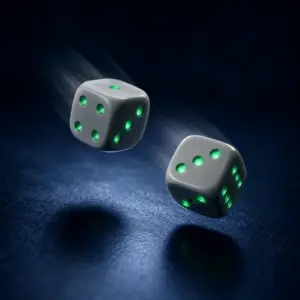 Dice cuts out almost everything else a casino game usually asks of you. You pick a target number or range, set how likely you think the roll needs to land in your favor, and the payout scales automatically based on how narrow you make that target. Aim for a wide, easy-to-hit range and you’ll win often for small payouts.
Narrow it down to a long shot and the payout climbs fast while your odds shrink just as fast. There’s no board, no grid, no waiting. It’s the closest thing this entire genre has to a pure coin flip with adjustable odds, and that simplicity is exactly why high-volume players and auto-bet strategies gravitate toward it.
 Limbo asks you to set a target multiplier before the round even starts, sometimes as low as 1.01x, sometimes stretching into the millions. The game then generates a random result, and if that result meets or beats your target, you win at your chosen multiplier. Miss it, and the round’s over. Unlike Crash, there’s no live climbing number to watch and no split-second cash-out decision to make under pressure.
You commit before you see anything happen, which makes Limbo feel calmer than its crash-style cousins, even though the underlying math runs on the exact same logic: lower targets hit more often for smaller wins, higher targets hit rarely for massive ones.
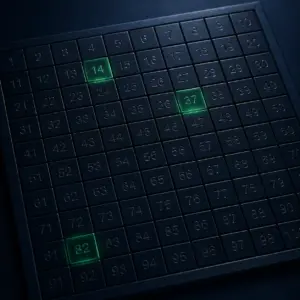 Keno predates almost everything else on this list by decades, running on the same basic idea as a lottery draw. You pick a set of numbers from a larger board, the game draws its own random set, and your payout depends on how many of your numbers match. The more numbers you pick correctly out of a smaller pool, the bigger your payout climbs, though matching all of them gets exponentially harder the more you choose.
Online versions strip away the old wait-for-the-draw pacing entirely, resolving each round in seconds rather than minutes. It plays slower and less frantic than Dice or Limbo, but the format itself, picking numbers and hoping, is instantly familiar even to players who’ve never touched a crypto casino before.
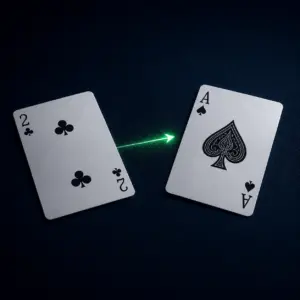 Hi-Lo shows you a single card or number and asks one question: will the next one be higher or lower? Guess right, and your multiplier climbs while a new card appears, ready for you to guess again or cash out what you’ve built. Guess wrong, and the round ends there. The odds shift constantly based on exactly where the current card sits.
Guessing “higher” on a low card like a 3 is a safe bet with a small payout, while guessing “higher” on a King is a long shot that pays out big precisely because it rarely lands. That constantly moving target is what keeps Hi-Lo from ever feeling repetitive, even though the core decision never changes.
Every game in the lineup above resolves the moment you commit. Crash games work differently, and that difference is the entire reason they get treated as their own category rather than just another instant-win format. A multiplier starts climbing the second the round begins, and it keeps climbing in real time until it collapses at a random point. Your only decision is when to cash out and lock in whatever multiplier you’re sitting on before that happens. Wait too long, and the round crashes before you click, taking your stake with it.
That live, ticking pressure is what separates Crash from everything else on this page. Plinko, Mines, Dice, Limbo, Keno, and Hi-Lo all ask you to commit once and then show you a result. Crash asks you to keep deciding, second by second, while the number in front of you keeps growing and the temptation to hold out for just a little more keeps growing right alongside it.
A handful of titles have come to define this category, each with its own visual hook wrapped around the same core mechanic:
Different skins, same underlying tension. Every one of these still comes down to the same question every round: cash out now, or push your luck for one more second.
Every game covered so far comes from somewhere specific, built by a real company with its own history, its own catalog, and its own approach to this genre. Here’s a look at the names actually doing the building.
BGaming’s game library, including its own take on Plinko, runs on more than 3,000 operator platforms worldwide, making it one of the most widely distributed names in this entire genre. Rather than chasing one flagship title, BGaming built out a broad catalog spanning Plinko, Dice, its Minesweeper-style Mines game, Crash, and more, all licensed under one roof to any casino willing to integrate them. If you’ve played an Original at more than one crypto casino and noticed the exact same game showing up twice, there’s a solid chance BGaming built both versions.
Hacksaw Gaming has built over 300 casino partnerships since entering the space, carrying its own versions of Plinko, Mines, and Hi-Lo, among others. Its releases tend to arrive with distinct payout ceilings and feature sets compared to BGaming’s builds of the same games, which is exactly why checking which studio built a specific “Plinko” or “Mines” tells you more than the game’s name alone.
Spribe, a studio based in Kyiv, released Aviator in 2019, and that single title did more to carry crash mechanics out of crypto-only casinos and into regulated markets than any game before it. Spribe has kept its catalog tight rather than flooding the market with variations, which is part of why Aviator remains the single most recognized name in crash gambling.
Two more studios have carved out space by building variety on top of the same crash formula. SmartSoft Gaming, founded in Tbilisi in 2015, built JetX as one of the earliest crash titles on the market, then expanded into an entire family of themed crash games including Football X, Cricket X, and Helicopter X, all running under a Malta Gaming Authority B2B license. InOut Games took a newer, more focused approach, building its catalog specifically around fast, crash-style formats like Chicken Road, where a chicken advances step by step across a road instead of a number simply climbing a graph.
Not every game on this page comes from a licensing studio. Some casinos build their own in-house alternative instead. BC.Game runs its own internal development team building every BC Original, including its versions of Crash, Plinko, Limbo, and Mines, and none of those builds appear anywhere outside BC.Game’s own platform. It’s the same broader genre and the same public game concepts covered throughout this page, just built and owned entirely in-house rather than licensed in from an outside studio.
The mechanics behind provably fair got covered earlier on this page, so this section skips the recap and goes straight to what actually matters: seeing it work in practice, and knowing what to do with that information.
Picture a Dice round. Before you bet, the game shows you a hashed server seed, something like a long string of letters and numbers that looks meaningless on its own. You set your own client seed, maybe just leaving the default one the game generates for you. You place your bet, the round resolves, and you move on.
Later, you decide to check it. You rotate your seed pair, and the game reveals the original server seed it had hidden the whole time. You run that revealed seed through the same hashing process the game uses, and compare the result to the hash you were shown before you ever placed your bet. If they match exactly, the casino locked in that seed before it had any idea what you were going to bet, and there was no way to quietly change the outcome once your bet was in. Most games handle this entire comparison for you with a single click. You never have to do the math by hand.
Here’s a detail worth knowing. The verification button built into a casino’s own game is still, technically, a tool the casino controls. For most players, that’s not a real concern, since the underlying math either checks out or it doesn’t, regardless of who built the button. But if you want a genuinely independent check, you can copy the revealed server seed, your client seed, and the nonce into a separate, third-party provably fair verifier instead of the casino’s built-in one. Several exist specifically for this purpose, run by sites with no stake in whether your result comes back clean. Running the same numbers through a tool the casino had no hand in building is the closest thing this genre has to a second opinion.
This is rare, but worth knowing what it means if it happens. A mismatch between the hash you were shown before betting and the hash generated from the revealed seed afterward is a real red flag, not a rounding error or a display glitch. It means the seed was tampered with somewhere between the moment it was committed and the moment it was revealed. If you ever hit this, it’s worth documenting the exact seeds and hashes involved and raising it directly with the casino’s support team, since a legitimate operator will want to investigate that just as much as you do.
Worth repeating briefly, since it’s easy to conflate the two. Provably fair proves a specific round wasn’t altered after you bet. It says nothing about how a casino handles deposits, withdrawals, or complaints, which is what an actual gambling license from a body like the Malta Gaming Authority or the UK Gambling Commission covers. Look for both when you’re sizing up a casino, not one standing in for the other.

Six games and an entire Crash category is a lot of ground to cover in one sitting, so here’s a straightforward way to narrow it down based on what actually matters to you: how much swing you want in your results, and how fast you want each round to move.
Some of these games let you dial risk up or down yourself, and some come with a fixed personality baked in. Plinko and Mines both hand you direct control. Choose a low risk setting on Plinko or a small mine count on Mines, and you’re looking at frequent, modest results. Push either one toward its high-risk end, and you’re chasing rare, dramatic payouts with a much higher chance of walking away empty. Dice and Limbo work the same way through your target selection, a wide target on Dice or a low multiplier on Limbo behaves conservatively, while a narrow target or a sky-high multiplier behaves like a lottery ticket.
Keno and Hi-Lo sit at different points on the spectrum by design rather than by your settings. Keno’s payout structure rewards patience, matching more numbers pays disproportionately more, but hitting a full match gets harder fast. Hi-Lo’s risk shifts automatically based on the card in front of you rather than anything you configure, which makes it feel less predictable session to session. Crash sits at the volatile end almost by default, since the entire format is built around watching a number climb past where you’d normally cash out, and that’s precisely where sessions tend to swing hardest.
If you want rapid-fire rounds you can fire off without much thought between them, Dice and Limbo are built for exactly that, resolving in a second or two with no decision beyond your initial target. Plinko sits close behind, a drop and a bounce, then you’re setting up the next one. Mines and Hi-Lo ask for a little more engagement per round, since you’re making an active choice with each tile or each card rather than just watching a result land. Keno slows things down further, closer to a lottery pace than a rapid-fire one. Crash asks the most of your attention moment to moment, since the entire round unfolds in real time and your only job is deciding when enough is enough.
| If You Want… | Try |
|---|---|
| Fast rounds with full control over your risk | Dice or Limbo |
| Something visual to watch play out | Plinko |
| An active decision every step of the way | Mines or Hi-Lo |
| A slower, patience-based pace | Keno |
| Real-time tension and a live cash-out decision | Crash Games |
Whichever game fits your style, the same basic principle carries across all of them. Decide what you’re comfortable spending before you start, size your individual bets as a small fraction of that total rather than a large one, and treat any session as entertainment with a cost attached rather than a plan to walk away ahead. The next section covers this in more depth.
Nearly every Original on this page was built with a phone screen in mind, not a desktop monitor as an afterthought. Studios building this genre lean on HTML5, the same web technology behind most modern mobile sites, rather than the older download-based software casino games once relied on. That means no app store, no install, and no wait. You tap a game, it loads in your browser, and you’re playing within seconds.
The format itself helps too. A single tap to drop a ball, tap a tile, or set a target multiplier translates naturally to a touchscreen in a way a five-reel slot with a dozen paylines never quite does. Rounds that resolve in a second or two also fit real life better, a quick session while you’re waiting in line does a lot less damage to your day than a slot game that wants your full attention for twenty minutes straight.
None of that changes the math underneath. A quick round on your phone carries the exact same house edge as the same game played at a desk, so treat five minutes on your commute with the same bankroll discipline you’d use anywhere else.
Everything that makes Casino Originals appealing also makes them worth extra caution. A slot spin takes a few seconds to resolve. A Dice roll or a Limbo round can resolve in under one. That speed means it’s possible to place far more bets per minute on these games than on almost any other casino format, and each bet carries the same house edge whether you notice it happening or not.
This isn’t a reason to avoid the genre. It’s a reason to set real limits before you start rather than while you’re mid-session. Decide on a budget you’re fully comfortable losing, and treat that number as fixed rather than something to reconsider once you’re a few rounds in.
Auto-bet features, common across Dice, Limbo, and several other Originals, deserve particular attention here. They remove the natural pause between rounds entirely and can run through a bankroll far faster than manual play, since there’s no moment where you’re forced to stop and decide whether to continue.
Licensed casinos typically offer several tools built specifically for this kind of fast-paced format:
Setting these up before you play, while you’re thinking clearly about what you can afford, works far better than trying to apply discipline mid-session once auto-bet is already running.
If gambling stops feeling fun and starts feeling difficult to control, support is available and worth reaching out to. Visit our responsible gambling page for regional support resources and tools to help you stay in control.
Casino Originals earned their spot in nearly every serious online lobby by doing one thing slots and table games never really committed to: getting out of your way. Plinko, Mines, Dice, Limbo, Keno, and Hi-Lo each strip a bet down to its simplest possible shape, while Crash keeps that same instant energy but hands you a live decision instead of a locked-in result. None of it happened by accident, and none of it happened in a single company’s boardroom either. Studios like BGaming and Hacksaw Gaming built entire businesses licensing these games out at scale, platforms like BC.Game built their own versions in-house instead, and crypto casinos gave the whole genre the provably fair backbone that lets you check a result yourself rather than take anyone’s word for it.
That transparency is worth remembering every time you sit down to play. The math behind each game is public, the odds are knowable, and the tools to verify a result sit one click away if you ever want to use them. Speed cuts both ways though, and a genre built around instant results deserves the same bankroll discipline as anything slower and flashier.
Which Original fits you best probably comes down to how much you want to control the risk yourself versus how much you want the game to decide it for you, and the good news is there’s no wrong entry point. Start with whatever pulled you into this page in the first place, and the casinos below are a solid place to try it.
Speed and mechanics, mainly. A Casino Original resolves in a single decision, a ball drop, a dice roll, a tile flip, rather than a multi-step process like a slot’s bonus round or a hand of blackjack. Most also skip traditional lab-certified RNG in favor of provably fair verification, letting you check a result’s fairness yourself instead of relying on a certificate.
Not at licensed, reputable casinos. Provably fair verification exists specifically so you don’t have to take that on faith, since the math behind each round is checkable after the fact. That said, the studio or platform building a specific game matters, so stick to casinos that clearly license from established studios like BGaming or Hacksaw Gaming, or that build transparently in-house.
Most Casino Originals offer a demo or “fun play” mode using virtual credits, letting you learn a game’s mechanics and payout structure with zero financial risk. It’s worth using before wagering real money on anything unfamiliar, especially games like Mines or Plinko where your own settings shape the entire risk profile.
It depends more on the specific studio’s build than the game type itself. Dice and Limbo tend to run the lowest house edges industry-wide, often close to 1%, while Keno typically runs the highest due to its lottery-style payout structure. Checking the stated RTP inside the game itself before you play is more reliable than assuming based on the game’s name alone.
Not quite, and this trips a lot of players up. Aviator is built by Spribe and licensed out broadly to many casinos, closer to how a slot studio operates than how a platform-exclusive Original works. It shares the same crash mechanic and provably fair backbone as the Originals covered on this page, but it isn’t exclusive to any single casino the way BC.Game’s in-house titles are.
No, though the genre grew up on crypto casinos and still runs heaviest there. Many studio-built Originals from providers like BGaming and Hacksaw Gaming also appear at standard fiat casinos, while some platforms keep their in-house Originals exclusive to crypto-only accounts. Check a specific casino’s payment options rather than assuming based on the game alone.

The Author
The Author
Slots and News Reviewer








 Learn All About Plinko and Where to Play
 Learn All About Mines and Where to Play
 Learn All About Dice and Where to Play
 Learn All About Limbo and Where to Play
 Learn All About Keno and Where to Play
 Learn All About Hi-Lo and Where to Play
 Learn All About Crash Games and Where to Play