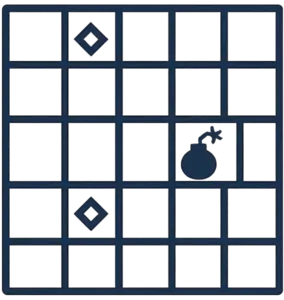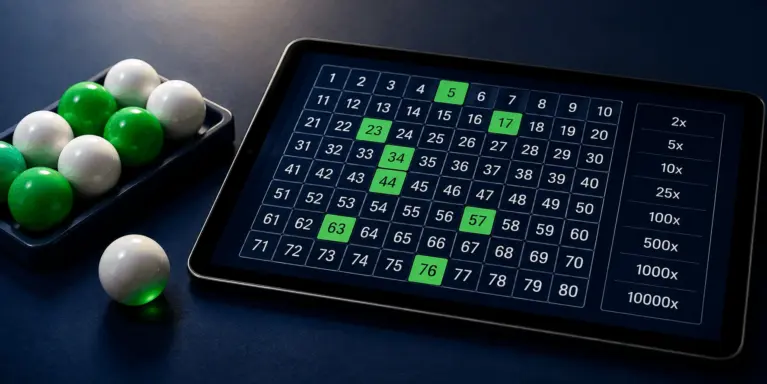
Keno gives you a grid of 40 numbers and lets you mark up to ten of them. Which ten you mark makes no difference whatsoever. The game counts how many of your numbers came up, not which ones you chose, so the careful pattern you built across the grid was decoration. Then it settles the whole thing in about two seconds.
Every player marking ten numbers wants all ten drawn and the top line of the paytable. That happens once in every 847,660,528 rounds. At one round per second, with no sleep and no bathroom breaks, you would wait around 27 years to expect it once. So the decisions worth making sit somewhere other than the numbers.
The lounge version sold that fantasy at a house edge of 20% to 35%, with minutes between draws. Online keno kept the grid and cut the price to low single digits. It also handed players controls the lounge never had. Risk modes rewrite the paytable, pick counts set your volatility, and every draw comes with a seed you can check afterwards. The casinos below run keno on those terms.
 Reviewed byNadia Winchester
Keno lobbies look identical until you open the paytable. Two casinos can run the same 40-number grid and pay noticeably different multipliers for the same eight hits. That gap only shows up when you compare the numbers side by side, which almost nobody does before depositing. The operators here publish their paytables in the game and run a working seed verifier. Stakes stay small enough to survive a cold run.
Availability counts too, because keno rarely gets the promotional treatment slots do. Casinos that build their own originals keep it in the lobby permanently. Sites leaning on third-party studios sometimes carry a keno title for a season and then quietly drop it.


New Casino
 Rated 82 of 100%
welcome bonus
550% up to €3540 + 400 FS


Exclusive Bonus
Rated 88 of 100%
welcome bonus
400% up to €4,000 + 400 FS

New Casino
Rated 83 of 100%
welcome bonus
250% up to €4,000 + 250 FS

New Casino
Rated 81 of 100%
welcome bonus
100% up to €5,000 + 175 FS


Crypto Casino
Rated 85 of 100%
welcome bonus
500% up to $10,000

Crypto Casino
Rated 89 of 100%
welcome bonus
100% up to €100,000
Crypto Casino
Rated 90 of 100%
welcome bonus
200% up to €100 + 150 FS

Crypto Casino
Rated 55 of 100%
welcome bonus
150% up to €1,300 + 100 FS

Crypto Casino
Rated 87 of 100%
welcome bonus
100% up to $1,500 + 150 FS

Crypto Casino
Rated 82 of 100%
welcome bonus
200% up to €2,000 + 500 FS

Crypto Casino
Rated 94 of 100%
welcome bonus
150% up to €4,000 + 400 FS

Rated 91 of 100%
welcome bonus
305% up to €1,200

Rated 89 of 100%
welcome bonus
305% up to €1,200
Crypto Casino
Rated 91 of 100%
welcome bonus
100% Deposit Bonus

Rated 91 of 100%
welcome bonus
200% Bonus up to €350
Rated 90 of 100%
welcome bonus
NO KYC REQUIRED

Rated 93 of 100%
welcome bonus
100% up to €100 + 100 FS


Hot Casino
Rated 95 of 100%
welcome bonus
243% up to €5,555 + 243 FS
Keno belongs to the lottery family and has never pretended otherwise. You mark numbers, the game draws numbers, and the overlap sets your payout. The originals version compresses that loop into roughly two seconds and runs it privately. Nobody shares your draw, and no clock decides when the next round starts.
The board holds every number from 1 to 40, and you mark between one and ten of them. The count you settle on shapes everything that follows. The game then draws ten numbers without replacement, so no number appears twice in a round.
The game calls your marked numbers spots and your matches hits, terms it carried over from the lounge years. A round with three spots and two hits pays exactly what the paytable assigns to that pairing. Nothing about the specific numbers changes the figure.
The paytable is a grid in its own right, holding a multiplier for every combination of spots played and hits landed. Mark one number and a single hit returns a small multiplier, a little under 4x on most builds. Mark ten and that same single hit returns nothing, because the paytable saves its money for the deeper matches. Reading it takes ten seconds and saves you from a lot of confused sessions.
Two settings move those multipliers around before you ever place a bet. Your pick count decides which row of the paytable applies, and the risk mode decides how brutally that row pays. Both get their own section below, since between them they account for almost everything keno does to a balance.
Keno carries more history than anything else in the originals lobby. Most of it predates server seeds by roughly two thousand years. The mechanic barely moved across that stretch. Players marked a selection, a draw took place somewhere else, and the overlap decided the payout.
Nearly every keno article opens with the same story. Legend credits a Han dynasty figure named Cheung Leung with inventing a numbers game around 200 BCE. He needed money for a war his citizens refused to fund, and the proceeds supposedly helped build the Great Wall. It makes for lovely copy, and no historical evidence supports any of it.
The timeline sits badly too, since the earliest walls went up under the Qin dynasty before the story even starts. The documented ancestor is baige piao, the white pigeon ticket. Players marked characters from the Thousand Character Classic, and results travelled out to surrounding villages by carrier pigeon. Accounts disagree on how many characters sat on a ticket, so treat any confident figure with suspicion.
The game reached the western United States in the 1800s with Chinese immigrants working the railroads and gold fields. Characters gave way to numbers along the way. Nevada then handed keno its strangest chapter, because state law allowed betting on horse races and banned lotteries outright.
Operators in Reno solved that in 1933 by printing horse names on the tickets and calling it Race-Horse Keno. The law changed in 1951, the horses went back to the stable, and the numbers returned.
Casino keno settled into a long, comfortable routine after that. Lounges ran an 80-number board, drew 20 balls every few minutes, and rarely returned more than 80%. Video keno cabinets did better, landing closer to the 88% to 95% range, though no screen ever mentioned it.
Crypto casinos rebuilt the game from the paytable outward. They shrank the board to 40 numbers and cut the draw to ten. Every bet now generates a private result from a seed pair the player can inspect afterwards.
Rounds settle instantly, autobet handles the repetition, and risk modes let players reshape the paytable themselves. The pigeons stayed retired.
Keno asks for very little setup, and the whole sequence takes under a minute the first time. The steps below cover a standard 40-number originals build, which is what the casinos above run.
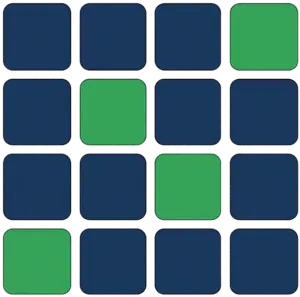
Find keno in the originals section of the lobby, sitting alongside dice, mines and plinko. Set your bet amount before touching the grid, since every multiplier applies to that figure. Small stakes suit the game, because keno pays in bursts and the gaps between them run long.
Most builds offer classic, low, medium and high settings. The one you choose rewrites every multiplier on the board before a single number gets marked. Low risk pays smaller amounts more often, while high risk strips out the minor wins and stacks everything onto deep matches.
Click any tile to mark it, and click it again to remove it. You can mark a single number or fill all ten, and the paytable redraws itself as your count changes. An auto-pick button will fill the board for you, producing exactly the same odds as ten minutes of careful deliberation.
The paytable sits beside the grid and lists what each hit count returns for your current setup. Check what one hit pays, then check how many hits you need before anything comes back at all. High risk settings can return nothing until you land a deep match, which is better to learn now than three blank rounds from now.
Confirm the bet and the game draws ten numbers, marking your hits on the grid as they land. Payouts credit straight away, and the multiplier appears next to the result. Turning off animations trims the round further, if two seconds feels indulgent.
Your numbers stay marked after each round, so repeating a bet costs one click. Autobet runs the same selection across a set number of rounds, with stop conditions for profit, loss and balance. Set those limits before you start rather than watching the balance drain and hoping it turns.
Risk mode is the least understood control in keno and the one that changes the most. It never touches the draw itself. Your chance of matching six of your ten numbers is identical in every mode, because the grid ignores the setting. What moves is the reward attached to that result.
Operators keep the overall return fairly level across the four settings, so the choice shapes volatility rather than value. The in-game RTP display still shifts slightly between modes on some builds, so give it a glance before settling in.
Classic and low risk spread the money across a wider set of outcomes. Shallow matches still return something, so a session produces regular small credits rather than long silences. The trade sits at the top end, where the biggest multipliers stay modest.
These settings suit longer sessions and smaller bankrolls. You get feedback often enough to track what the game is doing, and the balance moves in inches rather than lurches. Anyone testing a new casino’s keno build should start here, since you see more of the paytable faster.
Medium and high risk take the same total return and pile it onto the deep end of the board. Small matches stop paying entirely, and long stretches return nothing at all. When a deep match does land, the multiplier can climb into four figures on a full ten-spot ticket.
High risk turns keno into a lottery ticket with a two-second draw cycle. That works if you treat it as one, with a stake you have already written off and a session length you decided in advance. It works badly as a recovery plan, which is exactly when most players reach for it.
Side by side, the four settings break down like this.
| Risk Mode | Where the Money Sits | How Often It Pays | Top-End Shape | Suits |
|---|---|---|---|---|
| Classic | Spread across the widest range of hit counts | Most frequent returns of the four | Lowest ceiling | Learning a new build, long sessions |
| Low | Shallow matches still pay, with a slight tilt upward | Frequent | Modest ceiling | Small bankrolls and long autobet runs |
| Medium | Shallow matches thin out, deeper ones gain weight | Occasional | Noticeable jumps on deeper hits | Players wanting swings without extremes |
| High | Almost everything loaded onto the deepest matches | Rare | Four figures on a ten-spot ticket | Short sessions with a pre-set budget |
Pick count is the one keno decision with real weight behind it. It sets which row of the paytable applies, how often you see a return, and how far the top prize sits from reality. It does not improve your expected value, and no pick count ever has.
Every number on the board carries the same chance of appearing in the draw. Ten numbers come out of forty, so any single number you mark turns up 25% of the time. That figure holds for the first pick, the tenth pick and every one in between.
Because the draw takes numbers without replacement, the outcomes follow the hypergeometric distribution rather than simple multiplication. The practical version is easier to hold onto. Your average hit count is a quarter of whatever you marked. Mark four numbers and you land one on an average round. Mark ten and you land two and a half, which explains why ten-spot paytables treat three hits as nothing worth paying for.
A single marked number hits once every four rounds, which feels frequent until you notice how little it returns. Marking ten almost guarantees some overlap, since 96% of rounds produce at least one hit. The overlap is meaningless on its own, because a ten-spot ticket needs to run deep before the paytable wakes up.
Perfect tickets sit somewhere between rare and mythological. Matching all four of four picks lands roughly once in 435 rounds, which is achievable in an evening. Matching all eight of eight lands once in 1.7 million. The full ten arrives once in 847,660,528 rounds, and no amount of number selection moves that figure by a fraction.
The numbers below hold for any 40-number build, at any risk mode, at any casino.
| Spots Marked | Chance of at Least One Hit | Average Hits per Round | Odds of Matching Every Pick |
|---|---|---|---|
| 1 | 25.0% | 0.25 | 1 in 4 |
| 2 | 44.2% | 0.5 | 1 in 17 |
| 3 | 58.9% | 0.75 | 1 in 82 |
| 4 | 70.0% | 1.0 | 1 in 435 |
| 5 | 78.3% | 1.25 | 1 in 2,611 |
| 6 | 84.5% | 1.5 | 1 in 18,278 |
| 7 | 89.1% | 1.75 | 1 in 155,363 |
| 8 | 92.4% | 2.0 | 1 in 1,708,993 |
| 9 | 94.8% | 2.25 | 1 in 27,343,888 |
| 10 | 96.5% | 2.5 | 1 in 847,660,528 |
Fewer picks give you a game with regular feedback and small swings. More picks give you rarer results and a much longer tail. Both cost the same over time, so choose the version of the session you actually want to sit through.
Keno reaches online lobbies through two very different supply chains, and the version you open shapes the whole round. One comes from the casino itself. The other comes from a studio licensing the same game to hundreds of sites.
The originals build is the casino’s own work, coded in-house and hosted nowhere else. That explains why paytables differ from site to site while the grid stays the same. Forty numbers, ten drawn, ten spots and four risk modes now count as the standard shape.
A few operators stretch the format. Rainbet runs an extreme mode that widens the pool to 56 numbers, lengthening every outcome. The ceiling rises to match. House-built keno also carries the feature that matters most, since every round comes from a seed pair you can inspect.
Provider keno keeps the lounge format almost untouched. Pragmatic Play, IGT and a long list of smaller studios ship 80-number boards with 20 balls drawn. Paytables stay fixed, and no risk selector appears anywhere on the screen. Returns swing hard between these titles, and the figure hides in the game info panel.
Themed keno sits in the same family, adding bonus balls, multiplier draws and slot-style presentation. Amusnet, Wizard Games and Mobilots all publish versions along those lines. Bonus spot keno attaches a multiplier to the first drawn ball, so matching that one ball reshapes the round.
Live dealer keno is the genuine outlier. Ezugi streams a physical draw machine, pulls 20 numbers from 80 and caps selections at eight spots. Everyone plays the same draw, which brings back the shared timing the originals build deliberately removed.
| Version | Grid and Draw | Who Builds It | What Sets It Apart |
|---|---|---|---|
| Originals keno | 40 numbers, 10 drawn, 1 to 10 spots | The casino, in-house | Risk modes, seed verification, instant rounds |
| Extended-grid originals | 56 numbers, 10 drawn | Individual operators, such as Rainbet | Longer odds on every outcome, higher ceiling |
| Classic RNG keno | 80 numbers, 20 drawn | Pragmatic Play, IGT and similar studios | Fixed paytable, no risk selector, certified RNG |
| Themed keno titles | 80-number board with extras | Amusnet, Wizard Games, Mobilots and others | Bonus balls, multiplier draws, slot-style presentation |
| Live dealer keno | 80 numbers, 20 drawn, up to 8 spots | Ezugi | Physical draw machine, shared rounds, slower pace |
Keno hands the provably fair system more work than dice or limbo. Those games need a single number. Keno needs ten of them, none repeating, pulled from a board of forty.
The casino commits to a server seed before you bet and shows you its hash. You supply a client seed, which you can change whenever you like, and a nonce counts your bets upward. Combining the three produces a long stream of digits.
The game feeds that stream into a shuffle of all forty tiles and takes the first ten. No number can appear twice, because the shuffle gives each one a fixed position. Your selection never enters the calculation at all. The ten numbers locked in the moment you confirmed the bet, so marking the entire bottom row changes nothing about what comes out.
Checking a round takes about a minute and only needs doing once per casino.
A match confirms the draw came from the seeds rather than from a server watching your balance. Nobody runs that check every round, and nobody needs to. Running it once on a new casino tells you the panel does what it claims, which is the entire reason the panel exists.
House edge decides what keno costs you, and it varies wildly across versions of the same game. The same grid and the same ten balls can charge 2% at one casino and 30% at another.
Crypto casinos running house-built keno publish edges in the low single digits, roughly 1% to 4% depending on the operator. Those figures move a little between risk modes and pick counts. Multipliers get rounded to tidy numbers when a paytable is built, which leaves small gaps between rows. A build advertised at 99% RTP may return slightly less on certain setups. The game info panel spells that out if you open it.
Maximum payout caps deserve the same attention. A ten-spot paytable can advertise a multiplier in the thousands while the casino caps any single win well below it. Hitting a monster on a big stake and collecting the cap is a bad way to learn this.
The gap between originals keno and the lounge version is where the real money hides. Live keno lounges have run edges of 20% to 35%, and video keno cabinets landed somewhere around 5% to 12%. Originals keno charges a fraction of either.
Put that in cash and it stops being abstract. Play 500 rounds at $1 and you wager $500. At a 2% edge, that session costs you around $10 on average. At the 25% a keno lounge charges, the same 500 rounds cost $125. Identical game, identical numbers, twelve times the bill.
Keno attracts more folk wisdom than any other original, mostly because the grid looks like something you can outthink. You cannot, and the game is honest about it if you read the fairness panel.
Every round starts from a fresh shuffle with no memory of the one before. Some casinos show recent draws above the board, which does nothing except feed the pattern-hunting instinct. Numbers that appeared three rounds running are not warm, and numbers absent for fifty rounds are not owed anything. Randomness clusters, and clustering looks like meaning when you stare at it long enough.
Here is what makes no difference whatsoever to your odds.
The real levers sit elsewhere, and there are only three of them. Pick count sets your volatility, risk mode sets your payout shape, and stake size sets how long you last. None of the three improves expected value, so treat them as session design rather than strategy.
Progressions arrive on keno the way they arrive everywhere else, and they misfire here for a specific reason. Doubling after a loss assumes an even-money bet. A single-spot keno ticket hits one round in four and pays under 4x, so the recovery math never lines up cleanly.
Losing streaks arrive often enough to matter, since ten straight misses on a one-spot ticket happen 5.6% of the time. Deeper tickets stretch that further. On ten spots you land five or more hits once in 20 rounds, and six or more once in 135. An autobet script doubling through those gaps will find your balance limit long before it finds a win. Set stop-loss conditions instead, and let the script run flat.
None of this makes keno profitable, and anything promising otherwise is selling something. What it does is keep a session readable, which is the difference between playing keno and watching a balance evaporate at two seconds a round.
Every original in the lobby asks the same question in a different accent. How much variance do you want, and how quickly do you want to find out? Keno answers it entirely before the round starts, which sets it apart from half the games sitting next to it.
Plinko is the closest relative. Both games ask you to set risk and shape first, then release control completely and watch the result arrive. Rows in plinko do the job that spots do in keno, stretching or compressing the range of outcomes. Neither game gives you anything to do once the bet lands.
Dice and limbo run on a single number and a single threshold. The decision is sharper there, since one slider position covers your entire chance of winning. Keno spreads that same decision across ten tiles, which makes a round feel more detailed than it mathematically is. Watching three of your numbers land reads as progress, though the paytable may disagree.
Mines and the crash games sit on the other side of the divide. They hand you a decision while the round is still running, so cashing out becomes the skill the game tests. Keno has no exit. You confirm the bet, the shuffle happens, and the result stands whatever you think about it two seconds later.
Keno is also the only original in the lobby with a pre-digital ancestor. Plinko came from a television set and mines came from a minesweeper grid, while keno arrived carrying two thousand years of lottery tickets behind it.
Keno’s risk sits in its pace rather than its price. A low edge means little when the game runs 600 rounds in ten minutes. Autobet does the clicking, so the round count climbs while your attention drifts. Damage accumulates through volume, and volume is the one thing this format supplies effortlessly.
Set limits before the session rather than during it. Deposit caps, loss limits and session reminders live in the account settings of every licensed casino. They work far better than a decision made mid-drought. Cooling-off periods and self-exclusion tools sit in the same menu when a longer break makes sense.
Chasing losses turns a fast game into an expensive one. Treat a bad run as the end of a session rather than an argument to settle. Support is available if gambling stops feeling like entertainment. GamCare, BeGambleAware, Gamblers Anonymous and Gambling Therapy all offer free support and advice, and most jurisdictions run their own helpline alongside them. Reaching out early is easier than reaching out late, and our responsible gambling guide covers the available tools and regional resources in more detail.
Keno spent most of its life as the worst-value game in the building. The originals version fixed that without changing a single rule. The grid still does what it did in a Reno lounge, only faster and far cheaper.
Two decisions carry any weight. Pick count sets how often the game speaks to you, and risk mode decides how loudly. Everything else on that board is decoration, including the numbers themselves.
Mark a handful for a steady session with regular small returns and a balance that moves in inches. Fill all ten on high risk if you want a lottery ticket that resolves in two seconds. Budget it exactly like one. Neither route beats the house edge, and no route ever will. What changes is how much that edge costs and how clearly you can see it working. The casinos worth marking a grid at publish their paytables, show RTP per setting and run a working fairness panel.
House-built keno at crypto casinos runs on a provably fair system, so every draw comes from a server seed, your client seed and a nonce. You can verify any round afterwards and confirm the numbers came from those seeds. Provider keno uses certified RNG instead, which gets audited but cannot be checked round by round.
Pick count changes volatility, not value, so the honest answer depends on the session you want. Marking one to four numbers produces frequent small returns and gentle swings. Marking eight to ten produces long dry runs and rare, much larger payouts.
High risk carries the biggest multipliers, though it strips out almost every small payout to fund them. Operators keep the overall return close across all four modes, so the setting shapes how the money arrives rather than how much of it does. Classic and low return the most often.
Originals keno uses a 40-number board with ten drawn, while classic and lounge keno use 80 numbers with 20 drawn. The smaller grid shortens every outcome and pairs with far lower house edges. Selection limits differ too, with most originals builds capping you at ten spots.
No. Each round starts from an independent shuffle, so a number that appeared five times running carries the same 25% chance as one that has not shown up all night. Casinos display recent draws because players enjoy looking at them, not because the history predicts anything.
Matching all ten spots pays the top multiplier, which reaches four figures on some builds. That result lands once in 847,660,528 rounds. Maximum win caps apply at every casino, so check the game rules before assuming a headline multiplier pays out in full.
The Author
The Author
Slots and News Reviewer