

















Industry News

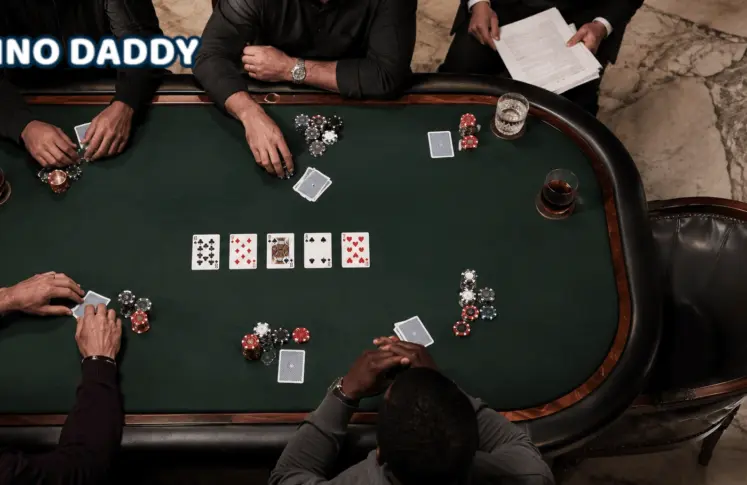
Poker without the guy across the table who’s been staring at you for five minutes like he can read your soul. That’s live poker at an online casino in a nutshell. You sit down, the dealer deals, and the only opponent you need to worry about is the house.
No bluffing required, because the dealer plays the exact same way every single time, rain or shine, good mood or bad. Your edge comes from knowing when the math favors a raise and when it’s begging you to fold. That’s a different kind of skill than a home game, but it’s a skill nonetheless, and it pays off the moment you actually learn it.
Casino Hold’em, Ultimate Texas Hold’em, Three Card Poker, Caribbean Stud, Texas Hold’em Bonus Poker: five games, one shared last name, wildly different personalities. Some reward patience, some reward speed, and one of them will happily punish you for raising blind on a bad Tuesday. We’re covering the rules, the real strategy, the honest math behind every one of them, and where to actually find the best live poker games.
 Reviewed byNadia Winchester

New Casino
 Rated 84 of 100%
welcome bonus
100% up to €100

New Casino
Rated 82 of 100%
welcome bonus
550% up to €3540 + 400 FS


Exclusive Bonus
Rated 88 of 100%
welcome bonus
400% up to €4,000 + 400 FS

New Casino
Rated 83 of 100%
welcome bonus
250% up to €4,000 + 250 FS

New Casino
Rated 81 of 100%
welcome bonus
100% up to €5,000 + 175 FS


Crypto Casino
Rated 85 of 100%
welcome bonus
500% up to $10,000

Crypto Casino
Rated 89 of 100%
welcome bonus
100% up to €100,000

Crypto Casino
Rated 90 of 100%
welcome bonus
200% up to €100 + 150 FS

Crypto Casino
Rated 55 of 100%
welcome bonus
150% up to €1,300 + 100 FS

Crypto Casino
Rated 87 of 100%
welcome bonus
100% up to $1,500 + 150 FS

Crypto Casino
Rated 82 of 100%
welcome bonus
200% up to €2,000 + 500 FS

Crypto Casino
Rated 94 of 100%
welcome bonus
150% up to €4,000 + 400 FS

Rated 91 of 100%
welcome bonus
305% up to €1,200

Rated 89 of 100%
welcome bonus
305% up to €1,200
Crypto Casino
Rated 91 of 100%
welcome bonus
100% Deposit Bonus

Rated 91 of 100%
welcome bonus
200% Bonus up to €350

Rated 90 of 100%
welcome bonus
NO KYC REQUIRED

Rated 93 of 100%
welcome bonus
100% up to €100 + 100 FS
Every live poker table runs on the same core setup, even though the games themselves play out very differently. A real dealer, streamed from a studio, deals from a physical deck using a shoe or shuffler, and card-recognition cameras read each card the moment it lands. That feed updates your screen in sync with the actual cards on the table, so nothing about your hand comes from a random number generator pretending to be a deck.
The dealer-vs-player setup is the same across every provider you’ll see reviewed here, whether it’s Evolution, Ezugi, Pragmatic Play, or Playtech. Other seats at the table might be filled with real players too, but their hands never interact with yours. Everyone is playing their own private round against the house at the same time, which is why a table can hold dozens of players without anyone stepping on anyone else’s cards.
What separates one poker variant from another comes down to three things:
Every casino poker variant sets a minimum hand strength the dealer needs before your raise bet gets compared at full value. Miss that threshold, and the raise often pushes back to you untouched, win or lose.
A dealer who only needs a pair of 4s to qualify, like in Casino Hold’em, ends up qualifying on most hands. A dealer who needs Ace-King high, like in Caribbean Stud, folds short far more often. That single number shapes almost everything about a game’s house edge, its pace, and how forgiving it feels to a new player. It’s also why two games that look nearly identical on the surface can carry very different math underneath, so knowing this rule cold matters more than memorizing any single hand ranking.
| Variant | Cards Used | Dealer Qualifies With | House Edge (Optimal Play) | Best For |
|---|---|---|---|---|
| Casino Hold’em | 2 hole + 5 community | Pair of 4s or better | ~2.16% | Fast pace, forgiving qualification rule |
| Ultimate Texas Hold’em | 2 hole + 5 community | Any pair or better | ~2.2% on Ante and Play combined | Players who want real strategic depth |
| Three Card Poker | 3 cards, no community | Queen-high or better | ~2% to 3.37% depending on bet mix | Speed and simplicity |
| Caribbean Stud Poker | 5 cards, no community | Ace-King or better | ~2.5% to 5.2% depending on metric | High-variance players chasing big payouts |
| Texas Hold’em Bonus Poker | 2 hole + 5 community | Pair or better | Varies by studio paytable | Familiar Hold’em feel at house-banked pace |
A quick note on that house edge column, because the ranges aren’t sloppy math. Poker variants get quoted two different ways depending on what’s being measured. House edge per initial bet and house edge per total wagered can look like completely different games even though they describe the same table. That’s because raise sizes swing wildly between variants, so a flat percentage without context tells you less than it seems to.
Take Ultimate Texas Hold’em as an example. Its house edge sits around 2.2% relative to the Ante bet alone, but drop that same math against your total wager across the whole hand, including any raise, and it falls closer to 0.5%. Both numbers are correct. They’re just measuring different things, and we’ll be specific about which one applies in each variant’s own section below rather than leaving you to guess.
Casino Hold’em is the poker variant most players meet first, and there’s a reason for that. It plays fast, the rules map almost exactly onto Texas Hold’em, and the dealer’s forgiving qualification rule means you’re rarely sitting through hand after hand of nothing happening.
Every round starts with an Ante bet. The dealer gives you two hole cards, deals two cards face down for themselves, and lays out three community cards, known as the flop, face up on the table. From there you have one decision: fold and give up your Ante, or call by matching your Ante with a Call bet.
If you call, the dealer reveals the turn and river cards, then flips their own hole cards. Your best five-card hand, built from your two hole cards plus any combination of the five community cards, gets compared against the dealer’s best five.
The dealer needs just a pair of 4s to qualify. Compare that to Caribbean Stud’s Ace-King requirement, and you’ll see why Casino Hold’em qualifies on the vast majority of hands. That matters because a qualifying dealer means full-value showdowns almost every time you call, rather than a wave of pushes that leave you feeling like nothing actually happened.
If the dealer doesn’t qualify, your Ante pays out at 1:1 regardless of your hand strength, and your Call bet pushes back to you untouched.
| Your Hand | Ante Payout |
|---|---|
| Royal Flush | 100 to 1 |
| Straight Flush | 20 to 1 |
| Four of a Kind | 10 to 1 |
| Full House | 3 to 1 |
| Flush | 2 to 1 |
| Straight or Lower | 1 to 1 |
Your Call bet pays even money whenever your hand beats a qualifying dealer, on top of whatever the Ante table pays.
Here’s the part most guides skip. Casino Hold’em doesn’t have a clean shorthand like Three Card Poker’s Q-6-4 rule. Optimal play depends on the interaction between your two hole cards and the three flop cards, and that interaction is too complex to compress into a single memorable phrase.
What we can tell you is the shape of correct play. Optimal strategy calls for raising on roughly 82% of hands and folding the remaining 18%, mostly hands with two low, disconnected hole cards and little chance of improving to a straight or flush. Played this way, the house edge sits at 2.16% per initial bet.
A simplified version gets you most of the way there without a calculator in hand. Raise with:
Fold everything else, with a couple of narrow exceptions around low connected cards like 2-3 through 2-7 and 3-4 through 3-7, unless those give you a shot at a straight. This simplified approach costs you barely anything, sitting only about 0.0025% above fully optimal play.
Casino Hold’em typically offers an optional Bonus bet, sometimes labeled AA Bonus, paying out based purely on your two hole cards and the three flop cards regardless of how the main hand resolves. Some Evolution tables also carry a Jumbo 7 Jackpot, a progressive side bet chasing a seven-card straight flush.
Treat both as entertainment rather than value plays. Side bets in Casino Hold’em consistently carry a steeper house edge than the main game, and the AA Bonus in particular can climb well into double digits depending on the pay table your casino uses.
Casino Hold’em runs at nearly every major live casino, since it’s one of the most widely distributed poker titles across providers. Evolution streams its version from studios including Riga, Latvia, while Ezugi, Pragmatic Play, and Playtech all run their own builds under the same core rules.
If Casino Hold’em is the speed round, Ultimate Texas Hold’em is the strategy exam. It borrows more directly from real Texas Hold’em than any other variant on this page, and it rewards players who actually study it with one of the lowest house edges in the entire casino.
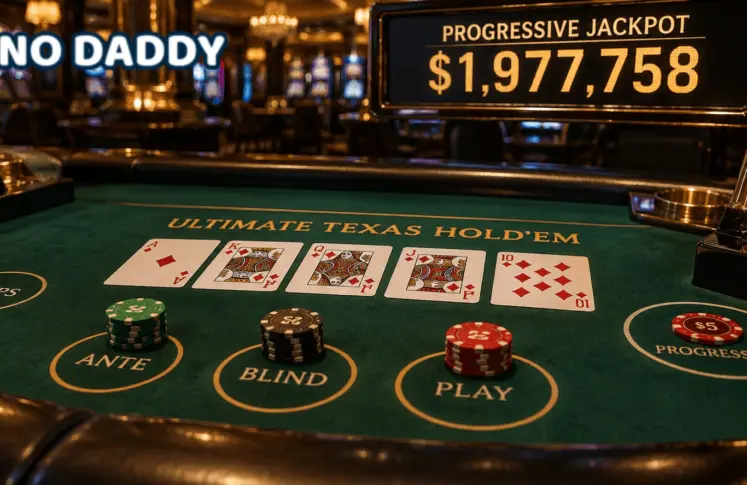
You start by placing an Ante bet, which comes with a mandatory Blind bet of equal size. An optional Trips bet sits alongside it if you want extra action. The dealer deals two hole cards to you and two face down to themselves, then the hand moves through three separate betting windows.
Before the flop, you can raise 3x or 4x your Ante, or check and wait. After the flop lands, you can raise 2x, or check again. Once the turn and river appear, your final choice comes down to a mandatory 1x Play bet or folding outright. You only get to raise once per hand, so the earlier you commit, the more you’re allowed to risk and win.
The bar here sits at any pair or better. That’s tighter than Casino Hold’em’s pair of 4s, but still loose enough that most hands see a genuine showdown rather than an automatic push.
This is where Ultimate Texas Hold’em separates itself from every other game on this page. The gap between playing correctly and playing on instinct is enormous. Optimal strategy brings the house edge down to around 2.2% on the combined Ante and Play bets. Blind 4x raises on every hand, regardless of strength, can push that edge as high as 14%.
Before the flop, raise the full 4x with any of the following:
After the flop, a 2x raise makes sense with two pair or better, four cards to a flush, an open-ended straight draw with an overcard, or a gutshot with two overcards. If you checked through both of those windows, the river forces your hand. Bet the mandatory 1x with any pair or better, and fold everything weaker.
That gap between 2.2% and 14% is bigger than almost any other casino table game shows between optimal and careless play, which makes this the one variant on this page where learning the strategy genuinely pays for itself within a single session.
Your Blind bet only pays out when you win with a straight or better. Anything weaker than that just pushes, even on a win, so don’t expect the Blind to carry its weight on ordinary hands.
| Winning Hand | Blind Bet Payout |
|---|---|
| Royal Flush | 500 to 1 |
| Straight Flush | 50 to 1 |
| Four of a Kind | 10 to 1 |
| Full House | 3 to 1 |
| Flush | 3 to 2 |
| Straight | 1 to 1 |
Trips pays independently of the dealer’s hand, based purely on the strength of your final five-card hand. Three of a kind or better triggers a payout, and pay tables generally range from 3:1 on trips up to 50:1 for a royal flush. It sounds tempting, but the house edge on Trips regularly climbs past 3%, and can reach as high as 6% depending on the specific pay table your table runs. If you play it, keep the stake small and separate from your core bankroll.
Evolution streams this under an exclusive partnership with Scientific Games, and it’s become one of the most widely distributed poker variants across live casino platforms. Ezugi, Pragmatic Play, and Playtech all offer their own builds too, though Evolution’s remains the version you’ll see recommended most often for its polish and table variety.
 Three Card Poker: Speed and Simplicity Done Right
Three Card Poker strips casino poker down to its bare essentials. No community cards, no multi-stage betting, just three cards and a single decision. That simplicity is exactly why it became a casino floor staple within a few years of its 1994 invention by British game designer Derek Webb.
You place an Ante bet, an optional Pair Plus side bet, or both. The dealer deals three cards to you and three to themselves. You look at your hand and make one choice: place a Play bet equal to your Ante, or fold and forfeit the Ante.
There’s no drawing, no community cards, and no second chance to improve your hand. What you’re dealt is what you play.
The dealer needs Queen-high or better to qualify. Fall short of that, and your Ante still pays even money regardless of what you’re holding, while your Play bet pushes back untouched.
This trips up more players than anything else in the game. With only three cards, a straight actually outranks a flush, the reverse of standard five-card poker. It’s simply harder to make three cards run consecutively than it is to match three suits, so the rankings flip to reflect that.
From strongest to weakest: Straight Flush, Three of a Kind, Straight, Flush, Pair, High Card.
Three Card Poker’s biggest advantage over Casino Hold’em is that it actually has a clean, memorable strategy rule. Play any hand containing at least a Queen, a 6, and a 4, or better. Fold everything weaker.
That single rule, known as the Q-6-4 Rule, brings the combined Ante and Play house edge down to roughly 2.01%, compared to 3.37% if you play every hand regardless of strength. In practice, this means:
Some players sharpen this further by watching other hands at the table. In live settings, you can sometimes see neighboring players’ cards, and if a lot of high cards are already out, the dealer’s chances of qualifying drop. That knowledge can justify playing a hand slightly below Q-6-4 in specific situations, though the edge gained is small.
Land a straight or better, and you get paid an Ante Bonus regardless of whether you beat the dealer. That’s one of the friendlier quirks in casino poker, since it means even a loss against a strong dealer hand can still put money in your pocket if your own hand was good enough.
| Your Hand | Ante Bonus Payout |
|---|---|
| Straight Flush | 5 to 1 |
| Three of a Kind | 4 to 1 |
| Straight | 1 to 1 |
Pair Plus pays based purely on your own three cards, win or lose against the dealer. Land a pair or better, and you get paid, no comparison required.
The catch is that Pair Plus carries a noticeably higher house edge than the Ante and Play combination, usually landing around 2.32% to 7.28% depending on the pay table your casino uses. Dealers love to talk up Pair Plus because of its big headline payouts, mini royals included, but the math consistently favors putting your money on Ante and Play instead. If you can’t resist the temptation, keep the Pair Plus stake as small as your table allows.
A less common third side bet, the 6 Card Bonus pays based on the best five-card hand you can build by combining your three cards with the dealer’s three. It’s a bigger swing bet than Pair Plus, with correspondingly bigger potential payouts and a steeper house edge to match.
Three Card Poker is one of the most widely distributed live poker titles in the industry. Evolution’s version, built in partnership with Scientific Games, sits alongside Ezugi’s own build, and both show up across the vast majority of live casino platforms you’ll come across.
Caribbean Stud Poker rewards patience and punishes greed in equal measure. It plays a full five-card hand with no drawing, no community cards, and a single raise-or-fold decision. That simplicity hides one of the steepest house edges on this page if you play it wrong, and one of the more reasonable ones if you play it right.
You place an Ante bet, plus an optional $1 Progressive Jackpot side bet if your table offers one. The dealer deals five cards to you and five to themselves, but only one dealer card stays face up. You look at your hand, compare it to that single visible card, and decide to raise or fold.
Raising costs exactly 2x your Ante, bringing your total bet to 3x the original stake. Fold, and you lose the Ante outright with no further action.
The dealer needs Ace-King or better to qualify, the strictest bar of any variant on this page. That single rule shapes almost everything about how this game feels at the table. Dealers qualify a little over 53% of the time, so more than four hands in ten end without a genuine showdown.
If the dealer doesn’t qualify, your Ante pays even money and your raise bet pushes back untouched, regardless of what you’re holding.
Caribbean Stud’s full optimal strategy is genuinely complex, closer to a lookup table than a memorable phrase. But a simplified version gets you within a hair of optimal play, and it fits in two sentences:
Raise with any pair or better. Fold everything weaker than Ace-King-Jack-8-3.
That’s the entire decision tree for roughly 95% of hands you’ll see. The only real gray area sits around Ace-King hands specifically, where your correct play depends partly on the dealer’s single visible card. If your Ace-King hand shares a matching card with the dealer’s upcard, or the dealer’s upcard is an Ace or King itself, raising becomes correct more often than folding.
Played with fully optimal strategy, including that Ace-King nuance, the house edge sits at 5.224% measured against your initial Ante. That number looks rough next to blackjack, but it tells only part of the story.
Because you raise on roughly 52% of hands, your average total wager per hand runs about 2.045 times your Ante. Measuring your expected loss against that larger average wager, rather than just the initial Ante, gives what’s called the element of risk, and that figure drops to around 2.56%.
Both numbers are mathematically correct. They’re just answering different questions. The 5.224% tells you your expected loss relative to your starting bet. The 2.56% tells you your expected loss relative to everything you actually put on the table across a full hand. For comparing Caribbean Stud honestly against other games, the element of risk is the more useful number.
| Your Hand | Raise Bet Payout |
|---|---|
| Royal Flush | 100 to 1 |
| Straight Flush | 50 to 1 |
| Four of a Kind | 20 to 1 |
| Full House | 7 to 1 |
| Flush | 5 to 1 |
| Straight | 4 to 1 |
| Three of a Kind or Lower | 1 to 1 |
The Progressive Jackpot side bet pays out on your five-card hand alone, independent of the dealer entirely. Land a flush or better, and you collect a piece of the jackpot meter, with a royal flush typically claiming the full pool.
The math here is rough. This side bet carries a house edge around 26%, dramatically steeper than the main game’s. A royal flush lands roughly once in every 649,740 hands, so unless the jackpot has grown unusually large relative to the bet size, the Progressive Jackpot functions purely as an entertainment purchase rather than anything resembling a value bet. Some live tables also run a 5+1 Bonus variant instead, paying based on your five cards combined with just the dealer’s single visible card, which carries its own steep house edge north of 8%.
Caribbean Stud Poker isn’t as universally available as Casino Hold’em or Three Card Poker, but Evolution runs a live version, and it shows up at select operators that carry the fuller Evolution poker suite. If your casino of choice doesn’t list it, it’s worth checking under a “Poker” or “Table Games” filter specifically, since it doesn’t always get top billing in live lobbies the way the more common titles do.
Texas Hold’em Bonus Poker rounds out the lineup with a game built for players who already know multiplayer Texas Hold’em and want that exact structure without needing eight strangers at the table. It borrows the traditional flow closely, then bolts on a house-banked payout system and a couple of side bets to keep things moving fast.
You place a main bet to start. The dealer deals two hole cards to you and follows the standard Hold’em community card sequence: three-card flop, turn, then river. Your best five-card hand, built from your two hole cards plus any of the five community cards, gets compared directly against the dealer’s.
Because there’s no separate raise-or-fold decision layered on top like in Ultimate Texas Hold’em, the pace runs closer to Casino Hold’em. You commit your stake upfront, then watch the community cards land.
The dealer needs a pair or better to qualify. That sits between Casino Hold’em’s loose pair-of-4s bar and Caribbean Stud’s strict Ace-King requirement, so qualification happens often enough to keep showdowns frequent without making every hand feel automatic.
Unlike the other four variants on this page, Texas Hold’em Bonus Poker doesn’t run on one universal pay table across every studio. Evolution, built through a partnership with Games Marketing, uses its own structure. Other providers running their own builds of the game can post different payouts for the same winning hands.
That means the house edge shifts depending on exactly which casino and which studio you’re playing at. Before sitting down, check the posted pay table on the table itself. A full house paying 3 to 1 at one casino might pay only 2 to 1 somewhere else, and that difference moves the underlying math more than most players realize.
Because this game skips the multi-stage raise structure of Ultimate Texas Hold’em, your strategic decisions come down mainly to your side bet choices rather than in-hand raise timing. The main bet plays out automatically once you’re committed, so your only real leverage is deciding whether the optional bonus wagers are worth adding to your stake.
As with every variant on this page, side bets carry a noticeably steeper house edge than the main game. Treat them as a smaller, separate part of your bankroll rather than a core part of your strategy.
This one is the least universally available of the five variants covered here. Evolution carries it as part of its wider live poker portfolio, but not every operator lists it, and you won’t find it at the volume of casinos that carry Casino Hold’em or Three Card Poker. If you specifically want to play it, check the game lobby’s poker filter directly rather than assuming it’s there.
Every game on this page ranks hands the same way, with one exception worth flagging early. Three Card Poker flips the order of straights and flushes, since a three-card straight is statistically harder to make than a three-card flush. Everything else on this page uses the standard five-card ranking below.
| Rank | Hand | What It Takes |
|---|---|---|
| 1 | Royal Flush | A, K, Q, J, 10, all the same suit |
| 2 | Straight Flush | Five consecutive cards, same suit |
| 3 | Four of a Kind | Four cards of the same rank |
| 4 | Full House | Three of a kind plus a pair |
| 5 | Flush | Five cards, same suit, any order |
| 6 | Straight | Five consecutive cards, mixed suits |
| 7 | Three of a Kind | Three cards of the same rank |
| 8 | Two Pair | Two separate pairs |
| 9 | Pair | Two cards of the same rank |
| 10 | High Card | No matching cards or sequence |
Because Three Card Poker only deals three cards, the probability math changes completely. A straight becomes harder to hit than a flush, so the rankings adjust to reward the rarer hand. From strongest to weakest in Three Card Poker specifically: Straight Flush, Three of a Kind, Straight, Flush, Pair, High Card.
If you’re moving between Three Card Poker and any of the other four variants in the same session, that flip is worth keeping front of mind. It’s a small detail, but forgetting it mid-hand is an easy way to misjudge your own strength at exactly the wrong moment.
The poker table you sit down at depends heavily on which studio built it, and the differences go beyond cosmetics. Rules, side bets, and even qualification thresholds can shift from one provider to the next, so knowing who’s dealing matters as much as knowing the game.
Evolution dominates live poker the way it dominates most of the live casino floor. Its portfolio covers Casino Hold’em, Ultimate Texas Hold’em, Three Card Poker, Caribbean Stud Poker, and Texas Hold’em Bonus Poker, plus a 2 Hand Casino Hold’em variant that lets you play two hands against the dealer at once. Several of these titles exist through exclusive partnerships. Ultimate Texas Hold’em and Three Card Poker come through a deal with Scientific Games, while Texas Hold’em Bonus Poker runs through Games Marketing.
That exclusivity matters for players. If a casino runs on Evolution, it almost certainly carries Casino Hold’em as a baseline offering, since it’s one of the most widely distributed titles in the company’s entire catalogue. Rarer titles like the Jumbo 7 Jackpot side bet on Casino Hold’em show up at fewer operators, so availability narrows as you move down the list toward the more specialized games.
Ezugi operates under the Evolution umbrella since the 2021 acquisition, but it still runs its own dedicated studios and its own build of these games. Its poker lineup centers on Casino Hold’em and Three Card Poker, streamed from a separate network of studios spanning Europe, Asia, and Latin America.
The practical difference for players comes down to presentation rather than rules. Ezugi’s tables tend to run a leaner interface than Evolution’s flagship builds, which suits players who want speed over spectacle. Both brands ultimately answer to the same parent company now, but they still get marketed and licensed as separate products at most casinos.
Pragmatic Play is the newest name in this space, having launched its first live poker titles in June 2025. That debut brought Casino Hold’em alongside Jacks or Better Draw Poker, a title built around holding or discarding any number of your five starting cards to chase the best final hand.
Because this is such a recent addition to Pragmatic Play’s live catalogue, availability still lags behind Evolution and Ezugi at most operators. Worth checking directly with any casino you’re considering if Pragmatic Play’s poker specifically is what you’re after, since it hasn’t rolled out everywhere yet.
Playtech runs its own build of Casino Hold’em, distributed under the name Casino Hold’em Open at some operators. The core difference here isn’t cosmetic. In the Open variant, player hole cards get dealt face up rather than face down, which changes the information available to everyone at the table before betting decisions get made.
Playtech’s live poker footprint is smaller than Evolution’s, but it remains a fixture at operators who run Playtech as their primary or secondary live casino provider.
Two tables can share a name and still play differently depending on the studio behind them. A Casino Hold’em table from Evolution, Ezugi, Playtech, and Pragmatic Play can carry different side bets, different qualification presentation, and in Playtech’s case, an entirely different information structure. Always check the specific rules displayed on the table itself before assuming your strategy from one provider carries over perfectly to another.
Live poker suits mobile better than most live casino games. The single-decision structure of games like Casino Hold’em and Three Card Poker fits a smaller screen naturally, without the crowded betting grid you get with something like roulette.
A few things worth knowing before you play on your phone:
Industry News

Industry News
Live poker plays fast, and that pace can quietly encourage bigger bets than you’d normally place. Multi-stage games like Ultimate Texas Hold’em also let the size of your bet grow across a single hand, which makes it easy to lose track of your total spend. A few things worth keeping in mind before you sit down:
If gambling stops feeling like entertainment, support is available. Organizations like GamCare, BeGambleAware, and the National Council on Problem Gambling offer free, confidential help.
Live poker isn’t one game wearing five different outfits. It’s five genuinely different skill sets that happen to share a family name and a deck of cards. Casino Hold’em rewards speed and a loose qualification rule. Ultimate Texas Hold’em rewards the player willing to actually study a strategy chart. Three Card Poker rewards simplicity done well. Caribbean Stud rewards patience against a strict dealer bar. Texas Hold’em Bonus Poker rewards familiarity with real Hold’em structure.
The one thing every variant on this page shares is this: bluffing does nothing against a dealer running the same rule on every hand. Your edge comes entirely from knowing the math, and that math changes completely depending on which table you sit down at.
Pick the variant that matches how you like to play, learn its specific strategy rather than borrowing one from a different game, and treat every side bet on this page as entertainment spending rather than value spending. Do that, and you’ll walk into any live poker table with a real understanding of what you’re actually up against.
No. Live poker at a casino means you against the dealer, using real cards streamed from a studio. Poker rooms like PokerStars or WSOP put you against other real players in peer-to-peer games, dealt by software rather than a live dealer.
Ultimate Texas Hold’em, when played with correct strategy. Its house edge sits around 2.2% on the combined Ante and Play bets, dropping closer to 0.5% when measured against the total Ante plus Blind wager.
No. The dealer follows the same qualification rule on every single hand, so bluffing has no effect. Your results depend entirely on playing correct strategy for whichever variant you’re at.
With only three cards, a straight is statistically harder to make than a flush. The rankings flip to reflect that, unlike standard five-card poker where a flush beats a straight.
Generally no. Every side bet covered on this page, from Trips to Pair Plus to the Progressive Jackpot, carries a steeper house edge than the main game. Treat them as optional entertainment rather than a core part of your strategy.
Yes. Casino Hold’em and Three Card Poker in particular work well on mobile thanks to their single-decision structure. A stable connection matters, since these games run on genuine video streams rather than lightweight animations.
The Author
The Author
Slots and News Reviewer