







Industry News
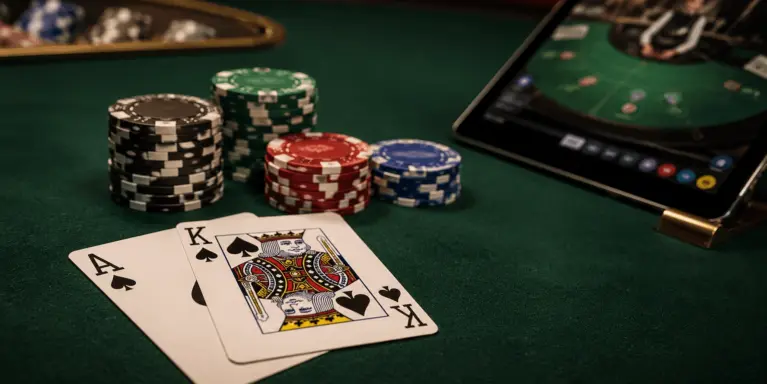
Live blackjack is where online casino gaming stops feeling like a slot machine and starts feeling like an actual casino. A real dealer shuffles a real shoe, streams it straight to your screen, and waits for you to make the call. No random number generator decides your fate behind the curtain. That’s the whole point of live dealer blackjack.
It’s also the game most players graduate to once they get bored of guessing. Blackjack rewards knowing what you’re doing. Basic strategy is mathematically solved, the house edge is one of the lowest on the casino floor, and every decision you make actually matters.
This page covers everything that goes into playing online live blackjack well: how the tables work, the rules in full (not the ten-second version), basic strategy you can actually use, every major variant worth knowing, side bets, and whether card counting has any place at a live table. Below, you’ll find our current pick of the best live blackjack casinos.
 Reviewed byNadia Winchester

New Casino
 Rated 84 of 100%
welcome bonus
100% up to €100

New Casino
Rated 82 of 100%
welcome bonus
550% up to €3540 + 400 FS


Exclusive Bonus
Rated 88 of 100%
welcome bonus
400% up to €4,000 + 400 FS

New Casino
Rated 83 of 100%
welcome bonus
250% up to €4,000 + 250 FS

New Casino
Rated 81 of 100%
welcome bonus
100% up to €5,000 + 175 FS


Crypto Casino
Rated 85 of 100%
welcome bonus
500% up to $10,000

Crypto Casino
Rated 89 of 100%
welcome bonus
100% up to €100,000

Crypto Casino
Rated 90 of 100%
welcome bonus
200% up to €100 + 150 FS

Crypto Casino
Rated 55 of 100%
welcome bonus
150% up to €1,300 + 100 FS

Crypto Casino
Rated 87 of 100%
welcome bonus
100% up to $1,500 + 150 FS

Crypto Casino
Rated 82 of 100%
welcome bonus
200% up to €2,000 + 500 FS

Crypto Casino
Rated 94 of 100%
welcome bonus
150% up to €4,000 + 400 FS

Rated 91 of 100%
welcome bonus
305% up to €1,200

Rated 89 of 100%
welcome bonus
305% up to €1,200

Crypto Casino
Rated 91 of 100%
welcome bonus
100% Deposit Bonus

Rated 91 of 100%
welcome bonus
200% Bonus up to €350

Rated 90 of 100%
welcome bonus
NO KYC REQUIRED

Rated 93 of 100%
welcome bonus
100% up to €100 + 100 FS
A live blackjack table isn’t a green-screen actor pretending to deal cards. It’s a real casino floor (or a purpose-built studio dressed to look like one), a real dealer, and a real shoe of cards being shuffled and dealt in front of a bank of cameras.
Here’s the part most players never think about: how does the platform know what card just landed? Studios use one of two methods. Some tables use cards with a tiny embedded barcode or RFID chip that gets scanned as the dealer places it down. Others skip special cards entirely and rely on computer vision (OCR) cameras that read the printed rank and suit directly off an ordinary card. Either way, that data gets pushed to your screen in real time, so the digital interface showing your hand total matches the same physical card the dealer just placed down. No manual entry, no delay.
The dealer runs the game exactly like they would on a casino floor. They shuffle, deal, take your hit-or-stand calls through the chat or button interface, and pay out based on the same rules a physical table would use. The only difference is you’re doing it from your couch instead of a pit.
This is also why live blackjack feels different from RNG blackjack, even though the math underneath is similar. There’s pacing, a real human making small talk, and the psychological weight of watching an actual card get pulled from an actual shoe instead of a screen generating a result instantly.
The goal in blackjack is simple: get closer to 21 than the dealer without going over. But the ten-second explanation most guides give you skips the parts that actually decide whether you win or lose money. Here's a full hand, rule by rule, including the details that separate a player who knows what they're doing from one who's just clicking buttons.

Betting closes once the dealer starts the round, so decide your stake before the shoe moves. Live tables display minimum and maximum limits clearly, and these vary a lot between standard tables and VIP rooms. Most platforms also let you play multiple hands at once if the table has open seats, which speeds up your session but multiplies your exposure, so it’s worth thinking through your bankroll before you stack bets across hands.
You get two cards face up. The dealer gets one face up (the “upcard”) and one face down (the “hole card”). Everything about your strategy for the rest of the hand depends on that upcard, since it tells you how strong the dealer’s position likely is before you make a single decision.
If your first two cards total 21 (an ace plus any 10-value card), that’s a natural blackjack. Unless the dealer also has one, you win instantly, typically paid at 3:2 or 6:5 depending on the table. If both you and the dealer have blackjack, the hand pushes and your original bet returns to you.
If the dealer’s upcard is an ace, you’ll be offered insurance, a side bet that the dealer has blackjack underneath. It pays 2:1 if the dealer does. Skip it. The math on insurance is bad for the player almost every time, regardless of what your own hand looks like, and it exists mainly to shave a little extra edge for the house.
Take another card if your total is low enough that going bust isn’t a real risk yet. You can hit as many times as you want until you stand or bust, and each hit brings a new card that updates your total instantly on screen. Click or tap “hit” and the dealer deals your next card from the live shoe the same way they would to a player sitting at a physical table.
Keep your current total and end your turn. You’ll do this once your hand is strong enough that hitting risks going over 21 more than it helps you. There’s no rule forcing you to reach any specific number. You’re standing on whatever total gives you the best odds against the dealer’s upcard.
Double your original bet in exchange for exactly one more card, then your turn ends automatically. This is a power move for strong starting hands like 10 or 11, where the odds favor you getting a card that puts you in a great position. Some tables also allow doubling after a split, which opens up more of these high-value moments if you catch a pair early.
If your two cards are a matching pair, you can split them into two separate hands, each with its own bet equal to your original wager. You then play each hand independently, hitting, standing, or doubling on each as if it were its own hand from scratch. Splitting aces usually comes with a catch: most tables only let you take one card per split ace, so plan for that before you split a pair of them.
Give up half your bet and end the hand immediately. Not every live table offers this, but when it’s available, it’s the right call on genuinely weak hands against a strong dealer upcard, since cutting your losses in half beats playing out a hand that basic strategy already says you’ll likely lose.
Once every player at the table has acted, the dealer reveals the hole card and plays according to fixed rules; they must hit until reaching at least 17. This part of the hand is entirely mechanical. The dealer has no choices to make and simply follows the table’s programmed rule set until their hand is complete.
Hands are settled against the dealer’s final total. Beat it without busting and you win. Tie and your bet pushes back to you. Bust, or finish lower than the dealer, and the bet is lost. Winnings land in your balance within seconds of the hand closing, since the payout is calculated automatically the moment the dealer’s final total registers.
One rule buried in step 10 matters more than it looks: whether the dealer stands on a soft 17 (an ace plus a 6) or is required to hit it. Dealer-hits-soft-17 tables carry a slightly higher house edge than dealer-stands-soft-17 tables. It’s a small difference per hand, but it adds up over a long session, so it’s worth checking the table rules panel before you sit down.
Rules on paper are one thing. Seeing how they actually play out at the table makes them stick. Here are a few example hands that show the reasoning in action.
You’re dealt a 6 and a 5, an 11. The dealer shows a 6. This is one of the strongest starting positions in blackjack, since an 11 can only improve with a hit and the dealer’s 6 is a weak upcard likely to bust. Doubling down here puts more money on the table exactly when the odds favor you most.
You’re dealt two 8s, a 16. The dealer shows a 10. A 16 is one of the worst totals in blackjack on its own, too high to hit comfortably and too low to stand on against a strong dealer card. Splitting turns one bad hand into two hands starting at 8 each, giving you a real shot at building something stronger on both.
You’ve got a strong 20. The dealer’s upcard is an ace, and insurance gets offered. It feels like protecting a great hand, but the insurance bet is judged purely on whether the dealer has blackjack, not on how good your own hand is. Skipping it and playing your 20 straight is still the better long-run decision.
You’re dealt a 16. The dealer shows an ace. This is one of the toughest spots in the game, a weak total against a dealer card that could easily be hiding blackjack. On tables offering surrender, giving up half your bet here beats grinding out a hand the odds already favor the dealer to win.
This is the single most important thing to check before you sit down at any blackjack table, live or otherwise, and it’s the detail most players never even look for.
A natural blackjack traditionally pays 3:2. Bet $10 and hit blackjack, you collect $15 in winnings on top of your original stake. Some tables, chasing a faster game or trying to squeeze more edge out of the same rules, pay blackjack at 6:5 instead. Same $10 bet, same natural blackjack, but now you only collect $12.
That difference looks small written out as a ratio. It isn’t, once you understand what it does to the underlying math of the game.
Switching from 3:2 to 6:5 payouts increases the house edge by roughly 1.4%, which is a massive jump in a game where skilled basic strategy play normally keeps the house edge under 1%. That single rule change can more than double the house’s advantage over you, and it does it quietly, since the table still looks and plays exactly like a standard blackjack game.
A 6:5 table can erase most of the advantage that makes blackjack worth playing over other casino games in the first place. Blackjack’s reputation as a low house edge game only holds true if the payout structure is intact. Play enough hands on a 6:5 table and the math starts working against you in a way basic strategy alone can’t fix.
Check the payout structure before committing to a table. Most live blackjack platforms display this clearly in the table rules or info panel, usually right next to the betting limits. Reputable studios like Evolution and Pragmatic Play Live tend to run standard 3:2 tables as their default, especially on their main-brand offerings.
If a table doesn’t clearly state 3:2 anywhere in its rules, treat that as a reason to look elsewhere rather than assume the best. A few extra seconds checking the payout panel can be the difference between a fair game and one quietly stacked against you.
Basic strategy isn’t a guess, a hunch, or a “feeling” about the shoe. It’s a mathematically solved decision for every possible hand against every possible dealer upcard, and it’s the single biggest lever you have to shrink the house edge in blackjack. Playing basic strategy correctly gets the house edge under 1% on most tables. Playing on instinct instead can push it past 2%, sometimes more.
The tables below cover hard totals, soft totals, and pairs. Read down your hand, across to the dealer’s upcard, and the intersection tells you the mathematically correct play. Live dealer pacing doesn’t change any of this. The math underneath the table is identical whether the dealer is a person on camera or a computer generating a result.
Legend: H = Hit, S = Stand, D = Double (Hit if double isn’t allowed), P = Split
| Your Total | 2 | 3 | 4 | 5 | 6 | 7 | 8 | 9 | 10 | A |
|---|---|---|---|---|---|---|---|---|---|---|
| 8 | H | H | H | H | H | H | H | H | H | H |
| 9 | H | D | D | D | D | H | H | H | H | H |
| 10 | D | D | D | D | D | D | D | D | H | H |
| 11 | D | D | D | D | D | D | D | D | D | H |
| 12 | H | H | S | S | S | H | H | H | H | H |
| 13-16 | S | S | S | S | S | H | H | H | H | H |
| 17+ | S | S | S | S | S | S | S | S | S | S |
| Your Hand | 2 | 3 | 4 | 5 | 6 | 7 | 8 | 9 | 10 | A |
|---|---|---|---|---|---|---|---|---|---|---|
| A,2 | H | H | H | D | D | H | H | H | H | H |
| A,3 | H | H | H | D | D | H | H | H | H | H |
| A,4 | H | H | D | D | D | H | H | H | H | H |
| A,5 | H | H | D | D | D | H | H | H | H | H |
| A,6 | H | D | D | D | D | H | H | H | H | H |
| A,7 | S | D | D | D | D | S | S | H | H | H |
| A,8 | S | S | S | S | S | S | S | S | S | S |
| A,9 | S | S | S | S | S | S | S | S | S | S |
| Your Pair | 2 | 3 | 4 | 5 | 6 | 7 | 8 | 9 | 10 | A |
|---|---|---|---|---|---|---|---|---|---|---|
| 2,2 | P | P | P | P | P | P | H | H | H | H |
| 3,3 | P | P | P | P | P | P | H | H | H | H |
| 4,4 | H | H | H | P | P | H | H | H | H | H |
| 5,5 | D | D | D | D | D | D | D | D | H | H |
| 6,6 | P | P | P | P | P | H | H | H | H | H |
| 7,7 | P | P | P | P | P | P | H | H | H | H |
| 8,8 | P | P | P | P | P | P | P | P | P | P |
| 9,9 | P | P | P | P | P | S | P | P | S | S |
| 10,10 | S | S | S | S | S | S | S | S | S | S |
| A,A | P | P | P | P | P | P | P | P | P | P |
Two plays trip up even experienced players more than any others. First, always split aces and eights, no exceptions. A pair of 8s totals 16, arguably the worst hand in blackjack, but splitting turns it into two hands with real potential instead of one hand that’s almost guaranteed to lose. Second, never split 10s. A total of 20 is already excellent. Breaking it into two hands starting at 10 each throws away a near-certain win chasing something worse.
This chart assumes standard rules: dealer stands on soft 17, doubling after split allowed. Some tables vary slightly, so it’s worth checking the table info panel if a specific rule looks different from what’s covered here.
Live blackjack isn’t a single game with one set of rules. Studios have built out entirely different formats around the same core mechanics, each one changing pace, seat availability, or house edge in ways worth knowing before you pick a table.
| Variant | Seats | Pace | Side Bets | Best For |
|---|---|---|---|---|
| Classic Blackjack | 7 seats | Standard | Perfect Pairs, 21+3 | Players who want the traditional table feel |
| Speed Blackjack | 7 seats | Fast | Varies | Players who want more hands per hour |
| Infinite Blackjack | Unlimited | Standard | Hot 3, Bust It, 6 Card Charlie | Players who don’t want to wait for a seat |
| Blackjack Party | 7 seats | Standard | Perfect Pairs, 21+3 | Players who want energy and interaction |
| Free Bet Blackjack | 7 seats | Standard | Bust It | Players who want free doubles and splits |
| Power Blackjack | Unlimited | Fast | Varies | Players who want speed without waiting for a seat |
| VIP / High Limit | 7 seats | Standard | Varies | High rollers wanting bigger limits and privacy |
This is the standard, no frills format most players start on. Seven seats, standard pacing, and the full range of moves covered earlier: hit, stand, double, split, and surrender where offered. If you’re learning basic strategy for the first time, a classic table is the right place to practice it, since nothing about the format complicates the decisions you’re already working through.
Same rules as classic, but the pace ramps up hard. Betting windows shrink, decision time gets tighter, and dealers move through hands noticeably faster. This format suits players who already know their strategy cold and want to get through more hands per session rather than sit through the normal pacing of a standard table.
The seat problem gets solved entirely here. Instead of seven fixed spots, every player at the table plays against the same dealer hand simultaneously, with no limit on how many people join. This is the format to reach for when classic tables are full, and it usually comes loaded with extra side bets like Hot 3 or 6 Card Charlie that don’t show up on standard tables.
Functionally the same rule set as classic blackjack, but built around a livelier presentation. Multiple dealers, music, on-screen graphics, and a more interactive chat experience. The gameplay underneath doesn’t change, so basic strategy applies exactly the same way. This one’s purely about atmosphere.
The hook here is in the name. Certain doubles and splits become free, meaning the casino covers the extra wager instead of you. In exchange, the dealer usually pushes on a total of 22 instead of you winning outright, which is the built-in tradeoff that keeps the math fair for the house. Worth learning the specific push rule before playing, since it changes a few strategy calls from the standard chart.
Built for players who want the no-wait format of Infinite Blackjack combined with the faster pace of Speed Blackjack. Unlimited seats, quick rounds, and typically doubling only allowed on hard totals of 9, 10, or 11 rather than any two cards. It’s a format designed entirely around volume.
Same core rules as classic blackjack, built around bigger stakes instead of a different rule set. Higher minimum and maximum bets, often a more private table feel with fewer other players, and sometimes a dedicated dealer. The strategy chart doesn’t change here. What changes is the bankroll needed to sit down comfortably.
Side bets sit alongside your main wager and pay out based on specific card combinations, independent of whether you win or lose the actual hand. They’re optional, carry a noticeably higher house edge than the main game, and are worth understanding honestly before adding them to your bet.
None of these side bets respond to basic strategy. They’re separate wagers running in parallel to your actual hand, and no amount of correct hit-stand-double decision making changes their odds. If you play them, treat them as entertainment on top of your main game rather than a way to improve your overall edge.
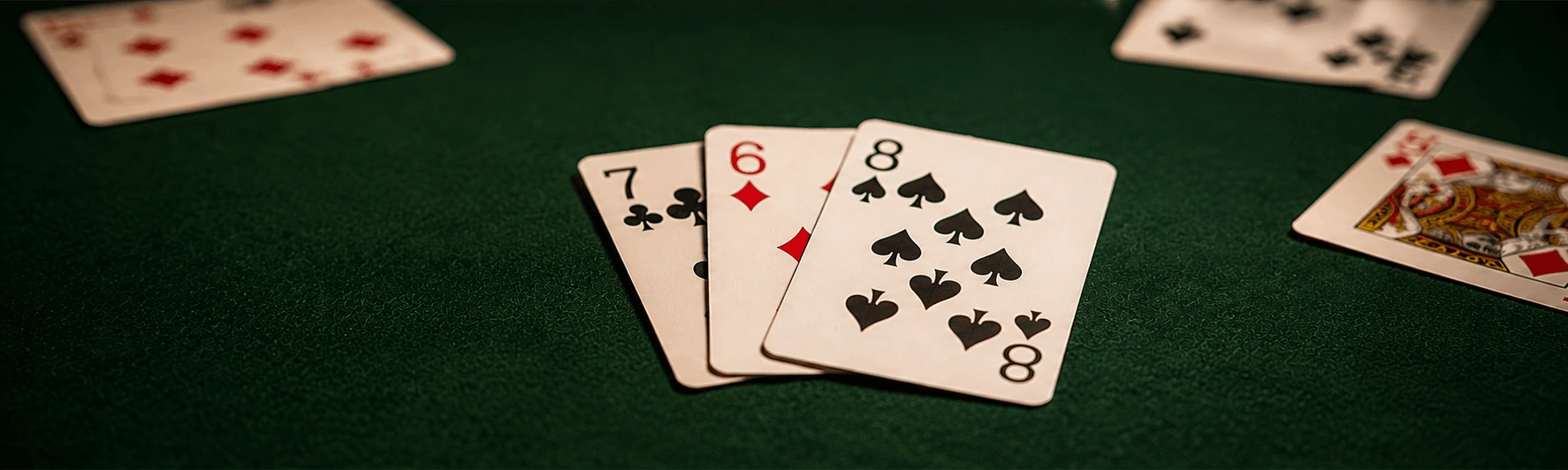
Short answer: not the way it works in the movies, and not the way it used to work in land-based casinos either.
Card counting relies on tracking the ratio of high cards to low cards remaining in the shoe, then betting more when the odds tilt in your favor. It’s a legitimate mathematical edge, but it depends on being able to see enough of the shoe to actually track it. Live blackjack studios have built their setups specifically around making that harder.
Continuous shuffle machines are the big one. Many live tables shuffle the discard pile back into play constantly rather than waiting for the shoe to run out, which resets the count in a way that makes traditional tracking close to useless. Add in multiple decks per shoe and dealers who reshuffle more often than a physical casino ever would, and the math that counting depends on stops holding up.
None of this means skill has no place at a live blackjack table. It just means the edge comes from somewhere else.
The players who do well at live blackjack over the long run aren’t the ones trying to outsmart a shuffle machine. They’re the ones who never deviate from basic strategy, pick their tables carefully, and manage their money like it matters, because it does.
Every live blackjack table is produced by one of a handful of major studios, and which one is running the show affects more than you’d expect: pacing, presenter style, table variety, and even the specific rule set you’ll find on a given table.
The biggest name in live dealer gaming, and the studio most players encounter first. Evolution runs an enormous roster of blackjack tables, from classic formats to Speed Blackjack, Infinite Blackjack, and Blackjack Party. Production quality is consistently high, with multiple camera angles and dealers trained specifically for the pacing live formats demand. If a casino offers live blackjack at all, there’s a good chance Evolution is behind at least one of the tables.
A newer entrant that’s grown fast, Pragmatic Play Live focuses on clean, straightforward tables without excessive gimmicks. Their blackjack offering tends to run standard 3:2 payouts as the default, which is worth noting given how often that detail gets buried elsewhere. Table availability is smaller than Evolution’s, but what’s there is solid and reliably produced.
One of the longer-running names in the space, Playtech built out live blackjack tables across multiple regional studios, which means presenter style and even table rules can vary depending on which studio is streaming a given table. Worth checking the specific rule set on a Playtech table rather than assuming it matches another one you’ve played, since consistency across their network isn’t guaranteed the way it is with some competitors.
The studio doesn’t change the math of blackjack itself. Basic strategy works the same regardless of who’s running the stream. What it does change is the experience: how fast hands move, whether side bets are available, how many tables you can choose from, and whether the specific payout and dealer-action rules line up with what you’re looking for. Checking the studio name alongside the table rules panel gives a fuller picture before you commit to a seat.
Live blackjack runs smoothly on mobile, and there’s no meaningful gap between the desktop and mobile experience anymore. The video stream, betting interface, and dealer interaction all carry over cleanly to a phone or tablet screen.
A few practical things to know before playing on mobile:
There’s no strategy difference between mobile and desktop play. Basic strategy, payout structures, and table rules all function identically. The only thing that changes is the screen you’re looking at.
Live blackjack combines real money, fast pacing, and the immersive feel of a real dealer, which makes it easy to lose track of time and spending if you’re not deliberately managing both.
Decide on a session budget and a time limit before you join a table, not while you’re already playing. Most licensed casinos offer built-in tools for this: deposit limits, loss limits, and session time reminders that alert you once you’ve hit a threshold you set in advance. Use them. They work best when set before a session starts, not adjusted mid-way through one.
Chasing losses by increasing bets to win back money already lost is one of the clearest warning signs in any casino game, blackjack included. Other signs include playing longer than intended, feeling anxious or irritable when not playing, or gambling with money set aside for other expenses. None of these mean something is definitively wrong, but they’re worth being honest with yourself about if they show up.
Playing perfect basic strategy lowers the house edge, but it doesn’t eliminate it, and it doesn’t guarantee winning sessions. Blackjack still involves real financial risk, and no strategy chart changes that. Treat the skill element as a way to play smarter, not as a reason to bet more than you can afford to lose.
If gambling starts to feel like it’s affecting your finances, relationships, or wellbeing, support is available. Organizations such as GamCare, BeGambleAware, and the National Council on Problem Gambling offer confidential help, and most licensed casinos provide self-exclusion tools directly within account settings.
Blackjack earned its reputation as a serious casino game for a reason, and live dealer tables only add to the appeal. Real cards, real pacing, and a house edge that rewards actually knowing what you’re doing rather than hoping for the best.
The players who get the most out of live blackjack aren’t chasing shortcuts or trying to beat the system. They’re checking the payout structure before they sit down, running basic strategy without deviation, and picking tables and studios that suit how they like to play. That’s the whole game, really. Not luck dressed up as skill, but skill quietly doing the work luck gets credit for.
Pick a table with fair rules, keep the strategy chart close until it’s second nature, and the rest takes care of itself.
No. Licensed live blackjack tables use real cards, real shoes, and independently audited random number generation only for shuffling mechanics, not gameplay outcomes. Regulated studios operate under gaming licenses that require regular audits of their equipment and processes.
RNG blackjack uses a random number generator to determine every card instantly, with no dealer or physical shoe involved. Live blackjack uses an actual dealer, actual cards, and a real-time video stream, giving you the pacing and feel of a physical casino table from home.
Rarely. Because live blackjack involves a real dealer running a real table in real time, most casinos don’t offer a demo or practice mode the way they do with RNG games. Some platforms offer free-to-watch tables where you can observe gameplay without betting, but actual play typically requires real money.
The timer keeps the game moving at a consistent pace for every player at the table, since a live dealer can’t wait indefinitely for one person to decide. Betting timers are usually generous enough for a normal decision, but they do mean it helps to know your strategy before the timer starts rather than working it out live.
No. Dealers reshuffle the shoe between rounds according to a set schedule, not mid-hand. On continuous shuffle machine tables, this happens even more frequently, since discarded cards get reintroduced into the shoe on a rolling basis rather than waiting for a full shoe to deplete.
Yes, and it varies significantly by table. Standard tables often start with fairly low minimums, while VIP and high-limit tables can require substantially larger minimum bets. Check the table’s info panel before joining, since limits are usually displayed clearly alongside the rule set.
The Author
The Author
Slots and News Reviewer