











Illinois Hits Fantasy Sports With New Tax and Licensing Rules


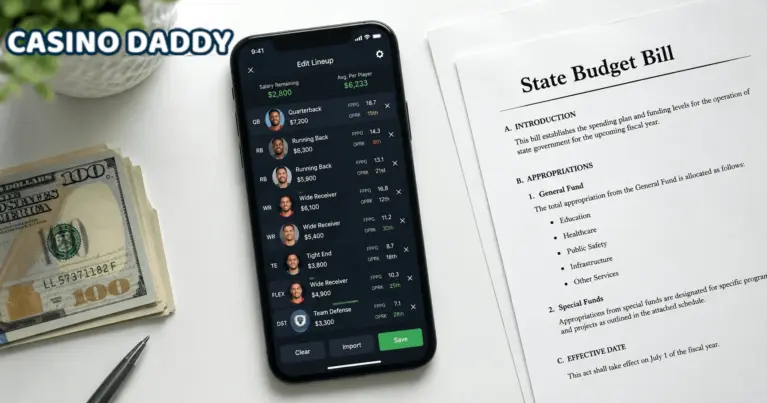
Illinois has passed a $56 billion state budget for fiscal year 2027, and the gambling industry is paying close attention. Buried in the legislation is a new Illinois fantasy sports tax framework. It puts daily fantasy operators under formal state oversight for the first time. DraftKings, FanDuel, and Underdog are among the platforms now facing licensing fees and a 15% tax on adjusted gross receipts.
A Budget Built on New Revenue
Lawmakers pushed the budget through during an overnight session on June 1. Senate Democrats framed it as a responsible answer to federal funding cuts, keeping the plan below Governor JB Pritzker’s original February proposal. Pritzker praised the result, calling it the strongest fiscal position the state has seen in decades. Illinois has now held a balanced budget for eight consecutive years.
To close the revenue gap without touching income taxes or pushing large corporate levies, lawmakers turned to targeted new sources. These include taxes on social media platforms, digital assets, tobacco, and fantasy sports. Rather than broad structural changes, the approach focused on sectors that had largely operated without dedicated state oversight. The package also carries an $830 million supplemental allocation for the current fiscal year.
How the Illinois Fantasy Sports Tax Works
Senate Bill 3019 is where fantasy sports operators need to focus. It establishes a formal licensing structure for DFS companies in Illinois, with fees tied to platform size. Small operators serving up to 7,500 patrons pay $500 for a two-year license. Larger platforms pay $7,500 for the same period.
Beyond licensing, every DFS operator now owes a 15% tax on adjusted gross receipts from Illinois players. Compliance obligations come attached, covering age verification, geolocation controls, identity checks, and anti-money laundering procedures. The Illinois fantasy sports tax is projected to contribute to roughly $65 million in new gaming revenue for the state. That figure depends on compliance rates and how several ongoing legal disputes shake out.
Prediction Markets Get Taxed Too
The bill goes further than fantasy sports. Senate Bill 3019 also amends the Illinois Sports Wagering Act to cover prediction market contracts, known as exchange wagers. Each exchange wager is taxed at 1.75%. That rate climbs to 3.5% once a single operator surpasses five million wagers placed in the state.
This is not clean legal ground. The Commodity Futures Trading Commission is actively challenging Illinois’ authority to regulate federally overseen platforms. Kalshi, Robinhood, and Crypto.com are among those in the crosshairs. Similar disputes have surfaced in Minnesota and other states, and further litigation seems inevitable as Illinois pushes to enforce the new rules.
Relief Measures in the Mix
Not every element of the budget is a cost. A 1.3-cent gas tax increase previously set for July now takes effect in January, giving drivers a short reprieve. A sales tax holiday on school supplies runs from August 7 to 16. Through the FRESH program, residents affected by SNAP benefit changes receive a $400 one-time payment, and $143 million goes to healthcare for seniors without legal US status.
Critics on both sides raised flags. Fiscal watchdogs pointed to the budget’s reliance on fund sweeps and warned that future federal cuts could deepen pressure on Illinois pensions. Others argued that new business taxes tend to reach consumers in the end, whatever the stated intent.
A Harder Market for DFS Operators
For daily fantasy sports companies, the change is real and immediate. Illinois has long been a major DFS market, but operators have never faced a formal licensing regime here before. That changes now. The 15% tax on gross receipts is significant, and operators will need to decide how much of that burden they absorb versus pass along to players.
DraftKings, FanDuel, and Underdog have navigated state-by-state regulatory shifts before. But Illinois now bundles a new tax, licensing requirements, and strict compliance demands into a single package. The unresolved prediction market litigation adds more uncertainty. Between the new rules and the legal fights ahead, the state is shaping up as one of the more complex environments for digital gaming operators in the country.

The Author
The Author
Slots and News Reviewer