











Binance.US Prediction Markets Push Targets CFTC Licence


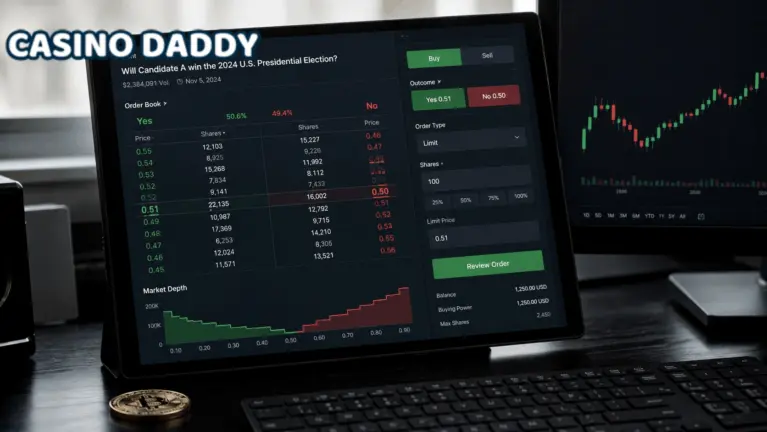
Binance.US is preparing a move into one of the fastest-growing corners of American finance. Chief executive Stephen Gregory told an audience at the Rare Evo Blockchain AI Conference in Las Vegas that the exchange wants regulatory clearance to offer event contracts. Bringing Binance.US into prediction markets would place the crypto platform alongside Robinhood, Coinbase and Kalshi in a sector that has swelled over the past two years. A formal filing could land within weeks.
A CFTC Application Could Arrive in August
The company plans to apply for a Designated Contract Market licence with the US Commodity Futures Trading Commission. The company could submit that application as early as August. A DCM licence is the federal permission that lets a platform list event contracts legally across the country.
Event contracts are derivatives tied to real-world outcomes. Traders take positions on questions with binary answers, and each contract settles once the event resolves. Elections, economic indicators, sports results and entertainment awards all sit within scope. Approval would let Binance.US run prediction markets across those categories under federal oversight rather than state gambling law.
Why Binance.US Wants Prediction Markets Now
The timing makes commercial sense. Robinhood has called event contracts one of its fastest-growing businesses, and Coinbase reported a sharp rise in prediction market activity during the second quarter. Both companies built that volume from a standing start. The segment has become the rare growth story that brokerages and crypto exchanges can chase at the same time. Volumes have climbed even as the legal picture stays unsettled.
For Binance.US, prediction markets also offer something more valuable than fresh revenue. They offer relevance in a market that moved on without it. The exchange once ranked among the largest crypto trading venues in the country, but its market share fell sharply after legal problems engulfed its global parent. Rivals took the ground it lost and have not handed any of it back.
The Shadow of a $4.3 Billion Settlement
In November 2023, Binance pleaded guilty to violating US anti-money laundering laws. The company agreed to pay $4.3 billion to settle the case. Binance.US operates as a separate entity, but the fallout still damaged its standing with American customers and regulators alike.
That history matters here. A licence application puts the company in front of a federal regulator that will examine its compliance culture closely. Event contracts are already a politically charged category, because state attorneys general, tribal gaming groups and the casino industry have all pushed to restrict sports outcomes. A bid to link Binance.US with prediction markets will not pass quietly.
Groundwork Already Laid Outside the US
Binance is not walking into this cold. Its global business runs a partnership with Predict.fun, an event contracts platform built on BNB Smart Chain. That arrangement sits outside the United States, so it falls beyond CFTC jurisdiction entirely.
The technical experience still counts. Pricing, settlement and liquidity management are the hard parts of running an event contract book, and the wider Binance ecosystem has already worked through them. Binance globally reports more than 300 million users, a scale advantage few competitors can match. Capability is clearly there. What Binance.US still needs is permission to open prediction markets to American traders.
State Borders Remain a Problem
A federal licence would not clear every obstacle. Prediction markets would only reach customers Binance.US can actually serve, and its US footprint has visible holes in it. New York and Texas both sit outside the operating map, while customers in several other states face restrictions on dollar transactions.
Those gaps cap the immediate upside for now. Kalshi and Polymarket have spent two years fighting state regulators for national reach, with mixed results. Binance.US would enter that fight carrying a smaller footprint and a heavier compliance file than either of them.
What Happens Next
The August filing is the first real checkpoint for anyone tracking this story. Until an application reaches the CFTC, everything here remains a stated intention from a conference stage. Regulators have given no signal on how quickly they would move on a request of this kind. Reviews of this type can stretch across months.
If approval arrives, Binance.US would join prediction markets at the exact moment the sector is defining its own rules. The CFTC has been drafting a framework for which event contracts can exist and which cannot. A crypto exchange carrying a recent federal settlement makes for an unusual test of that framework. The answer regulators give will tell the rest of the industry a great deal about who gets through the door.

The Author
The Author
Slots and News Reviewer