









Kalshi Faces $120K Daily Nevada Fine Over Geofencing Deadline


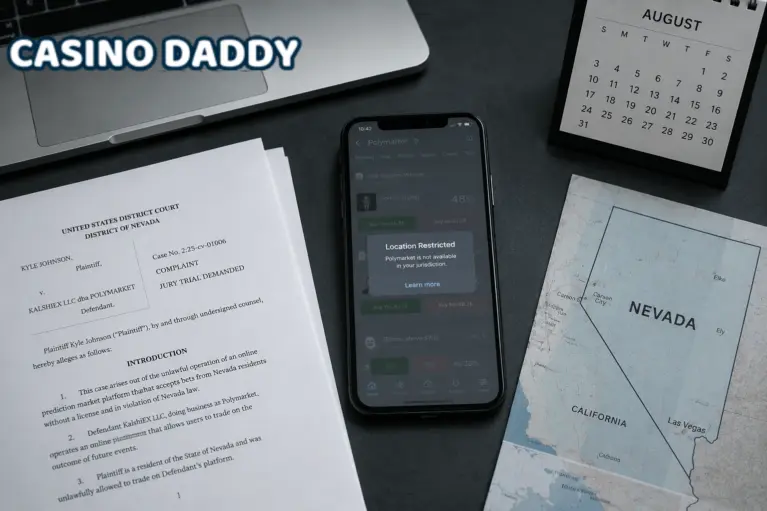
Kalshi has agreed to keep its prediction contracts out of Nevada, and the cost of failure is steep. Kalshi now faces a Nevada fine of $120,000 per day if it misses an August 12 compliance deadline. State regulators secured the agreement after investigators found the company still serving residents despite a standing court order.
The deal ends a contempt fight before it ever reached a hearing. Instead of arguing its position in front of a judge, the company committed to a fixed timeline and a third-party geofencing system. The Nevada Gaming Control Board walks away with enforcement leverage it did not have before.
How Kalshi Ended Up Facing a Nevada Fine
The dispute traces back to a preliminary injunction issued on May 18, 2026 by the First Judicial District Court. That order barred the company from offering event-based contracts tied to sports, elections, and entertainment inside the state. Regulators had argued that these products sit squarely under state gaming law and require proper licensing. The court agreed with them.
What happened next gave Nevada the grounds to attach a fine to Kalshi’s compliance. Board investigators repeatedly logged in from inside the state and bought contracts the injunction prohibited. They managed it without difficulty, and officials responded by moving for contempt proceedings.
Kalshi acknowledged the failures in court filings submitted on July 23. The company confirmed that investigators had reached restricted contracts from within Nevada after the injunction took effect. That admission shifted the conversation away from liability and toward remedy.
A Hard Deadline and a Daily Price Tag
Kalshi must have a third-party geofencing system fully operational by August 12, 2026. Every day past that date costs the company $120,000, a fine Nevada will keep charging until the restrictions actually work. Deployment has already started, and regulators will receive regular progress updates as the rollout continues.
The structure of the deal matters as much as the number. Nevada is no longer asking a court to interpret anything. It set a date, attached a figure, and handed the burden of proof to the operator.
Why the First Injunction Did Not Hold
A court order only works if the party under it can enforce the ban across its own systems. Kalshi had a court order and still had Nevada customers, which is why regulators moved to a fine instead. Licensed sportsbooks in the state run mandatory geolocation checks built to a specification regulators wrote themselves. Trading platforms have never carried that obligation.
That gap explains why a fine, rather than another order, became Nevada’s tool for bringing Kalshi into line. A daily figure is simple to calculate and simple to enforce. Regulators do not need to prove intent or schedule a second hearing. They only need a date on the calendar and a system that either passes or fails.
Nevada Draws a Line Other States Can Copy
Board Chairman Mike Dreitzer framed the agreement as a defence of the state’s regulated industry. His position was blunt: the court told the company to stop, and it kept going anyway. The penalty structure exists so that outcome does not repeat itself.
Nevada has spent months pushing unlicensed prediction platforms out of its market. The Board says it has now restricted every known operator working in the state without a licence. This case is the largest of those actions and by some distance the loudest.
Other regulators watching the Kalshi case now have a working model, because Nevada showed that a fine attached to a deadline moves faster than litigation. Several states have spent the past year arguing over how to classify event contracts. Nevada skipped the classification debate and went straight to enforcement mechanics.
What Happens After August 12
Nevada residents lose access to these contracts either way, so the immediate market question is already settled. The open question is cost. If the geofencing system lands on time, Kalshi avoids the fine and Nevada closes the file on this stage of the dispute.
Miss the date and the arithmetic turns ugly quickly. A single week of delay would run to $840,000. A month would push past $3.7 million, which is real money even for a platform of Kalshi’s size.
The wider fight over prediction markets remains far from settled. The company still argues that federal oversight covers its contracts, and courts across the country will keep testing that claim. But Nevada has found a faster lever than legal argument. A penalty with a date on it achieved what a court order alone could not, and the clock now runs to August 12.

The Author
The Author
Slots and News Reviewer