




Albania Online Sports Betting Returns Under 10-Licence Cap


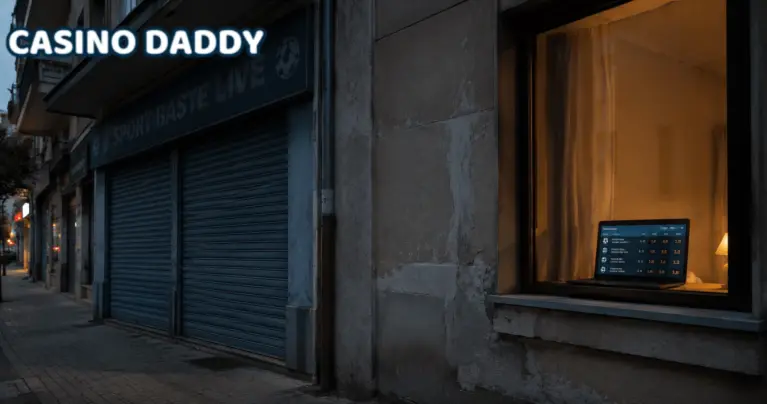
Albania shut its betting market in 2019 and kept it closed for seven years. That era is ending. Albania will license online sports betting again under a framework capped at 10 operators, and the rulebook behind it is finally complete. Betting shops and slot halls stay banned, which leaves online sports betting as the only legal format in Albania.
A Ban That Pushed the Money Offshore
Before prohibition, the country ran one of the busiest retail betting scenes in the region. Roughly 4,000 shops served a population of slightly more than 2.8 million people. Annual turnover hit €700 million in 2018, the year parliament voted the industry out of existence.
Addiction concerns drove that vote, along with the number of shops sitting near schools and inside residential neighbourhoods. Prime Minister Edi Rama also raised sports integrity risks and alleged links between some betting businesses and organised crime. The shops closed, and the visible market vanished within months.
The betting itself carried on. Estimates put unregulated online sports betting revenue in Albania at $117 million in 2024 and $126 million in 2025. Add casino and poker activity, and unregulated online GGR reached roughly $229 million last year. That money stayed offshore and untaxed, which eventually changed the political calculation.
How Albania Will Hand Out Online Sports Betting Licences
The Council of Ministers adopted Decision No. 194 on 26 March 2026, and it took effect four days later. The measure creates a single-stage competitive process run by the Gambling Supervisory Authority alongside a Licensing Commission. Parliament approved the reopening back in 2024, but the eight supporting regulations only wrapped up in July 2026.
The commission decides how many licences to award in each round, subject to the nationwide cap of 10. Applicants get 45 calendar days from the competition notice to submit their documents. A non-refundable application fee of ALL500,000, around €5,100, accompanies every bid.
Scoring runs on a 100-point scale. The economic offer carries 30 points and sector experience another 30, while organisational capacity accounts for 20. Technology and software bring 15 points, and a three-year business plan covers the final five. If two bidders tie, the commission settles the ranking by lottery.
Entry Conditions Written for Global Operators
The entry conditions for online sports betting in Albania filter the field hard. Applicants must register as Albanian joint-stock companies and hold at least ALL40 million, roughly €400,000, in share capital. They also need ALL2 billion in turnover from the previous financial year, a figure close to €20 million.
Experience counts just as heavily. Each applicant needs a gambling track record across at least three EU or OECD markets. Local legal specialists have already pointed out that no Albanian company with a genuine interest in betting can clear that bar.
The licence fee depends on the bids themselves, starting at a floor of ALL400 million, or about €4 million. Winners pay in instalments across a 10-year term. Authorities must publish the licensing call domestically and in two international newspapers, which signals exactly who the competition targets.
Traceable Money and Tighter Player Controls
Regulators built the online sports betting rules in Albania around visibility. Players must register with a national identity card, and cash wagering stays off the table completely. Every payment has to move through an Albanian bank, a licensed electronic money institution or an approved payment provider.
Operators carry monitoring duties on top of that. They must retain player records for a minimum of three years and apply the national self-exclusion register. Family members will also be able to request the exclusion of a relative, which goes further than several established European regimes.
Licence holders must publish risk information and winning probabilities, then direct customers toward support services. One gap stands out here, because Albania has no dedicated gambling counselling or rehabilitation centre. Anyone following that signposting will find very little waiting at the other end.
What the State Stands to Collect
Licensed online sports betting operators in Albania will pay 15% of gross gaming revenue into a state fund. That money supports culture, sport, technology and innovation projects. Standard 15% corporation tax, local taxes and licensing costs land on top.
The government projects around ALL2 billion, close to €20 million, in annual public revenue. Enforcement carries real teeth as well. Two breaches inside three years can trigger a suspension of 30 days to two years, and a third violation opens the door to full revocation.
The Questions Nobody Has Answered
Albania has set no date for the first online sports betting licensing round. Nobody has confirmed how many of the 10 slots the commission will award at the start either. Demand remains the larger unknown, since seven years of prohibition reshaped habits across an entire generation of sports fans.
The population has also slipped from about 2.8 million in 2018 to roughly 2.75 million today. Local observers expect interest to return, though not at the old scale. Older bettors kept their appetite for sport, while younger ones grew up with no legal option in front of them.
Albania will restart online sports betting in a very different country from the one that banned it. The framework looks solid on paper, with traceable payments, a working self-exclusion register and barriers high enough to keep the field small. The real test comes later, when licensed sites have to pull players away from the unregulated operators they have used for years.

The Author
The Author
Slots and News Reviewer