






TikTok Gambling Policy Tightens Grip on Card Break Livestreams


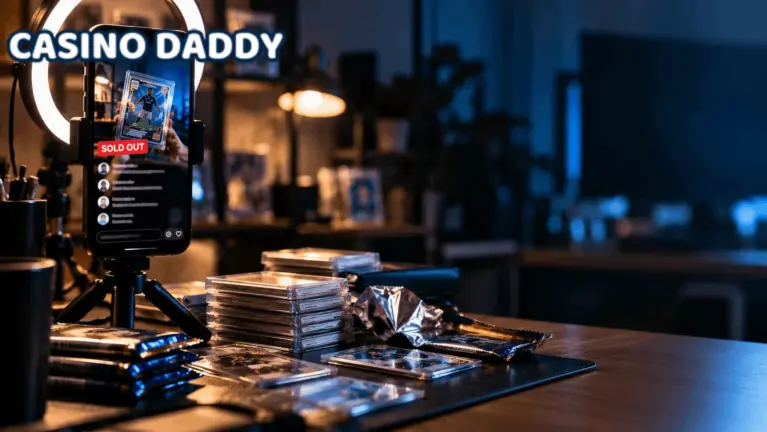
Trading card breakers who built audiences on live TikTok streams have spent five months watching the rules move under their feet. The TikTok gambling policy has gone through several rewrites since May, and the version published on August 31 pushes random team breaks into a much narrower lane. Sellers can still run them. They just have to do it inside TikTok Shop’s Surprise Sets feature, using the platform’s own randomization tool.
Card breaks work simply enough on the surface. A seller opens sealed trading card products during a livestream and distributes the contents to buyers who paid for spots in advance. Random team breaks add a wrinkle: each buyer gets assigned a team or category at random, then receives whatever matching cards come out of the packs. That element of chance sits at the centre of what the TikTok gambling policy now restricts.
What the TikTok Gambling Policy Still Permits
Plenty of formats survived the cull. Approved sellers who meet Shop Performance Score requirements can keep running personal breaks, pick-your-team breaks, pull-until-you-win breaks and case breaks. Two conditions apply across all of them. Products must be sealed before the stream begins, and customers must receive physical goods once they buy.
The prohibitions are narrower and more targeted than a blanket ban. Sellers can no longer raffle off break spots that failed to sell, which closes a familiar workaround for streams that never filled. Blind box promotions survive only when a TikTok-recognised brand originally manufactured the product as a blind box, so improvised mystery bundles fall outside TikTok’s gambling policy entirely.
Five Months of Revisions
May brought the first real crackdown. TikTok banned random card breaks, draft-style breaks and bounty breaks outright, cutting off several of the most popular livestream formats in one move. June added eight more, including pull games, points programs, train games, King of the Hill and HP battles. Every format on that list leans on chance to determine what a buyer walks away with.
The August 31 revision softened the position on random team breaks, but attached conditions. Draws now run through TikTok’s official randomization software, and manual draws outside that system are gone. No off-camera spinners, no third-party generators, no seller-run number picks. The TikTok gambling policy keeps the mechanism of chance in the platform’s hands rather than the seller’s.
That detail carries more weight than the bans themselves. A platform that owns the randomization also owns the audit trail, so TikTok can answer questions about fairness with its own logs instead of a breaker’s word.
Surprise Sets Expand While Value Limits Disappear
Surprise Sets began as a trading card mechanic and grew well past it. Buyers now purchase electronics, beauty products, toys and fashion accessories without knowing the exact item until the sale closes. The expansion turned a niche collector format into a general retail feature, and it raised obvious questions about how much value sits inside any given set.
Earlier rules answered those questions with numbers. TikTok capped the gap between the highest and lowest priced item in a set and required higher-value products to make up a set share of inventory. Those figures came out in September. The replacement language asks for fair price differences and blocks sets where the expensive items appear too rarely, which shifts the judgment call from arithmetic to interpretation.
Disclosure duties stayed in place. Sellers must list potential contents and quantities, display available products during livestreams, and submit listings for review. The wider TikTok gambling policy already bans raffles, sweepstakes, wagers and lucky wheels on Shop, along with any activity where a customer pays for the chance at a randomly selected prize.
Lawsuits Sit Behind the TikTok Gambling Policy Shift
None of this happened in a vacuum. US courts have not resolved the legal status of card breaks, and several active cases are testing it right now. Three breakers sued TikTok and Fanatics in California over antitrust and unfair competition claims. Separate legal action against Whatnot argues that certain break formats function as unlicensed gambling.
Fanatics Live features in the same litigation wave, which touches competition law, gambling law and allegations of lottery-style operations. Each revision of the TikTok gambling policy has arrived while those arguments played out, so the platform has been drawing its own boundaries ahead of any ruling that might draw them instead.
TikTok also gave itself enforcement teeth that no court ordered. It can pull listings, restrict livestreams and suspend accounts, and it reviews Shop listings for compliance before they go live.
Where This Leaves Randomized Selling
Breakers with strong performance scores still have a viable business, but the creative freedom that defined early break culture has gone. Formats that once differentiated one stream from another now need to fit inside a standardised feature with platform-controlled draws. Some sellers will adapt. Others will move to platforms with looser rules, and those platforms will inherit the same legal questions.
For anyone watching how randomized rewards get treated outside licensed gambling, the TikTok gambling policy is worth tracking closely. The mechanics under a card break are not far from the ones under loot boxes and sweepstakes, and a major commerce platform has now built a compliance regime around them without waiting for a regulator. If the California and Whatnot cases go badly for the defendants, TikTok’s gambling policy may end up looking less like caution and more like a head start.

The Author
The Author
Slots and News Reviewer