










Ohio Calls Kalshi Illegal Gambling, Vows to Enforce Law


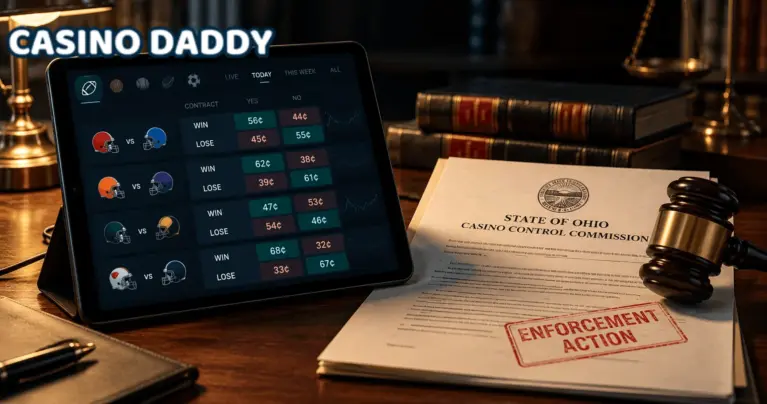
Governor Mike DeWine has dropped the careful language. Speaking after a federal appeals court cleared the way, he said that what Kalshi offers to users in Ohio is illegal gambling and nothing more sophisticated than that. The state, he confirmed, will enforce its gaming laws accordingly.
That position carries far more weight than it did six months ago. On 25 September, the US Court of Appeals for the Sixth Circuit ruled that Kalshi’s sports event contracts do not qualify as swaps under the Commodity Exchange Act. Federal commodities law, the panel found, does not block Ohio from applying its own gambling statutes to those products.
For Kalshi, the loss cuts into the argument the company has built its entire national sports business on. Ohio now holds an appellate decision in hand, plus a governor willing to describe Kalshi as illegal gambling in language no regulator would put in a press release. The gap between the two sides has rarely looked wider.
DeWine Refuses to Dress It Up
The governor made no attempt to soften his description of the sector. He called prediction markets gambling outright and accused operators of engineering their way around rules that every licensed sportsbook in the state already follows. His view is simple enough: these companies want the revenue without the regulation.
DeWine then reached for a farmyard comparison. “If it’s a pig, it’s a pig,” he said, arguing that giving the animal a new name changes nothing about what it actually is. He accused the platforms of chasing a free ride and promised that Ohio would enforce the law.
Why Ohio Treats Kalshi as Illegal Gambling
Strip away the trading vocabulary and the mechanics look familiar. A user picks an outcome, puts money behind it, and collects if the result lands their way. Regulators see a sports wager wearing a financial label, and that is the core reason Ohio classifies what Kalshi offers as illegal gambling rather than derivatives trading.
Age is the sharpest edge of the complaint. Sports event contracts open to anyone 18 or older, while licensed sports betting in Ohio starts at 21. That three-year gap hands an unlicensed platform direct access to a group the state deliberately walled off from its regulated market.
Money forms the other half of the case. Licensed operators pay a 20% tax on sports betting receipts, fund self-exclusion infrastructure and follow state advertising rules, none of which applies to a federally registered exchange. The Ohio Casino Control Commission’s $5 million fine notice against Kalshi, issued earlier this year over unlicensed sports contracts, is still unresolved.
The Ruling That Opened the Door
Judge Julia Smith Gibbons wrote for a unanimous panel that Kalshi had failed to show its sports event contracts meet the statutory definition of a swap. Those contracts, she found, carry only downstream economic consequences. The decision upheld Judge Sarah Morrison’s March denial of a preliminary injunction in Ohio and vacated the injunction Kalshi had secured against Tennessee regulators.
The ruling reaches across four states, covering Ohio, Tennessee, Kentucky and Michigan. It settles nothing permanently, since the underlying lawsuits continue, but it strips away the protection Kalshi leaned on while those cases work through the system. Tennessee gained the same enforcement freedom in the process.
Kalshi Has Not Moved an Inch
The company disagrees with the decision and has given no indication it plans to pull sports contracts out of the state. Its argument has stayed consistent since it began listing these markets in January 2025. Kalshi operates a designated contract market registered with the Commodity Futures Trading Commission, so federal oversight should travel with the product wherever a user opens the app.
Compliance now turns into a tactical decision. The platform can suspend sports event contracts in Ohio and keep fighting through the courts, or leave them running and absorb whatever the state brings next. Operators in similar standoffs have often chosen the first route, because trading against an active ruling builds up liability that becomes very difficult to argue away later.
A Split Only the Supreme Court Can Close
The national picture still refuses to resolve. Back in April, the Third Circuit sided with Kalshi in its New Jersey dispute, holding that sports event contracts likely qualify as swaps and that federal law pre-empts state enforcement. The Ninth Circuit went the opposite way in August in a Nevada case, and the Sixth Circuit has now joined it.
That record leaves Kalshi with one favourable appellate ruling and two against. New Jersey has already petitioned the Supreme Court to review the Third Circuit decision, and Kalshi can pursue further review of its own loss. Until the justices step in, the legal status of a sports event contract depends on which side of a circuit boundary the user happens to live.
Ohio spent most of the past year arguing that Kalshi runs illegal gambling under a friendlier name, and the Sixth Circuit has now handed that argument real legal footing across four states. DeWine’s remarks read less like a warning shot and more like a timetable. Enforcement is coming, and the company will have to decide how much it wants to pay for the privilege of testing the line.

The Author
The Author
Slots and News Reviewer