









Utah Charges Push Sportsbooks Out of Prediction Markets


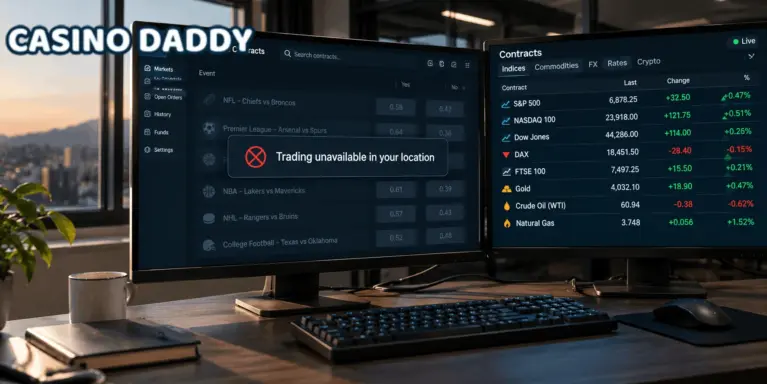
Utah has turned into the toughest jurisdiction in America for prediction markets, and three of the biggest names in US betting have just confirmed it. DraftKings, FanDuel and Fanatics each pulled sports event contracts away from customers in the state inside a single week. The trigger was criminal rather than regulatory. Prosecutors charged rival platform Kalshi and its two co-founders with felony gambling offences, and the rest of the sector moved within days.
What makes the retreat striking is the timing. The federal regulator that oversees these contracts sued Utah only days earlier, arguing the state has no authority over them whatsoever. Three operators walked away from Utah’s prediction markets anyway, which says something about how little appetite anyone has for testing that argument with their own executives exposed.
Three Operators, Two Different Exits
DraftKings went first, cutting sports, political and novelty contracts for anyone physically located in Utah on Wednesday 28 October. Financial markets survived the cull. Customers in the state can still trade contracts tied to stocks, commodities and cryptocurrency, and any open positions in the removed categories stay live until they settle on schedule.
FanDuel matched that approach two days later. Its Predicts platform ended access to sports, politics and novelty markets at 10 a.m. ET on Friday, while keeping economic benchmarks and other financial indicators available to Utah customers. Existing positions there also run to settlement rather than closing early.
Fanatics chose a cleaner break. From 4 November, Fanatics Markets stops accepting trades in Utah entirely, financial contracts included. The company offered no carve-out and no partial service, which makes it the only one of the three treating the state as a closed market rather than a restricted one.
The Criminal Case Behind the Retreat
Utah Attorney General Derek Brown filed charges against Kalshi and co-founders Tarek Mansour and Luana Lopes Lara on 28 October. Each founder faces 14 counts. The heaviest is a second-degree felony alleging a pattern of unlawful activity, sitting alongside 12 third-degree felony counts for promoting online gambling and one further count covering gambling promotion generally. No court has tested any of it yet, and Kalshi rejects the allegations outright.
The case grew out of an undercover operation. An investigator from the Attorney General’s office registered a Kalshi account using a Utah IP address and placed 12 sports event contract trades during September, covering NFL, MLB, MLS, NHL and NCAA football markets. He made those trades from Salt Lake County and Davis County between 13 and 26 September. Prosecutors allege the platform collected fees on every one of them.
A civil suit landed first, on 20 October, seeking to bar the company from the state and claw back profits. Kalshi described the criminal escalation as a crazy overreach. Brown used a post on X to restate the state’s line in blunt terms. Calling something a prediction market does not change what it is, he said, and federal registration does not put any company above the law.
The Federal Regulator Pushes Back
The Commodity Futures Trading Commission sued Utah on Monday, arguing that the Commodity Exchange Act hands it exclusive jurisdiction over federally regulated event contracts. On that reading, state gambling law simply does not reach them. CFTC Chair Michael Selig has signalled the agency will follow the question as far up the court system as it needs to go, the Supreme Court included.
Utah has already won a round, though. District Judge Robert Shelby rejected Kalshi’s preemption argument back in August, and the 10th Circuit later declined to pause enforcement while the appeal runs. A bipartisan coalition of 37 states and Washington D.C. filed a brief backing Utah at the appeals court last week, which is an unusual amount of cross-party agreement for anything touching gambling policy. The outcome will decide how far Utah’s gambling law can reach into prediction markets.
What Utah Means for Prediction Markets Elsewhere
Utah is an outlier, and its prediction markets were never going to resemble anyone else’s. It is one of only two states with no legal gambling whatsoever, so there is no licensed sportsbook sector to measure these contracts against and no gaming regulator holding a framework they could slot into. Arizona was the first state to bring criminal charges against Kalshi. Utah is now the second.
The wider fight runs through more than a dozen states, and federal appeals courts have reached conflicting conclusions on the same basic question. Several parties want the Supreme Court to settle it. Until someone does, operators have to price legal risk state by state, which is exactly what DraftKings, FanDuel and Fanatics just did in full view of the market.
Where the Line Falls Next
Leaving cost these three companies very little in revenue terms, because Utah’s prediction markets were tiny to begin with and the state has no gambling culture to draw customers from. The signal matters more than the sums. Criminal exposure for named executives changes the calculation in a way civil penalties never have, and three operators proved that point inside a week.
Kalshi is still trading in Utah and still fighting. The CFTC is still arguing that none of this is Utah’s business to decide. But the companies holding sportsbook licences in dozens of other states have now shown where their limit sits, and it sits well short of a courtroom test.

The Author
The Author
Slots and News Reviewer