









Google Plans Gambling Whitelist to Bar Unlicensed Casino Ads


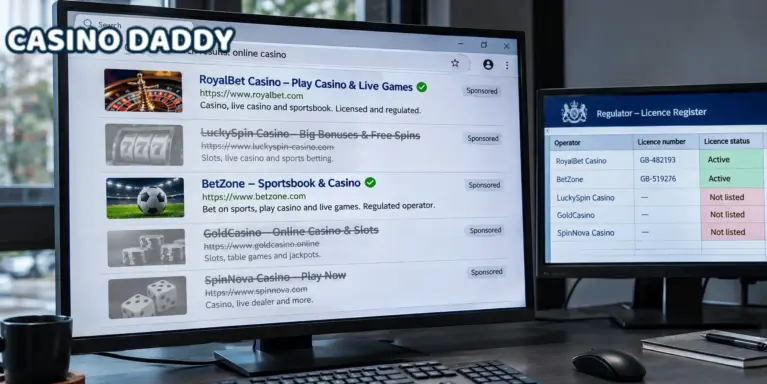
Google has agreed to help European gambling regulators build a whitelist that would strip unlicensed operators of paid search visibility, and the plan reaches affiliate sites too. Dutch Kansspelautoriteit chairman Michel Groothuizen disclosed the agreement on 25 November. Gambling authorities from the UK, the Netherlands, Denmark and Ireland had met Google’s advertising staff at its London offices days earlier. Nothing has launched. The parties hope to have something working by summer 2027, and nobody in the room committed to that date.
Affiliates Would Need an Operator to Vouch for Them
The affiliate provisions change how casino affiliate sites earn paid placement. Licensed operators would nominate the intermediaries they work with, naming partners that send traffic only to licensed providers. Regulators would then check if those sites also funnel players toward illegal brands. Affiliates that clear the check join Google’s gambling advertising whitelist, and ones that slip up afterwards get removed and become invisible inside the system.
Disclosure runs the other way as well. Operators would hand regulators a list of their marketing partners, which turns the affiliate relationship into something authorities can audit instead of guess at. Any affiliate caught promoting unlicensed services risks losing its place on Google’s gambling ad whitelist. That also means losing access to the largest paid channel in the sector.
Removal carries real weight. A delisted affiliate keeps its site and its content, loses the paid route to anyone searching for a casino, and watches its organic rankings take on the entire load. That is a thin position for any business built on bought traffic.
How Google Would Run the Gambling Whitelist
Each regulator supplies its own list rather than feeding into one shared European register. National licensing databases provide the raw material, and Google would verify every gambling advertiser against the whitelist covering the market it wants to target. Businesses missing from the relevant database lose the ability to buy ads aimed at that country.
The Dutch arrangement gives the clearest picture of the mechanics. The KSA would periodically tell Google which companies hold Dutch licences, and Google would then drop gambling ads from any operator absent from that whitelist. Designers want the model to work in jurisdictions as different as Portugal and Finland. Plenty of technical detail remains unresolved.
Groothuizen Welcomes Google but Promises Nothing
The KSA chairman called Google’s offer of joint action remarkable, pointing out that technology companies have often held interests directly opposed to those of regulators. He floated several possible motives, among them reputation, incoming European regulation, and a simple wish to avoid disputes. None of that uncertainty struck him as grounds for walking away.
Nobody can guarantee complete success, he said, because illegal operators keep inventing new methods. He described the platforms as potentially useful partners without calling them permanent allies, and he made no promise at all about implementation. Regulators would escalate if the agreements deliver too little.
He also accepted a limit on what any fix at the advertising layer achieves. Pulling illegal operators out of Google’s ad system would not wipe out the black market, because demand and distribution both survive the loss of paid placement. Google’s gambling advertising whitelist buys regulators a tool rather than a conclusion.
Organic Results Remain the Harder Problem
Paid search is the easier half of the job. Unlicensed sites also rank in ordinary results, where no advertising rule applies, and some of them let players slip past national self-exclusion schemes. A Google-run gambling whitelist does nothing about a page earning its position organically.
Enforcement figures put the scale in context. UK regulators referred more than 7.8 million URLs to search engines this month and saw roughly three million taken out of results. September still produced 586 illegal gambling sites reachable by British consumers. Regulators need separate instruments for the organic side, and none emerged from the London talks.
What Has to Happen Before Summer 2027
Google and the regulators will spend the coming months building the framework. The four authorities in the room represent GREF, a forum covering 41 regulatory bodies across Europe, so the eventual footprint could stretch well past the original four markets. Nobody has said how many will get a list. Google’s own certification rules, updated on 14 September, already require gambling advertisers to demonstrate compliance, and unlicensed operators still get through.
The rest of the platform ecosystem stays unsettled. Regulators want comparable commitments from Meta, TikTok and Discord, and nobody has suggested those conversations are close to producing anything. For affiliate sites the practical question arrives sooner. Google’s gambling ad whitelist would make operator relationships the gateway to paid visibility, and the vetting begins with whoever puts your name forward.

The Author
The Author
Slots and News Reviewer