












Tennessee Casinos
ONLINE CASINOS IN TENNESSEE: THE LAW ARRIVED AFTER THE MARKET HAD GONE
Online casinos in Tennessee have never been licensed, and sweepstakes casinos are now banned as well. Governor Bill Lee signed Senate Bill 2136 on 22 May 2026 and it took effect immediately, with no wind-down period.
By then there was almost nothing left to close. In December 2025 Attorney General Jonathan Skrmetti sent cease-and-desist letters to nearly forty sweepstakes operators, and every single one complied, either shutting down immediately or agreeing a date to wind down. The big names had gone before the legislature finished writing the bill.
Getting that bill through was also far from smooth. This page explains what the law does, how it nearly died in the House, and what remains legal for anyone searching for TN online casinos.
Are online casinos legal in Tennessee?
No. Tennessee has never licensed online casinos, and Senate Bill 2136 banned sweepstakes casinos from 22 May 2026, taking effect immediately on signature. The law amends the Tennessee Consumer Protection Act of 1977, so operating or promoting a dual-currency platform is treated as an unfair or deceptive trade practice, with civil penalties of 5,000 to 15,000 dollars per violation enforced by the Attorney General. Licensed online sports betting remains legal. Tennessee has no state income tax.
WHAT SENATE BILL 2136 DOES
Tennessee did not write a new gambling statute. It used consumer protection law instead, which is a meaningfully different route.
HOW THE BAN ON ONLINE CASINOS IN TENNESSEE WORKS
SB 2136 amends the Tennessee Consumer Protection Act of 1977, at Title 47 Chapter 18 of the Tennessee Code, to reclassify sweepstakes casino operations as unfair or deceptive trade practices. Rather than declaring the activity gambling, the state declared it a consumer protection violation, which hands enforcement to the Attorney General along with the broad investigative powers that Act already provides.
WHAT IS PROHIBITED
The statute targets the dual-currency structure: platforms where one virtual currency is sold to players and a second is distributed through promotions or bundled with purchases, with certain winnings convertible to cash or prizes. Both operating such a platform and promoting one fall within the prohibition.
THE PENALTIES
- Civil penalties of 5,000 to 15,000 dollars per violation
- Enforcement by the Attorney General under the Consumer Protection Act
- Broad investigative powers attached to that Act
- A private right of action for Tennessee consumers
That last point is worth noting. Consumer protection statutes typically let individuals bring their own claims, which is a different exposure profile from a gambling prohibition enforced only by the state.
EFFECTIVE IMMEDIATELY
The law took effect on signature, with no transition period. Tennessee became the ninth state to enact a ban of this kind.
HOW THE BILL NEARLY DIED
The path through the legislature was the most eventful of any sweepstakes ban this year, and it came close to producing nothing at all.
THE SEQUENCE
- 2 February 2026: SB 2136 introduced by Senator Ferrell Haile, with companion HB 1885 by Representative Scott Cepicky, both at the request of the Attorney General office
- March 2026: the Senate passed it unanimously, 32 to 0
- April 2026: the House amended it to remove every reference to sweepstakes, virtual currency and the industry, leaving only general gambling enforcement changes, and passed that version 67 to 20
- The Senate rejected the amended version outright
- A bicameral conference committee was formed and agreed a compromise restoring the original anti-sweepstakes language
- 23 to 24 April, the final days of the session: both chambers approved the restored version, the House 69-17-1 and the Senate ratifying the conference report 25-5
- 22 May 2026: Governor Bill Lee signed it
WHY THAT MATTERS
Had the House version survived, Tennessee would have ended the session with a gambling enforcement bill that said nothing about sweepstakes at all. An amendment ordering a study of what a regulated sweepstakes industry might look like was also withdrawn along the way. The ban that exists today is the product of a conference committee putting the teeth back in during the final week.
THE VETO THAT DID NOT COME
Because the legislature had already adjourned, a veto would have killed the bill for the year with no possibility of an override. Lee signed it instead, and unlike Oklahoma no override was needed.
THE ENFORCEMENT THAT CAME FIRST
The most striking thing about Tennessee is that the market had already closed before the ban existed, and it closed without a single court case.
THE DECEMBER 2025 LETTERS
Attorney General Jonathan Skrmetti announced enforcement action against dozens of sweepstakes operators in late December 2025, sending cease-and-desist letters to nearly forty platforms. He cited Tennessee constitutional prohibition on lotteries together with the state consumer protection statutes, and characterised the sites as offering illegal gambling to residents.
Every platform that received a letter either disabled the relevant parts of its service immediately or agreed a date for winding down. Skrmetti warned that any other operator serving Tennessee or considering entering should regard itself as on notice.
WHO LEFT AND WHEN
| Operator | What happened |
|---|---|
| VGW brands: Chumba, LuckyLand Slots, Global Poker | Restricted Sweeps Coins access from November 2025, wind-down complete by late December |
| Stake.us, McLuck, Crown Coins, WOW Vegas, High 5 | Exited following the December enforcement campaign |
| Legendz, Sportzino, Thrillzz, Kickr, ReBet | Received earlier cease-and-desists from the Tennessee Sports Wagering Council over sweepstakes sportsbooks |
| All letter recipients | Complied; none contested the letters in court |
WHY THE LAW ON ONLINE CASINOS IN TENNESSEE STILL MATTERED
A cease-and-desist letter rests on an interpretation that an operator could in principle challenge. A statute does not. SB 2136 codified what the Attorney General had already achieved and created a foundation that is considerably harder to contest, which is why the state pursued it even after the market had emptied.
WHAT IS STILL LEGAL IN TENNESSEE
Tennessee has an unusual regulated market: a large legal sports betting industry and no casinos at all.
| Type of gambling | Status in Tennessee |
|---|---|
| Real money online casinos | Not licensed, no framework |
| Online poker | Not licensed |
| Sweepstakes casinos | Banned since 22 May 2026 under SB 2136 |
| Online sports betting | Legal and licensed, online only |
| Commercial and tribal casinos | None |
| Tennessee Education Lottery | Legal |
| Charitable gaming | Very limited, annual events only |
| Social casinos with no redemption | Unaffected by the ban |
SPORTS BETTING WITHOUT CASINOS
Tennessee was the first state to legalise sports betting on an online-only basis, with no requirement for a physical casino partner, because there are no casinos in the state to partner with. The Sports Wagering Council regulates that market, and it was the body that first moved against sweepstakes sportsbooks before the Attorney General took on the wider industry.
THE CONSTITUTIONAL BACKDROP TO ONLINE CASINOS IN TENNESSEE
Tennessee constitution prohibits lotteries, with a narrow amendment permitting the education lottery. That prohibition is part of what Skrmetti relied on in the December letters, and it is the reason casino gaming has never been authorised here in any form.
OFFSHORE SITES AND PLAYER PROTECTION
The ban removed the accountable option and left the least accountable one reachable, which is the same outcome seen in every prohibition state.
PLAYERS ARE NOT THE TARGET
SB 2136 works through consumer protection law and is aimed at operators, promoters and service providers. No Tennessee resident has faced action for having played at a sweepstakes casino. What players lost was access, and in some cases unredeemed balances when platforms wound down during the winter.
THE PRIVATE RIGHT OF ACTION CUTS BOTH WAYS
Because the ban sits inside the Consumer Protection Act, Tennessee consumers gained a private right of action alongside the Attorney General enforcement powers. That is a genuine consumer remedy, and it is unusual: in most prohibition states a player refused a payout has no route at all.
WHY OFFSHORE IS WORSE
- No independent testing of game fairness or payout rates
- No enforced self-exclusion or deposit limits
- Payment processing that can fail without warning
- No Tennessee authority to complain to, unlike the licensed sportsbooks
WHERE TO GET HELP
Tennessee runs the REDLINE helpline on 1-800-889-9789, and the Tennessee Association of Alcohol, Drug and other Addiction Services coordinates free treatment. The national helpline on 1-800-GAMBLER operates around the clock, and licensed sportsbooks are required to fund responsible gambling programmes.
LEGAL ALTERNATIVES FOR TN ONLINE CASINOS
There is no lawful online casino option in Tennessee and no sweepstakes route either, but the state does have one substantial regulated online product.
LICENSED ONLINE SPORTS BETTING
Legal, licensed and entirely online, regulated by the Tennessee Sports Wagering Council. Audited outcomes, enforced self-exclusion and a formal complaints route, none of which a sweepstakes platform offered.
THE TENNESSEE EDUCATION LOTTERY
Draw games and scratch tickets, operating under the narrow constitutional amendment that permits it.
SOCIAL CASINOS WITH NO REDEMPTION
SB 2136 targets the dual-currency redemption model rather than casino-style games as such. Platforms offering play with no cash or prize redemption are unaffected, so if you want the games without the prizes that option survives.
A NOTE ON WHAT ENFORCEMENT CANNOT REACH
Tennessee approach is not unlimited. A federal judge granted the prediction market Kalshi a preliminary injunction against a Tennessee cease-and-desist, after Kalshi argued its contracts fall under Commodity Futures Trading Commission jurisdiction rather than state gambling law. Sweepstakes operators have no comparable federal argument, which is part of why they complied rather than litigated.
THE HONEST SUMMARY
Anything still offering redeemable coins to Tennessee players after May 2026 is operating against an explicit statute, and most likely offshore. For the wider national picture, see our USA online casinos hub, or compare with New York, the other state where the Attorney General emptied the market before the legislature finished the job.
Latest Tennessee gambling news
Industry News
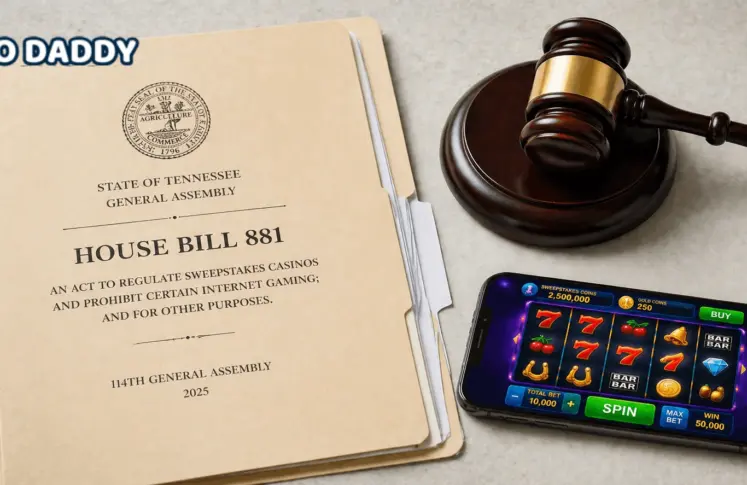
Tennessee Bans Sweepstakes Casinos in 2026 Crackdown


Industry News
Tennessee Cracks Down on Online Sweepstakes Casinos
Are online casinos legal in Tennessee?
No. Tennessee has never licensed online casinos and has no casinos of any kind, and sweepstakes casinos were banned on 22 May 2026 under Senate Bill 2136. Licensed online sports betting remains legal, as does the Tennessee Education Lottery.
When did Tennessee ban sweepstakes casinos?
Governor Bill Lee signed SB 2136 on 22 May 2026 and it took effect immediately, with no wind-down period. Tennessee became the ninth state to enact a ban of this kind.
How does the Tennessee ban work?
Through consumer protection law rather than gambling law. SB 2136 amends the Tennessee Consumer Protection Act of 1977 so that operating or promoting a dual-currency platform is an unfair or deceptive trade practice. Civil penalties run from 5,000 to 15,000 dollars per violation, enforced by the Attorney General, and Tennessee consumers gained a private right of action.
Why had operators already left before the ban?
Attorney General Jonathan Skrmetti sent cease-and-desist letters to nearly forty sweepstakes operators in December 2025, citing the state constitutional prohibition on lotteries and its consumer protection statutes. Every recipient complied, either shutting down immediately or agreeing a wind-down date. Chumba, LuckyLand, Global Poker, Stake.us, McLuck, Crown Coins, WOW Vegas and High 5 had all gone before the bill passed.
Did the ban nearly fail?
Yes. The Senate passed it 32-0 in March 2026, but the House then stripped every reference to sweepstakes from the bill and passed that version 67-20. The Senate rejected it, a conference committee restored the original language, and both chambers approved the final version on the last days of the session in April.
Can Tennessee players be prosecuted?
No. The law targets operators, promoters and service providers, not individual players, and no Tennessee resident has faced action for having played. What players lost was access and, in some cases, unredeemed balances when platforms wound down.

The Author
The Author
Site Admin