










ACR Poker Makes ScreenShield the Default on November 4


Online poker’s biggest security argument of the autumn has produced its first network-wide rule change. On November 4, ACR Poker stops asking players to opt into ScreenShield and switches the table-protection feature on for every account across the Winning Poker Network. Anyone who needs screen capture can still turn it off. The change reads like a small settings tweak, yet ACR has flipped the burden of opting out onto streamers and left ScreenShield running for everybody else.
ACR introduced ScreenShield at the end of September, after claims that malicious remote-access software had handed an outsider a live view of opponents’ screens during high-stakes cash games. The network first switched it on for flagged accounts, then opened requests to anyone willing to email support. Making it automatic is the third move in under six weeks.
What Changes for ACR Players When ScreenShield Switches On
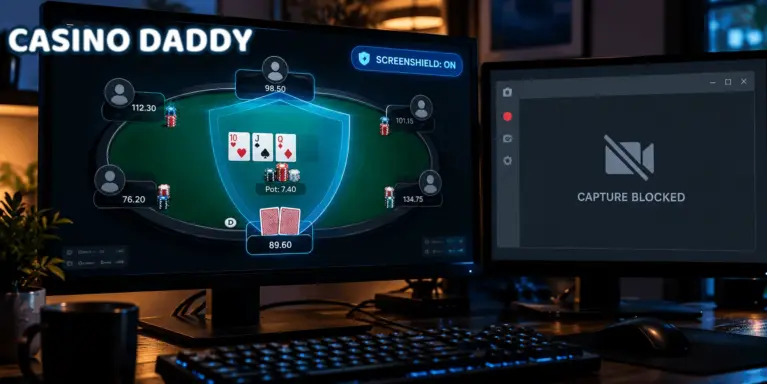
The feature blocks protected table content from the screen-capture and screen-sharing methods it covers, hole cards included. ACR players still see their own tables as normal, and ScreenShield leaves the game untouched: same client, same dealing, same speed. What it kills is the simplest version of the attack that put the network under scrutiny, where software on a player’s machine streams the table to somebody else.
That narrow scope matters. ScreenShield guards the table, not the computer behind it, and WPN has called it one layer of protection rather than a cure. Malware that reads memory, logs keystrokes or lifts credentials sits outside what it can touch.
Streamers and Coaches Keep an Off Switch
The reason ACR held back from running ScreenShield on every account in September has not disappeared. Plenty of legitimate poker work depends on capturing the screen. Players stream to Twitch, record sessions for later review, build training material and share replays with coaches who pull their decisions apart afterwards.
So the November default ships with a self-service escape hatch. ACR players who need capture functionality can open the ScreenShield page in Settings and turn the protection off themselves, without a support ticket. Content creators lose a couple of clicks, and the recreational player who has never followed this story gets covered anyway.
WPN Weighs a Ban on Third-Party Software
A larger decision sits behind the November change. The network is evaluating a policy that would prohibit third-party software from running alongside the poker client, and no decision has landed yet. That review weighs extra security and game-integrity protection against the tools serious players treat as standard equipment.
Such a rule would sting. Multi-tabling regulars lean on table managers that stack windows, assign hotkeys and handle bet sizing across a dozen tables at once. That category of software sat at the centre of the September compromise, and banning it outright would shrink the attack surface while hitting the grinders who generate most of the network’s rake. ACR has set no timeline, so ScreenShield stays the only measure confirmed for next month.
Two Million Hands and One Closed Account
The rollout follows a gameplay review the network ran across its own tables. WPN examined more than 2,000,000 hands played by accounts whose devices had MeshAgent, the remote-access tool at the centre of the case, detected on them. It says it found no evidence that any reviewed player used hole-card knowledge on the network.
Roughly 200,000 of those hands belonged to Paul Gregg, the player name that became the focus of high-stakes community suspicion in late September. WPN says its review found no evidence that Gregg could see opponents’ hole cards or acted on such knowledge. No charges exist anywhere, and Gregg has said nothing in public.
The network closed his account anyway. WPN points to broader information gathered during its investigation and through conversations with other operators, and it draws a firm line between that call and the gameplay findings. Two conclusions pointing in opposite directions explain why ACR now gives everybody ScreenShield by default.
ACR Hands the ScreenShield Method to Rival Rooms
WPN has framed this as an industry problem from the start. The network has passed implementation details to rival operators so they can judge the value of similar safeguards, and ACR has made no attempt to keep ScreenShield to itself. Rooms fielding the same questions from their own high-stakes regulars now have a working reference instead of a blank page.
The Default Setting Is the Real Message
Opt-in security protects the people who already follow the news. Everybody else carries on with the settings they started with, which is how a feature launched in September reached only a slice of the accounts that might want it. ACR moving ScreenShield into the default position closes that gap in one step, and streamers have a fortnight to find the off switch.
The third-party software question is the one still hanging, and the answer will say plenty about the balance WPN wants between a locked-down client and the tools its regulars have built their play around. That decision may take months. For now, the change ACR players meet on November 4 is simple: ScreenShield arrives switched on, and the choice to remove it belongs to them.

The Author
The Author
Slots and News Reviewer