









Dabble Pays AU$1M Fine Over BetStop Self-Exclusion Failures


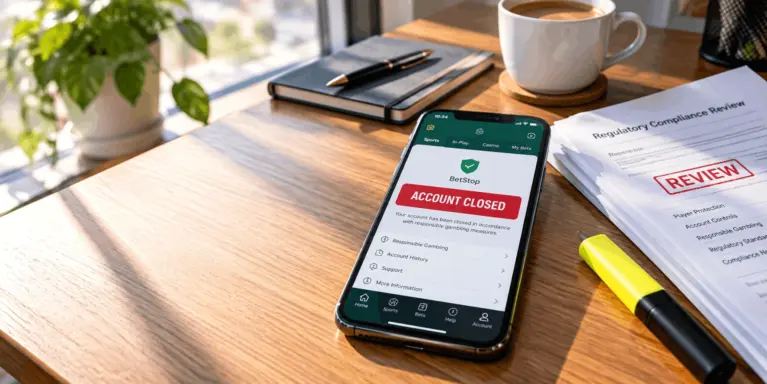
Dabble has paid a fine of AU$1,069,200 after Australia’s media regulator found the social betting app broke BetStop self-exclusion rules. The Australian Communications and Media Authority (ACMA) found that Dabble left accounts open for people who had chosen to quit online wagering. It also kept sending those same people marketing messages. On top of the penalty, the operator signed a court-enforceable undertaking that puts its compliance systems under independent review.
Why Dabble Received a BetStop Fine
BetStop sets clear duties for licensed wagering providers. Once a customer registers, the operator must close that person’s account as soon as practicable and stop all electronic marketing. ACMA found that Dabble failed on both counts.
The regulator identified 157 wagering accounts that stayed open after their holders joined the register. It also found that Dabble sent 839 electronic messages to 165 self-excluded people. Those emails, texts and app push notifications reached people who had made a deliberate choice to step away from betting.
A third breach sits behind the BetStop fine Dabble now carries. Operators must include BetStop information in any electronic message that promotes gambling. Dabble sent more than 2,000 push notifications to 45 customers without that mandatory information.
Regulator Calls the Breaches Serious
ACMA member Carolyn Lidgerwood did not soften her assessment. “These were serious breaches by Dabble,” she said. Lidgerwood stressed that BetStop registrants have made a clear choice to quit online wagering. Operators must honour that choice by closing accounts fast and cutting off promotions.
She also warned that the scheme only works when operators follow the rules. ACMA will act against wagering providers that fall short, she added. Her comments frame the Dabble fine as a test of how well BetStop holds up in practice.
Dabble Says No Customers Placed Bets
Dabble responded with a statement that pushes back on the scale of harm. A company spokesperson said the investigation found no BetStop-registered customers could access their accounts or place bets. The company added that it takes its responsible gambling duties seriously and has strengthened its controls since.
That defence has limits, though. The rules demand more than a block on betting. They require account closure and a full stop on marketing. So the fine Dabble paid over BetStop breaches rests on the messages that reached vulnerable people.
What the Undertaking Requires
The court-enforceable undertaking runs for two years. Dabble must commission an independent review of its compliance systems. It must then fund and carry out the changes that review recommends.
If Dabble breaks those terms, ACMA can ask a court to enforce them. That gives the regulator a direct path to further action beyond the BetStop fine Dabble has already paid. For a young operator, two years of external scrutiny will shape how it builds its marketing tools.
Who Is Dabble?
Tom Rundle founded Dabble in 2020 after senior roles at PointsBet and CrownBet. The app adds a social layer to sports betting. Users can follow friends, former athletes and other personalities, then copy their bets.
The brand has grown fast. Tabcorp paid AU$33 million for a 20% stake in 2022, and Dabble sponsors the National Basketball League and the Supercars Championship. That profile means this fine puts Dabble’s BetStop compliance under a bright public spotlight.
A Wider Crackdown on Self-Exclusion
The Dabble fine joins a run of ACMA actions this year, several tied to BetStop and marketing rules. Entain brands Ladbrokes and Neds faced penalties over self-exclusion breaches in May. In July, Tabcorp paid more than AU$2.7 million over telemarketing and spam failures linked to VIP customers.
BetStop has grown into a major protection tool since its August 2023 launch. By 30 June 2026, 65,430 people had registered, and 40,160 of them held active exclusions. Every compliance lapse puts some of those people back within reach of gambling marketing.
Tougher Rules Arrive in 2027
The stakes rise sharply from 1 January 2027. New laws will strengthen the BetStop framework and substantially lift penalties for breaches. Under that regime, a fine for failures like Dabble’s could climb well above the current figure.
The reforms also double the window ACMA has to issue penalties, from 12 months to 24. That change matters because ACMA has faced criticism for investigations that ran past the old deadline. A longer window gives the regulator time to build cases properly.
What Comes Next for Dabble
Dabble’s BetStop fine lands just months before those tougher penalties take effect. The operator now has two years to prove its systems can spot a self-exclusion and act on it straight away. Rival operators will be watching closely, because ACMA has made its expectations plain. Close the account, stop the messages, and include BetStop information every time.

The Author
The Author
Slots and News Reviewer