











Florida Seizes 346 Slot Machines in Illegal Gambling Sweep


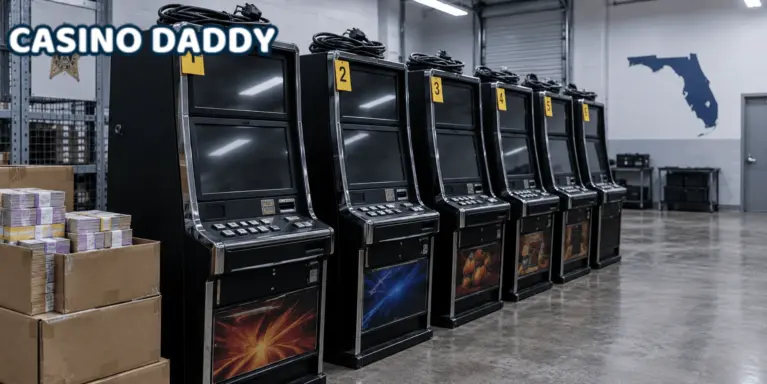
Florida spent August prying slot machines out of unlicensed storefronts, and the tally paints a blunt picture of illegal gambling across the state. The Florida Gaming Control Commission logged 71 enforcement cases in that single month. Investigators pulled 346 slot machines out of circulation, recovered $179,717 in cash and arrested 15 people. That is a heavy month of work for one regulator, but the agency behind it openly admits the problem stretches past what it can currently see.
Slot Machines Are a Narrow Privilege in the Sunshine State
Florida keeps slot machines on a short leash, which is part of why illegal gambling venues gravitate toward them. Legal machines exist in only a pair of counties and on tribal gaming properties. Any machine humming away in a strip mall back room therefore falls outside the rules by default. That narrow footprint makes the enforcement test simple: no licence, no slots.
The penalties are where the picture gets murkier. Running an unlicensed gambling house ranges from a misdemeanor to a felony depending on the specifics of the offence. Regulators and lawmakers have both argued that the lighter end of that scale does little to scare off operators who treat fines as a routine cost of doing business. That argument has gained volume as the same addresses keep turning up in enforcement reports.
Local, State and Federal Agencies Pull in the Same Direction
The Division of Gaming Enforcement leads the charge against unlicensed operators, but it does not work alone. Commission director Carl Herold confirmed that the number of agencies joining these operations keeps growing. Sheriff’s offices, state bodies and federal agencies across Florida now share illegal gambling case files with one another. That gives investigators far more reach than the commission could manage by itself.
The cooperation shows up in the volume of busts. Police resources poured into these operations have been substantial, and the results have started to arrive. Venues that once ran quietly for months now surface much faster, because more eyes are pointed at them.
Florida Tracks Illegal Gambling Cases Without Tracking Offenders
The commission’s record-keeping stops short of following people. Herold confirmed the regulator does not track repeat offenders, and his answer on the subject was direct. He said his agency has not seen anybody it arrested get arrested again, though it does hear from other agencies that pick up people with existing criminal records and then make the call.
That leaves a blind spot in the middle of a growing caseload. Florida counts illegal gambling seizures machine by machine and venue by venue, without a clear thread linking one bust to the next. The commission has focused its energy on removing machines and charging the people found running them. Names, patterns and repeat behavior sit outside that scope for now.
Raided Locations Keep Coming Back to Life
Some operators simply reopen. Venues shut down in earlier raids have been reoccupied and put back to work, in some cases at the exact same address. That pattern hands real weight to the argument that current penalties do not bite hard enough to change behavior.
The lead volume backs it up. The commission opened 314 new signals in August alone, and Herold noted that 48% of them concern things that happened before. Nearly half the incoming intelligence therefore points backwards rather than at fresh activity. Investigators are chasing history as much as they are chasing live operations.
How Big Is the Problem Really?
Herold has been candid about the limits of his own numbers. He acknowledged that illegal gambling in Florida is realistically much larger than the commission can establish at this stage. Seizure totals measure enforcement output, not the size of the underground market, and the two are easy to confuse.
That distinction matters for anyone reading the August figures as a scoreboard. A total of 346 machines came off the floor, but nobody can say what share of the state’s supply that represents. With 314 fresh leads open, the queue does not look like it is shrinking.
What Happens After the Arrest
August produced real results, and the machine counts and cash seizures are not trivial. Enforcement against illegal gambling in Florida now runs across multiple agencies with better coordination than before, so the pressure is holding. Operators who once counted on obscurity have fewer places to hide.
The harder questions sit on the other side of the arrest. Without repeat offender tracking and without penalties that operators actually fear, raided venues will keep reopening and the same leads will keep landing on the same desks. Florida has proven it can find illegal gambling operations. Making them stay closed is the tougher job, and that one is still open.

The Author
The Author
Slots and News Reviewer