











Katy Poker Card Room Shut by Texas Raid, Four Arrested


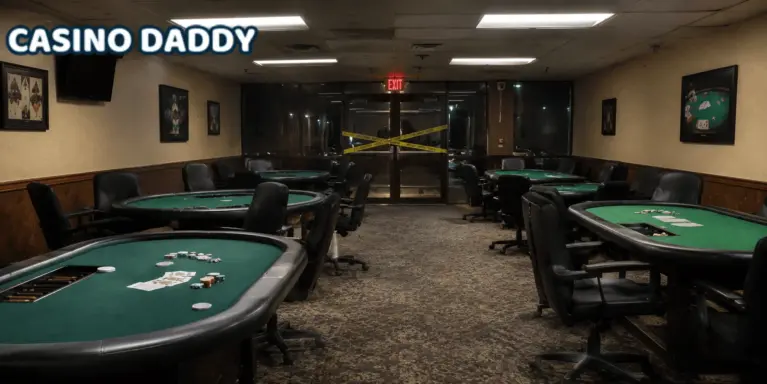
Harris County deputies walked into a card room on the Katy Freeway last Thursday evening and closed it down. The Katy Poker club raid ended with four arrests and a sealed business. Outside, a district attorney told reporters that this was only the opening move in a much wider effort against card rooms in the county. Investigators had spent close to a year building the case.
The four people arrested all held roles in running the business. Prosecutors are pursuing charges of engaging in organized criminal activity, a felony under Texas law, and money laundering charges may follow once investigators trace the club’s accounts. Customers sitting at the tables walked out of the Katy Poker club raid without charges. None of the allegations has been tested in court.
A Year of Watching Before the Katy Poker Club Raid
Capt. Mike Santos of the Harris County Sheriff’s Office said investigators had examined the club for about a year. They knew most of their arrest targets by name before anyone went through the door, and they knew what each person did inside the operation: dealing cards, controlling access, handling the money. Eight tables, nothing flashy. The room sat on the eastbound frontage road at 24445 Katy Freeway, between Katy Fort Bend Road and the Grand Parkway.
Santos said he was close to certain the customers had no idea the club was taking a cut. That distinction carries real legal weight, since players in a lawful private game in Texas commit no offense at all. Deputies escorted them out and let them go. Investigators turned instead to the paperwork, and they now plan to trace bank accounts and transactions to establish how much the operation collected in the months before the Katy Poker club raid.
The One Line Texas Card Rooms Cannot Cross
Texas law hands private poker games a narrow defense, and the entire social club industry stands on it. A room can charge membership dues, hourly seat fees, food, drink, and access to amenities. What it cannot do is take a slice of the pots, because the moment the house profits from the wagering itself rather than the service around it, that defense falls apart. Prosecutors allege Katy Poker had been crossing the line for months before the raid.
District Attorney Sean Teare, who runs prosecutions in Harris County, said the rake changes the odds players face at the table. He called illegal gambling a quality-of-life crime that pulls other offenses toward it. The problem reaches well past Katy, in his telling. His office and the sheriff describe these rooms as magnets for robbery and auto theft, which is why deputies filed the operation under community impact rather than simple gambling.
Katy Poker Became the Second Club Raided in Three Weeks
Three weeks earlier, Houston Police Department vice officers and the district attorney’s office hit the 101 Poker Club, also on the Katy Freeway, and seized more than $118,000. Prosecutors charged four people there with the same organized criminal activity offense: Stephen Hohman, 28, Brian Keegan, 61, Laura Respondek, 41, and Randolph Reynolds, 41. Criminal complaints dated that operation back to early June. The club reopened within about a day.
That last detail matters. Losing more than $118,000 and four staff to arrest did not keep the 101 Poker Club shut, and it was dealing cards again four days later. Katy Poker may not get the same latitude after this raid, since deputies said they will work to keep the business closed. Santos added that investigators still do not know if the operators had ties to other gambling venues in the county.
Why Texas Crackdowns Keep Running Into Walls
Katy Poker is hardly the first Texas room to face a raid, and enforcement here carries a patchy record that operators know well. Back in March, the Texas Alcoholic Beverage Commission raided The Lodge Card Club in Round Rock and seized more than $1.3 million in cash, closing the state’s largest poker room for weeks. Prosecutors later dropped the money laundering allegations. A Williamson County grand jury declined to indict the owners on April 28, and the club reopened on May 26 with its assets returned.
Around 60 rooms across Texas run some version of the social club model, and no dedicated state regulator watches any of them. Local prosecutors read the same statute differently county by county. Katy Poker can lose its tables to a raid in Harris County while rooms a few hours up the road keep dealing without interruption, and nothing about one outcome binds the other.
Final Thoughts
The four people arrested at Katy Poker have not been named publicly, and their cases had not surfaced in district clerk records in the days after the operation. Every allegation against them remains unproven. What happens next depends less on the arrests than on the financial trail, because if investigators can document a sustained rake and match it to deposits, money laundering charges become realistic.
Teare’s promise of a countywide crackdown gives every other Harris County room something to think about. Some will carry on and take their chances. Others will tighten their fee structures and strip out anything that resembles a cut of the pot. The Katy Poker club raid settles nothing by itself, yet it has reopened a question Texas has dodged for years, and the courts rather than the sheriffs will have to answer it.

The Author
The Author
Slots and News Reviewer