










New CheckBeforeYouPlay Tool Checks If a Casino Is Licensed


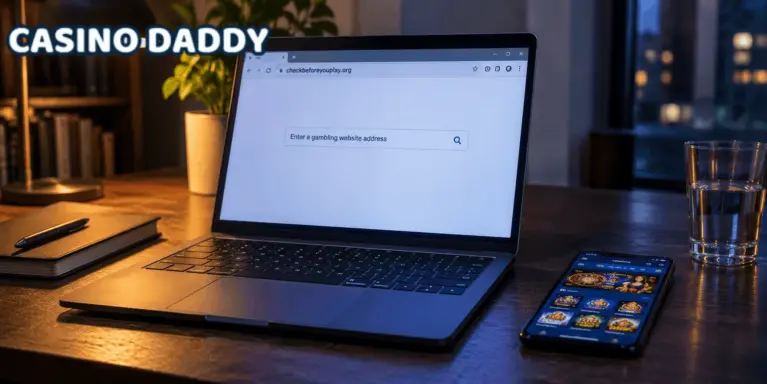
Spotting an illegal casino site has always come down to guesswork. A polished homepage, a familiar game lobby and a generous welcome offer look identical on a licensed platform and on one running without any licence at all. The International Association of Gaming Regulators has now put a free verification service called CheckBeforeYouPlay.org in front of players. Paste a gambling site’s web address into the CheckBeforeYouPlay tool, and it returns the licensing information held for that operator across every participating regulator jurisdiction.
How the CheckBeforeYouPlay Tool Verifies a Site
The platform went live on 9 November and asks for nothing more than a URL. Behind that simple input sits a database assembled from regulatory records and other verified public sources, covering the jurisdictions whose regulators have signed on to the project. Sharp Vision, a Paris-based regulatory technology company, built and contributed the system that powers the CheckBeforeYouPlay tool. Its day job involves helping gambling regulators monitor their markets, analyse betting and payment data, and identify unlicensed sites operating where they should not be.
That origin matters for accuracy. Fake licence badges sit in operator footers all over the internet, and a player who trusts one of those is reading marketing copy rather than a regulatory record. CheckBeforeYouPlay draws on the same sources the agencies themselves maintain, so an answer from the tool carries institutional weight instead of a vendor’s assurance.
Ontario Backs the Canadian Rollout
Canada’s participation runs through the Alcohol and Gaming Commission of Ontario, which publicly supported both the launch and the campaign around it. Ontario opened its regulated iGaming market to private operators in April 2022, and the AGCO has spent the years since chasing operators, suppliers and content that slip outside the framework. Its position on this one is blunt. Ontarians deserve to know exactly who they are dealing with before they place a bet.
Ontario players already had the AGCO’s own list of registered casinos and sportsbooks to consult. CheckBeforeYouPlay adds a second route, and a far faster tool for anyone who lands on an unfamiliar site through an ad or a social post rather than a deliberate search. One address bar, one answer, no registry page to cross-reference.
Illegal Gambling Awareness Week Gave the Launch a Stage
The tool arrived inside the inaugural Illegal Gambling Awareness Week, which ran from 9 to 13 November. IAGR announced the campaign in late October during its annual conference in Lima, pitching it as the first internationally coordinated effort to warn consumers about unlicensed operators. Most awareness campaigns in this industry concentrate on how much people gamble. This one asks a different question altogether, about where they are gambling in the first place.
IAGR invited member regulators to brand the materials as their own, publish content daily and arrange local media coverage. Michigan’s Gaming Control Board took part, pointing residents toward its own licensed-operator list and toward the CheckBeforeYouPlay tool, which it placed beside its standing invitation for residents to report suspected illegal operators. Florida’s commission joined too, with a reminder that the state permits exactly one legal online sportsbook.
What Unlicensed Sites Actually Cost Players
The case for the campaign rests on concrete harm rather than abstract principle. Players who hand personal documents to an unlicensed operator expose themselves to identity theft and financial data theft, and they have no regulator to turn to when something goes wrong. Deposit limits, self-exclusion and reality checks exist because licence conditions require them, so a site outside any framework carries none of them by default.
Then there is the money. Withdrawal disputes on unlicensed platforms end wherever the operator decides they end, because no appeals body sits above them. A player who wins big on a site holding no licence in their jurisdiction can discover that the balance on screen and the money that reaches their bank account are two very different numbers. CheckBeforeYouPlay cannot recover that money, but the tool takes seconds to run and would have flagged the risk before any deposit left the account.
Why the Habit Matters More Than the Technology
Kevin Mullally, who became IAGR’s first chief executive in February, framed the goal as a behavioural one. He wants a licence check to become routine, something players run before they open an account or move money, with the same reflex that makes people glance at a padlock icon before typing in card details. Any verification system only works when people actually reach for it.
That is the real test ahead. The data is in place, the technology works, and regulators across several countries now point to one address instead of a dozen scattered registry pages. What happens next depends on how many players open the CheckBeforeYouPlay tool before they deposit rather than after something has already gone wrong. Awareness campaigns run for a week, and the habit this one is built to create needs to last considerably longer.

The Author
The Author
Slots and News Reviewer