








Shirt Ban Aside, Premier League Gambling Ads Grew 42%


Shirt fronts in the Premier League look cleaner this season than they have in years, and the advertising around them has never been busier. Researchers at the University of Bristol counted 15,571 Premier League gambling ads across the opening weekend of the 2026/27 campaign, roughly 42% more than at the same point in 2023, when clubs first agreed to remove betting brands from matchday shirts. The logos came off the chest. The money behind them found new surfaces, and the reform campaigners who predicted exactly that now have a number to take to ministers.
Five Hours of Branding in a Single Weekend
Bristol’s team has monitored betting marketing in league coverage for four straight years. Across the opening weekend of 2026/27, Premier League gambling ads held space on screen for a combined five hours and 16 minutes, a figure built from every individual appearance of a betting brand. A rotating hoarding that cycles one logo a dozen times therefore adds a dozen entries to the count.
Season on season, the picture looks like progress. Overall exposure fell 10.5% compared with last year, and the front of every shirt is now free of betting brands. Stretch the comparison back to 2023 and that progress disappears, because Premier League gambling ads have climbed well past the level recorded when clubs signed the agreement.
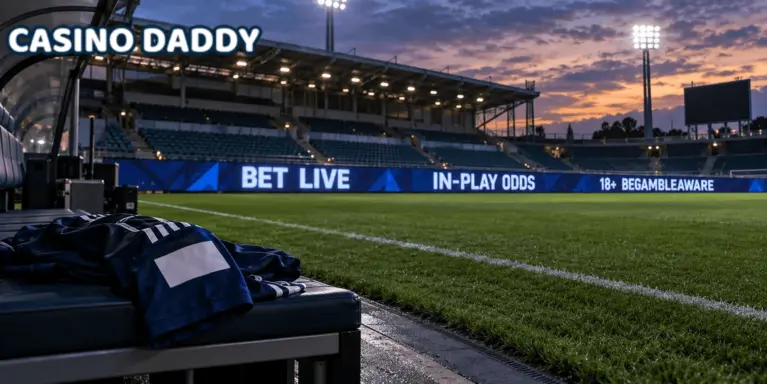
Pitchside hoardings did most of the work, accounting for 72% of all Premier League gambling ads logged during live play. The study also compared competitions, and the gap is wide: league coverage averaged 2,449 betting messages per match over the four-year period, against 1,677 in the Bundesliga and 483 across NBA and NHL broadcasts in the United States. English football sells more gambling exposure than any comparable competition on television.
Where Premier League Gambling Ads Went Instead
The voluntary deal covered one square of fabric and nothing else. Sleeve and training-kit placements rose 362% in a single season, which is the clearest sign that sponsorship budgets moved rather than shrank. Clubs kept their betting partners, and Premier League gambling ads simply relocated to somewhere else on the kit.
Manchester United signed a training kit agreement with Betway in August, and Tottenham Hotspur struck a similar deal with Betano in June. Aston Villa and Everton both run gambling brands on their sleeves. None of these arrangements breaks any rule, because the ban clubs voted for was narrow by design.
Betting Money Still Runs Through English Football
Gambling companies sit behind 13% of all new sponsorship deals signed for the 2026/27 season. Nineteen Premier League clubs and 19 Championship clubs hold a betting partnership of one kind or another, which covers almost the entirety of the top two divisions in English football. The commercial relationship survived the transition more or less intact.
The league points to football’s Gambling Code of Conduct, which sets standards for responsible sponsorship and includes protections for younger audiences. It also argues that some formats appearing during live broadcasts sit outside its control, a fair point given that broadcasters and venues sell most of the pitchside inventory where Premier League gambling ads cluster. Clubs and the league say they take child protection seriously and continue to work with government on compliance monitoring.
Campaigners Want Parliament to Take Over
Nick Harvey, spokesperson for the Coalition to End Gambling Ads, described the shirt-front removal as a cynical move by a league that knew the branding could shift to sleeves, training kits and stadium boards. His group is preparing to deliver a petition signed by more than 27,000 people to Downing Street. Sir Iain Duncan Smith MP, co-chair of the All-Party Parliamentary Group for Gambling Reform, called the voluntary approach a failure and said fans still sit through thousands of betting messages per broadcast.
Government attention sits elsewhere for now. The Department for Culture, Media and Sport welcomed the shirt-front change and has put its energy into barring operators without UK licences from sponsoring British sport. Licensed firms face no new restriction, which leaves most Premier League gambling ads exactly where they are.
What Happens Next
Dr Raffaello Rossi, Senior Lecturer in Marketing at the University of Bristol Business School, will present the findings to the APPG as MPs weigh up statutory limits. His argument is blunt: the ban cleared logos off shirt fronts and left them everywhere else in football. With four years of monitoring behind it, that claim lands harder than the usual campaign rhetoric, and the MPs hearing it have already said the voluntary route is not working.
Nothing in the current framework forces the next move. The league can keep its voluntary code, clubs can keep signing sleeve and training-kit deals, and Premier League gambling ads can keep filling the five hours of screen time that fans absorb across a single weekend of football. Change arrives when legislation arrives, or when the sport decides the scrutiny costs more than the sponsorship pays.

The Author
The Author
Slots and News Reviewer