









Sri Lanka Targets Unlicensed Gambling With 24 Site Blocks


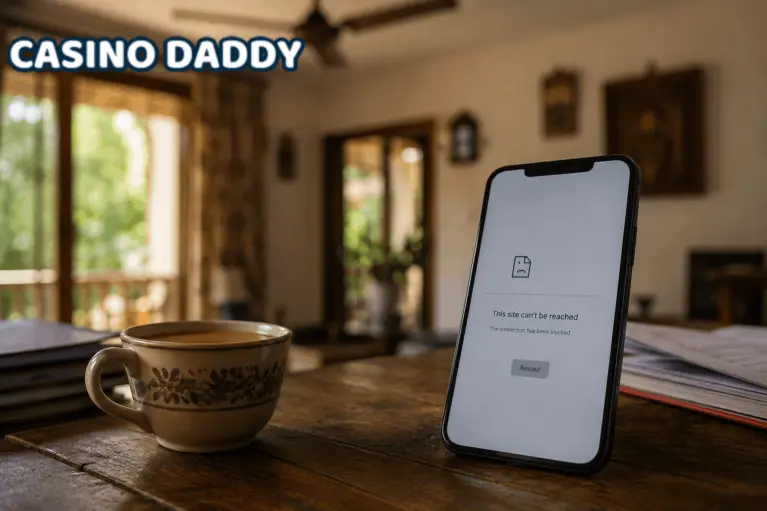
Sri Lanka has cut off access to 24 online betting and casino sites in a single order, leaving players across the country staring at dead links. The Telecommunications Regulatory Commission of Sri Lanka instructed every telecom provider to block the platforms with immediate effect. Each site stood accused of serving local players without the required approvals, which puts the action squarely against unlicensed gambling operators in Sri Lanka. It is the first enforcement move of real scale under the country’s new regulatory framework.
The blocklist reads like a roll call of the industry. Stake, bet365, Betway and 1xBet all feature on it, alongside Betfair, Unibet, Dafabet and 22Bet. Melbet, BC.Game, Parimatch, Mostbet, 1Win and BetWinner round out the named platforms. None of them held the licences Sri Lanka now demands, which places every one of them in the unlicensed gambling category.
The Law Behind the Blocking Order
The directive came under the Gambling Regulatory Authority Act No. 17 of 2025, which took effect on 1 December last year. That law swept away a scattered set of older rules and replaced them with a single framework covering land-based venues and online play alike. It also created the Gambling Regulatory Authority, a new body sitting under the Ministry of Finance, Planning and Economic Development. The GRA now carries responsibility for licensing and oversight across the entire sector.
Operators cannot simply hold a general permit and move online. The law requires a separate digital gambling licence for internet-based services. Applicants must also be incorporated or registered under the Companies Act, a condition that rules out purely offshore structures. Advertising any service that breaches those terms is prohibited too, so Sri Lanka’s rules on unlicensed gambling reach well beyond the sites themselves.
How Sri Lanka Defines Unlicensed Gambling
Section 44 of the Act sets out penalties for violations, and that provision underpins the current action. Officials have framed the move carefully as a licensing matter rather than a blanket prohibition. Online play stays legal in the country, but only where the operator holds local approval. Everything outside that approval counts as unlicensed gambling, and Sri Lanka has now shown it will act on the distinction.
A Regulator Still Under Construction
An awkward gap runs through this story. The GRA missed a parliamentary deadline of 30 June 2026 to begin full operations. Recruitment for the Director General position and other senior appointments had not been completed by that date. So the body ordering compliance is not yet fully staffed, even as Sri Lanka moves hard against unlicensed gambling operators.
The rules themselves remain unfinished as well. Regulations covering the GRA’s broader licensing and enforcement duties are still under expert review, with completion expected around October. That first package should address licensing procedures, permitted gambling activities, online requirements and anti-money laundering controls. Operators shut out this week therefore have no finished rulebook to comply with.
Money Sits Close to the Centre
Financial flows help explain the urgency behind the order. Earlier reporting pointed to more than 40 local payment channels being used by offshore gambling platforms. Tax revenue from all that activity stayed outside government hands entirely. Pulling offshore operators under domestic supervision closes both gaps at once.
Sri Lanka has also worked with regional partners on cross-border enforcement against unlicensed gambling networks over recent months. The blocking order fits that wider pattern rather than standing alone. Officials have been building toward tighter control of gambling money for some time.
What Players in Sri Lanka Face Now
Authorities urged consumers to steer clear of unauthorised platforms and warned against depositing funds with them. They also flagged possible legal consequences for anyone who keeps using blocked sites. Anyone reaching an unlicensed gambling site from Sri Lanka now does so without any local consumer protection behind them.
Technical workarounds remain available, and VPN traffic will almost certainly climb. Blocking at the ISP level stops casual access but does little against determined users. Enforcement of this kind buys attention more reliably than it buys compliance.
Who Actually Plays Here
Market data gives some sense of who the block affects. Around 55% of online gambling users in the country are aged between 25 and 44. Roughly half work full time, 20% are self-employed and 35% hold a university education.
Sports betting leads the product mix at 30% of activity, followed by bingo at 25% and lotteries at 20%. Social media and search engines serve as the main routes through which players discover gambling services. Around 70% of users fall into the non-problem gambling category, while 5% sit in the problem gambling group.
A Signal, Not a Finished System
Twenty-four blocked domains send a clear message to the offshore industry. Sri Lanka intends to police its market rather than let it run unsupervised. The scale of this first action, and the size of the brands caught by it, leaves little room for misreading.
The harder question is what comes next. Operators have no practical route back into the market until the GRA is fully staffed and the licensing regulations are published. Sri Lanka has drawn its line against unlicensed gambling firmly, but the doorway for licensed operators is still under construction.

The Author
The Author
Slots and News Reviewer