










Skill Games Are Officially Classified as Gambling in Pennsylvania


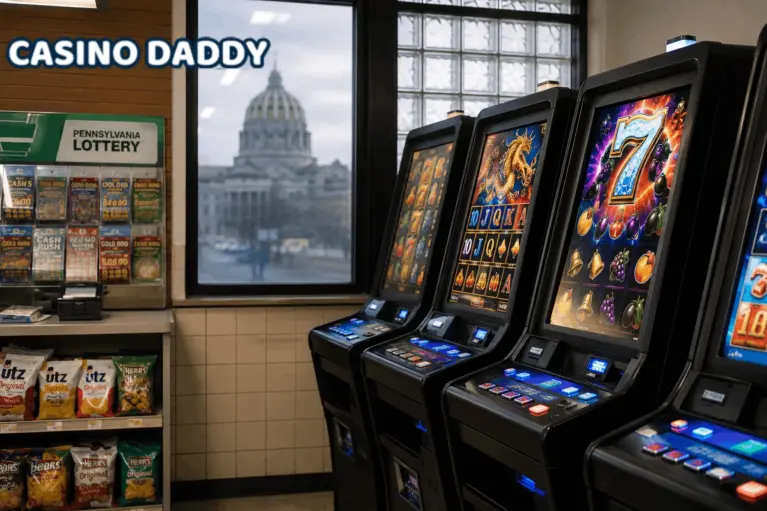
Skill games are classified as gambling in Pennsylvania, following a ruling this week from the state’s Supreme Court. The justices determined that the machines meet the legal definition of slot machines. These devices sit in bars, gas stations, convenience stores, and social clubs across the state. The decision passed by an almost unanimous vote and closes years of legal uncertainty.
A Decade-Long Legal Fight
The fight over how to treat these machines has dragged on for nearly a decade. Lower courts had often sided with manufacturers, ruling that the skill element set the devices apart from ordinary slots. Casinos and state officials disagreed and pushed the issue toward Pennsylvania’s highest court.
Licensed casinos pay heavy taxes on slot revenue under state law. Skill game terminals, by contrast, largely operated outside that tax structure in gas stations, bars, and convenience stores. That gap became one of the casino industry’s biggest complaints, and it gave regulators a strong incentive to fight for stricter classification.
The financial stakes explain why the case climbed all the way to the state’s highest court. Casinos estimated they were losing meaningful revenue to untaxed terminals competing for the same dollars. Regulators worried about consumer protections too, since skill game machines faced none of the inspection standards that apply to licensed slots.
Why Skill Games Are Classified as Gambling in Pennsylvania
Justice David Wecht wrote the majority opinion. He pointed to changes lawmakers made to the state’s Gaming Act in 2017. That update added terms like “skill slot machine” and “hybrid slot machine” into Pennsylvania law.
Wecht said that choice of language settles the question. “Our General Assembly already has spoken clearly on this subject,” he wrote. A skill element, he added, does not exempt a machine from gambling rules.
Operators have argued for years that the games differ from ordinary slots because players can improve their odds through memory and decision-making. The court rejected that argument outright. A machine does not escape slot machine status just because skill plays a role in the payout, the justices found. That reasoning explains why skill games are classified as gambling in Pennsylvania now, regardless of how much input players have over the outcome.
Who Wins From the Ruling
The decision favors Pennsylvania’s casinos, gaming regulators, state police, and lottery officials. All of them argued for years that the machines belonged under gambling law rather than running as unregulated games. Attorney General Dave Sunday welcomed the ruling and called it a win for consumers and taxpayers. He said the decision gives players stronger guarantees that the games stay fair and properly overseen.
A 120-Day Countdown for Lawmakers
The ruling will not take effect immediately. Justices imposed a 120-day stay, so the machines can keep running while lawmakers work out new rules. That window gives the General Assembly room to debate taxes and regulations instead of rushing toward an outright ban.
Some lawmakers have floated tax rates similar to those on traditional slot machines. Others want stricter limits on how many terminals a single business can host. Either path would reshape the industry, since operators can no longer claim the machines sit outside gambling law.
Pennsylvania is not alone in wrestling with this question. States including Georgia, Virginia, and Kentucky have faced similar fights over how to label and tax the same kind of terminals. Pennsylvania’s ruling gives those debates a fresh reference point. One of the largest markets for skill games just settled the legal question through its highest court rather than through new legislation.
Industry Warns of Fallout
Pace-O-Matic, one of the largest suppliers of skill games in Pennsylvania, pushed back hard against the ruling. The company said the decision ignores earlier lower court rulings that had found the machines legal. More than 10,000 small businesses and nonprofit organizations could feel the impact, the company warned, because many rely on the machines for extra revenue.
Pace-O-Matic has spent years building relationships with small business owners who host its terminals. Owners often split revenue with operators, turning a single machine into steady supplemental income. A sudden ban or a steep new tax could change those numbers fast.
What Comes Next
The matter now moves to the Pennsylvania General Assembly. Lawmakers must decide whether to formally legalize, regulate, and tax the machines before the 120-day stay runs out. Now that skill games are classified as gambling in Pennsylvania, the legal question is closed. Lawmakers face a different fight: working out taxes and oversight before the stay expires.
For casinos and other licensed operators, the ruling offers some relief. A regulated framework could level the playing field and bring fresh tax revenue into the state. For small businesses and nonprofits that depend on the machines, the next four months carry real stakes.

The Author
The Author
Slots and News Reviewer