







Bulgaria Now Requires a Gambling Affiliate Licence


Bulgaria has brought gambling affiliates under direct state supervision for the first time. Since 1 August 2026, any business or individual earning commission from player activity in Bulgaria must hold a gambling affiliate licence issued by the National Revenue Agency. The requirement arrived through amendments to the Bulgarian Gambling Act, which drew their authority from the 2026 State Budget Act. The agency published its implementation guidance on 6 August.
The transition window was short. Existing affiliates had until 15 August to submit applications, which gave them roughly two weeks to read the guidance and file the paperwork. So a corner of the market that operated without specific oversight for years now sits inside a licensing regime with real financial teeth.
How Affiliates Get Paid Now Decides Everything
The regime pays little attention to what an affiliate publishes. It focuses on how the money reaches them. Any arrangement tying compensation to registrations, deposits, wagers, winnings or recruited players now requires a gambling affiliate licence in Bulgaria. That captures revenue share deals, CPA agreements and hybrid structures alike.
Traditional advertising sits outside the net. Fixed fees and time-based placements stay unregulated, because neither depends on what a player actually does after clicking. Regulators drew the line at measurable gambling outcomes. A banner sold for a flat monthly rate needs no approval, but the same banner paid on deposits does.
What a Gambling Affiliate Licence in Bulgaria Requires
Each licence runs for five years. Renewal applications must land at least two months before expiry, so lapsed paperwork becomes a compliance failure rather than an administrative delay.
The rules apply equally to Bulgarian and foreign applicants. Overseas affiliates must appoint an authorised representative with a Bulgarian address before they can obtain approval. That single clause adds cost and local exposure for international operators who previously served the market from anywhere.
Applicants also declare every channel they use to promote gambling. Websites, mobile apps, social media accounts, video platforms and streaming services all go on the record, and the declared list becomes part of the official licence documentation.
The agency aims to review applications within seven days. If documents are incomplete, it must notify the applicant within three days and allow another seven for corrections.
The Price of Staying Compliant
Money is where the regime bites hardest. A gambling affiliate licence in Bulgaria carries an annual maintenance fee of €6,000, due by 31 March each year. Anyone approved after that date pays before the certificate is issued.
On top of the flat fee sits a variable charge of 10% on performance-based commission revenue. Operators handle the mechanics. They withhold the amount from commission payments and remit it through monthly electronic declarations, filed by the 15th day of the following month.
Concealment carries a steeper price. Where a transaction hides the true commission value, the rate doubles to 20% of the concealed sum. Licensed affiliates also face a hard partner restriction. They may promote only operators holding an active Bulgarian gambling licence.
Fines, Confiscation and Blocking Orders
The enforcement side is broad. Businesses that use unlicensed affiliates face property sanctions of roughly €5,000 to €20,000, and repeat breaches can double those figures.
Affiliates promoting operators without Bulgarian approval risk fines of about €3,000 to €10,000, or property sanctions between €5,000 and €20,000. Breaching existing advertising restrictions triggers a separate tier, with fines near €2,000 to €5,000 or sanctions from €3,000 to €8,000. Authorities can also confiscate money earned through unlicensed affiliate activity.
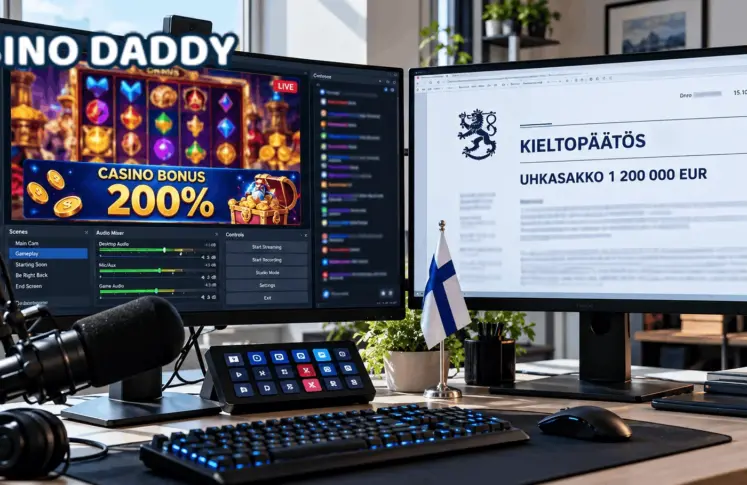
The sharpest tool is digital. The agency can order the blocking of websites, applications, social media profiles and streaming channels run by unlicensed affiliates. That reach extends well past traditional review sites and lands squarely on casino streamers and social content creators working the Bulgarian market.
What Comes Next for the Market
Affiliates active in the country now face a straightforward audit of their own contracts. Every deal linking payment to player behaviour needs review, and every promotional channel needs declaring. Partnerships with operators lacking Bulgarian approval have turned into a liability rather than a revenue stream.
The wider question is how far this model travels. Most European regulators have policed affiliates indirectly, leaning on operators to control their marketing partners. Bulgaria chose direct licensing instead, complete with a revenue levy and the power to switch off a channel. Other markets facing the same enforcement gap will be watching how it performs.
For anyone earning performance commission in the country, the position is now simple. You need a gambling affiliate licence in Bulgaria, and the deadline has already passed. The penalties for ignoring that reach your bank account and your traffic at the same time.

The Author
The Author
Slots and News Reviewer