

German Ruling on Online Gambling Refunds Due 28 January 2027


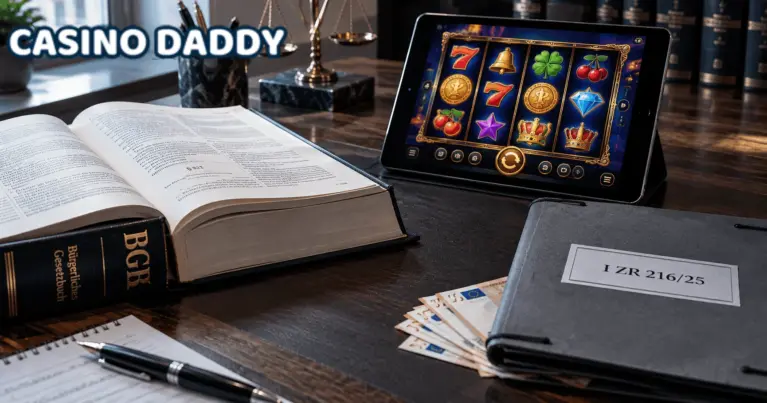
Germany’s highest civil court has fixed a date that thousands of players have been waiting on. On 28 January 2027, the Federal Court of Justice decides whether German players can claim online gambling refunds from operators that took their money without a German licence. The judges leaned toward the player’s side during a hearing in September, although nothing is settled yet. Operators that served the market before 2021 are watching the calendar closely.
One Player, One Maltese Licence
The lead case involves a claimant who played online casino games with Tipico Games between December 2020 and September 2022, losing more than EUR 10,000 in the process. Tipico Games held a licence from the Malta Gaming Authority during that period but no German permit for the products it offered. The player argues the gaming contracts were void from the start, which would leave the operator with no legal basis for keeping the stakes.
Lower courts agreed with him. In September 2025, the Higher Regional Court of Stuttgart found that the operator had received the money without any valid legal foundation, because German rules at the time prohibited or heavily restricted what it was selling. Tipico appealed to the Federal Court of Justice, where the case carries the reference I ZR 216/25.
A second case, I ZR 78/25, went before the same panel on 17 September 2026 and will receive its judgment on the same day. Both run as lead-decision proceedings, so the two judgments set the framework for every German court handling online gambling refunds instead of resolving a pair of isolated disputes. Lawyers acting for Tipico asked the panel to pause until two pending European decisions arrive.
What German Law Says About Online Gambling Refunds
Germany banned online casino gaming almost everywhere until the 2021 treaty took effect, with Schleswig-Holstein the single early exception. Plenty of operators held licences in Malta or other EU states, yet those permits never authorised them to serve German customers. That gap is what German courts rely on when they order online gambling refunds.
Where a contract was void, German civil law treats the money as unjust enrichment and gives the player a route to recover it. Courts have applied that reasoning consistently. Limitation periods complicate things, because older losses fall outside the standard window and depend on a residual damages provision that not every court reads the same way.
The European Court of Justice cleared a major obstacle in April 2026, confirming that EU law does not stop member states from banning certain gambling services or attaching civil consequences to breaches of those rules. That decision knocked out the argument operators had leaned on hardest. German judges weighing online gambling refunds no longer need to worry about colliding with single market law.
Thousands of Claims Are Already Waiting
Thomas Dünchheim, a gambling law specialist at Greenberg Traurig, says lawyers have spent months gathering claimants, some of them carrying losses in the tens of thousands of euros. He draws a parallel with the mass compensation actions seen in other industries, where litigation funders bundle individual files into far larger proceedings. A similar structure forming around German claims for online gambling refunds would change the financial scale of the problem considerably.
Operators have a defence ready. They argue that players who knew the games were unlawful and played anyway should not recover their stakes, and Dünchheim expects that question to become the central battleground once the lead judgments land. German courts have mostly rejected the argument so far, but the Federal Court of Justice has not addressed it directly.
Every claim still turns on its own facts. Where a player gambled, what the operator advertised, when the losses happened and how long the claimant waited before suing all feed into the result. German courts awarding online gambling refunds assess each file separately, so a favourable ruling in January converts nothing automatically.
The Problem With Handing the Money Back
The prospect of German players collecting online gambling refunds has raised questions among addiction researchers. Tobias Hayer, a psychologist at the University of Bremen’s Institute for Public Health and Nursing Research, points to the features that make online play riskier than its land-based equivalent. Players stay anonymous, the games run at any hour, payments move instantly, and the speed of play allows enormous volumes of wagering in a single sitting.
He also raises a caution that sits awkwardly beside the good news. A large sum landing in the account of someone whose addiction remains untreated can push them straight back into the same behaviour. Support structures matter as much as the payment itself, so the money alone solves very little.
What Happens on 28 January
The judgments will not hand every claimant a cheque. They settle the principles that lower courts have been applying unevenly, which matters far more in the long run than the fate of two individual files. Void contracts, limitation deadlines and losses racked up while a player was abroad all sit on the table.
For operators that served Germany before the 2021 treaty, the exposure stays difficult to quantify. Nobody has produced a credible estimate of the total bill, and the companies involved have disclosed nothing about provisions. A broad ruling for players would move German claims for online gambling refunds out of scattered litigation and into sector-wide liability.
Until the panel speaks, nothing is decided. The September hearing pointed in a direction without committing the court to it, and Tipico’s request to wait for pending European rulings may still shape the reasoning. Players with losses from the prohibition years have three months to watch, and lawyers on both sides have three months to prepare.

The Author
The Author
Slots and News Reviewer