










L&L Europe Agrees £900K Fine Over Delayed Withdrawals


Anyone who has watched a casino balance sit in pending limbo for three days will recognise the practice at the centre of this case. L&L Europe Limited, the Malta-registered operator behind All British Casino, CasinoCasino and HyperCasino, agreed to pay a fine of GBP 900,000 after the UK Gambling Commission found it put unnecessary obstacles between customers and their own winnings. The regulator published its decision on 21 October. Sitting alongside the withdrawal findings are serious failures in anti-money laundering controls and in the systems meant to catch players heading for trouble.
One Request, Then Wait
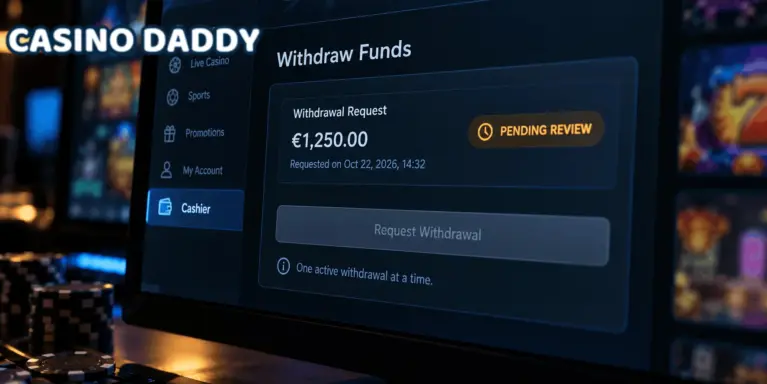
The clause that drew the sharpest criticism was easy enough to miss in a terms and conditions page. Customers could hold only one withdrawal request at a time, and anyone wanting to take out more money had to wait for the first request to clear authorisation before submitting another. The Commission ruled the term unfair within the meaning of the Consumer Rights Act 2015. That arrangement, which earned L&L Europe a fine running to six figures, applied across seven brands aimed at British players.
The operator’s fraud and collusion policy added another layer of delay. Some customers had every fifth or tenth withdrawal pulled aside for manual review, which then triggered requests for documents the company could reasonably have asked for at sign-up. Payouts slipped back further for no regulatory reason, and other requests sat withheld on grounds unconnected to any legal obligation at all.
The Regulator Draws a Line on Payout Friction
Sue Young, who runs operations at the Commission, put the principle plainly. Consumers should be able to collect winnings without hitting barriers that serve no purpose. Operators can legitimately ask for information at the point of withdrawal when the law demands it, but the regulator found no such justification anywhere in this operator’s process.
Young also used the decision to speak past the company in front of her. L&L Europe is not the only business that could face a fine over this kind of practice, and she made clear the Commission intends to keep testing how licensees handle payouts. Withdrawal fairness now sits next to anti-money laundering and player protection as an enforcement priority rather than a secondary concern.
Young Players Lost Thousands Before Anyone Called
The social responsibility findings cover the twelve months from October 2024 to October 2025, and they make uncomfortable reading. One customer attempted 84 deposits in seven days, every one of them failing for insufficient funds, and the monitoring system treated none of it as a signal of harm. A 21-year-old lost GBP 6,500 over three days, while an 18-year-old lost GBP 4,000 in eight minutes.
Neither account picked up a high-risk classification. The Commission traced the problem to blanket financial thresholds applied across the whole customer base instead of any real assessment of individual circumstances, which left the system blind to speed, age and pattern. Even when players did cross a threshold meant to prompt contact, the follow-up sometimes arrived late. One customer passed that marker on day one and heard from the casino two weeks afterwards.
Money In, Questions Later
The anti-money laundering findings follow a similar shape. A customer deposited GBP 4,400 within eight hours of opening an account, sending the funds from a bank account that had itself just been opened, and the origin of that money went unverified. The same customer later supplied an incorrect address twice while chasing a withheld withdrawal, and nothing in the process registered the combination as suspicious.
Source of funds checks exist precisely for that pattern. A new account, a new bank, a large deposit inside a single working day and shifting personal details should produce questions before they produce a balance. The Commission found those questions never came.
L&L Europe Pays a Fine With a Message Attached
The money goes to the Consolidated Fund as a payment in lieu of a financial penalty, and the operator is covering part of the investigation costs on top. Chief executive Chris Dalli accepted that internal controls had fallen below the required standard. L&L Europe took the fine without contest, rewrote its withdrawal policies and put an action plan in front of the regulator, and that cooperation is why the case closed as a settlement rather than a formal sanction.
For players, the useful part of the decision is the boundary it draws. A casino can ask for documents when the law requires them, but it cannot manufacture friction, cap how many withdrawals sit in the queue, or hold money back for reasons it never has to explain. Those practices now carry a price.
GBP 900,000 will not frighten the biggest names in the market. The precedent might. L&L Europe will pay its fine and move on, but the clause it had to delete still sits in plenty of other rulebooks, and slow payouts remain the complaint British players raise more than any other. Operators running a one-at-a-time withdrawal queue have been given fair notice.

The Author
The Author
Slots and News Reviewer