











AI Powers Turkey’s Betting Crackdown as Police Detain 169


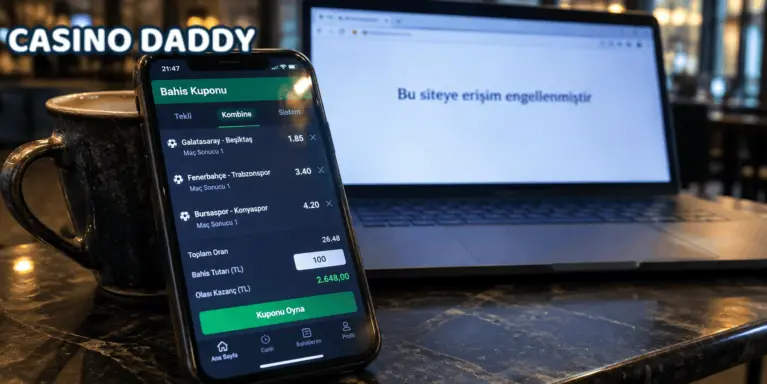
Turkey has handed its betting crackdown a new instrument, and it spends its days reading Telegram. On 3 November, police moved in 39 provinces at once, acting on evidence that an artificial intelligence system built inside the Istanbul force had gathered over weeks of monitoring. Officers detained 169 people, and 121 of them are now in jail pending trial.
The system carries the name AVCI, hunter in Turkish, and its designers aimed it squarely at the spaces that domain blocking never reached. Investigators pointed it at 47 Telegram groups and pulled out roughly 306,000 messages worth a second look. Turkey ran its previous betting operations against websites, and this crackdown went after conversations instead.
How AVCI Reads a Closed Group
AVCI applies natural language processing to open-source material and flags the vocabulary that gives an illegal operation away. It recognises slang, coded substitutions and emoji combinations that mean nothing to an outsider scrolling past. Conversations that look like ordinary football chatter turn out to be odds, stakes and payout instructions once the system sorts them.
The tool also analyses images and video, matches accounts using different display names to the same person, and maps the relationships between them. One feature matters more than the rest for prosecutors, because AVCI captures messages from closed groups as they arrive, which means deleting a conversation afterwards no longer removes it from the evidence file. Investigators keep what the suspects thought they had erased.
Turkey needed something that worked on betting activity hiding inside private groups, and the crackdown now starts at that layer rather than with a list of domains. Operators had already adapted to blocking. Moving the whole business into encrypted chat looked like a safe bet right up until the raids landed.
What the 39-Province Raids Produced
Prosecutors had 194 names on the target list, and officers reached 169 of them during the coordinated operation. Courts jailed 121 pending trial, placed 45 under judicial supervision and released three without restrictions. Turkey coordinated the betting operation across 39 provinces, and the crackdown leaned on evidence that no officer had to physically obtain.
Among those detained sits a 21-year-old software developer whom investigators describe as a central figure in the network. He allegedly ran his Telegram presence under a handle referencing Michael Carroll, the British lottery winner who became a tabloid fixture for burning through his jackpot. None of the allegations against him has been tested in court yet.
Turkey Tested the Same Tool in Its May Betting Crackdown
Police ran AVCI through a similar operation back in May, working across 35 provinces and processing around 600,000 messages before anyone moved. That sweep ended with 108 arrests. It also triggered one of the broadest blocking rounds ordered in a single Turkish case.
Authorities cut access to 5,151 sites. Of those, 5,000 hosted illegal betting, 111 advertised the platforms and funnelled mobile users toward them, and 40 processed payments. Turkey has been blocking betting domains since 2006, and the crackdown has never stopped the market from reappearing under fresh addresses within hours, which explains why the messaging-app layer became the priority this year.
A $102M Money Trail Runs Through Aydın
A separate gendarmerie-led investigation out of Aydın went after the money rather than the chat logs. Officers identified 40 suspects whose bank accounts moved TRY 3.484 billion between them, roughly $102 million. On 3 November, the same day as the Istanbul-led operation, teams detained 37 people across 14 provinces.
Investigators then imposed precautionary measures on 467 bank accounts, four cryptocurrency accounts and four vehicles. Searches turned up phones, computers, storage devices and SIM cards. The financial side of Turkey’s enforcement now moves at the same pace as the betting crackdown aimed at operators, and the two tracks landing on the same date was not a coincidence.
Licensed Sportsbooks Are Taking Hits Too
Turkey’s regulated betting market has vulnerabilities of its own, and the crackdown has already reached them. Four suspects went to jail pending trial in October over an alleged scheme built on delayed live sports data, which would have let bettors wager on moments that had already happened. Prosecutors put the losses to data provider Spordata and licensed sportsbooks at around TRY 12 million, or $240,000.
The case runs on a different logic from the Telegram networks. Nobody needed an unlicensed site to pull it off, because the alleged manipulation happened inside the legal system through a timing gap in the data feed. Enforcement has to cover both problems at once now.
What Comes Next
Two AVCI-assisted operations this year have produced 277 detentions and close to 900,000 analysed messages between them. The pattern points toward more of the same, since the system gets cheaper to run every time investigators feed it a fresh vocabulary. Operators who treated encrypted group chats as safe ground now have to price in a machine archiving everything in real time.
Turkey still offers almost no legal route for online betting, so the crackdown runs without a licensing valve to channel demand anywhere useful. Players keep looking for somewhere to place a bet. New operators keep surfacing to serve them, and the tooling that catches those operators improved dramatically this year while the economics underneath the market did not move an inch.

The Author
The Author
Slots and News Reviewer