










Italy Plans Esports Regulation Under Its Gambling Watchdog


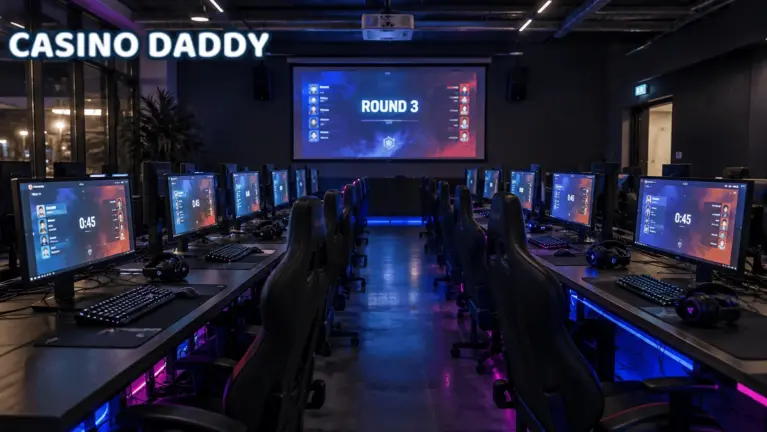
Italy’s LAN gaming halls take no bets, run no house games, and sell nothing more exotic than an hour at a high-spec PC. The country’s 2027 budget bill would still hand them to the agency that polices casinos and betting shops. Under the draft, Italy would run esports regulation through the Agenzia delle Dogane e dei Monopoli, with license fees, per-device taxes and five-year data retention attached to the job. The video game industry wants it gone.
A Licensing Regime Lifted From the Gambling Playbook
The provision covers any venue where customers pay to use networked gaming equipment. In practice that means LAN halls and esports centers, the places where players rent a seat for the afternoon or turn up for a local tournament. Operators would need authorization from ADM, renewed every two years, before they could keep the doors open. That requirement alone drops Italy’s esports regulation onto the same administrative footing as the country’s gaming machine sector, where one agency decides who trades and on what terms.
The fee schedule reaches almost every component of the business. Each gaming device would cost EUR 200, roughly $224, and the venue itself carries a charge of EUR 1,000, around $1,120, before anyone counts the games. A single title would run to EUR 2,000, about $2,240, with online platforms at EUR 10,000.
Then comes the tax. The draft sets an annual taxable base of EUR 15,000, about $16,830, for every device or station on the premises, and applies an 8% entertainment levy on top of it. Venues also need a minimum of 20 stations to qualify. That puts the smallest compliant operator on a taxable base of EUR 300,000 before it sells a single hour of play, and Italy’s esports regulation would apply the same math to every room in the country.
Italy’s Plan Would Push Esports Regulation Into Tournaments and Server Logs
Licensing is only the entry point. ADM would set technical requirements for platforms, gaming centers and the games themselves, deciding which titles qualify for approval in the first place. It would also write the rules governing tournaments, from participation fees to prize structures, with a levy of up to 8% on entry fees funding the oversight work. The agency would decide what counts as a competition.
Record keeping carries its own weight. Operators would retain logs of online activity on their terminals for at least five years. That obligation covers every customer who sits down at a machine, and the bill would also bar betting of any kind on the premises, a restriction aimed at activity these venues almost never host in the first place. Italy would file a room of players grinding ranked matches under the same esports regulation logic that governs a betting shop.
The Revenue Projections Run Into a Much Smaller Market
The financial case attached to the bill assumes explosive growth. A technical report projects 200 LAN gaming centers operating in Italy by 2027 and 2,300 by 2028, together generating more than EUR 66 million, roughly $74 million, in tax and fee revenue. Much of the argument Italy makes for esports regulation rests on those two numbers holding up.
They do not survive contact with the current market. Italy has around 70 LAN centers today, and a meaningful share of them sit below the 20-machine threshold the bill would impose. The entire Italian esports sector was worth roughly EUR 32 million in 2026, about $35.9 million, which puts the projected tax take at double the value of the industry it targets.
The growth curve is the harder problem. Reaching 2,300 venues inside two years would require the sector to multiply more than thirtyfold. It would have to manage that while absorbing new license costs, a device tax, and a station minimum that disqualifies many operators already trading. Few businesses expand fastest in the year Italy sends its esports venues a new regulation bill.
Why Italy’s Video Game Industry Wants the Esports Regulation Dropped
IIDEA, the trade body representing Italy’s video game industry, published a statement on 6 November calling for the measure to come out of the bill. Its objection rests on proportionality. The costs and the administrative load would fall on a sector still in its early stages, and the association warned that the damage could prove irreversible rather than temporary.
Legal questions followed. IIDEA flagged doubts about compatibility with EU law and data protection rules. The obligation to keep detailed records of what users do online drew the sharpest criticism, since storing that material for half a decade sets a retention standard most consumer businesses never face. The association called it the most troubling element in the package.
What Happens Next in Parliament
Parliamentary examination of the budget bill has only just begun, so the provision can still change shape, narrow, or disappear before the final vote. Budget legislation moves fast in Italy. It regularly carries measures that attract little scrutiny on the way through, which is part of why IIDEA has asked lawmakers to ground any changes in realistic data and consult the businesses that would have to comply.
The bigger question sits above the fee schedule. Italy would extend gambling oversight to venues where nobody wagers anything, on the reasoning that paid access to gaming machines sits close enough to the real thing to warrant the same treatment. If that reasoning survives parliament, Italy hands the rest of Europe a working template for esports regulation. The line between gaming hall and gambling hall thins from there.

The Author
The Author
Slots and News Reviewer