










Brazil Bill Would Turn Betting Losses Into Refunds


Players in Brazil who lost money on licensed betting sites could receive refunds under a bill now sitting in two congressional committees. Deputy Ricardo Abrão filed PL 5,502/2026 on 1 October, and it reached two House committees on 12 November. The proposal reaches far past the trapped balances and unpaid prizes that September’s market shutdown left behind, into money players lost on bets they placed legally while operators still held valid licences. Lawyers acting for the sector have already called it an aberration.
Ten Ways to Owe a Player Money
Abrão’s text creates what he calls the Full Restitution and Compensation for Bettors Law, and it sets out ten circumstances in which Brazil would require an operator to issue betting refunds. Several of them are uncontroversial. Withheld account balances, unpaid winnings, cancelled bets, duplicate charges and transactions nobody authorised would all trigger repayment, as would withdrawals a company blocked without justification.
Two further entries carry heavier consequences. Operators would owe money for accepting wagers from customers under self-exclusion or blocking measures, and for losses caused by fraud, technical failure or a platform that dropped offline mid-bet. Any company that kept using customer funds after regulators suspended its authorisation would pay those back too. Then comes the provision that turned a routine consumer bill into a fight: total net losses recorded in an account, with no requirement that the operator did anything wrong.
How Brazil Would Calculate Betting Refunds
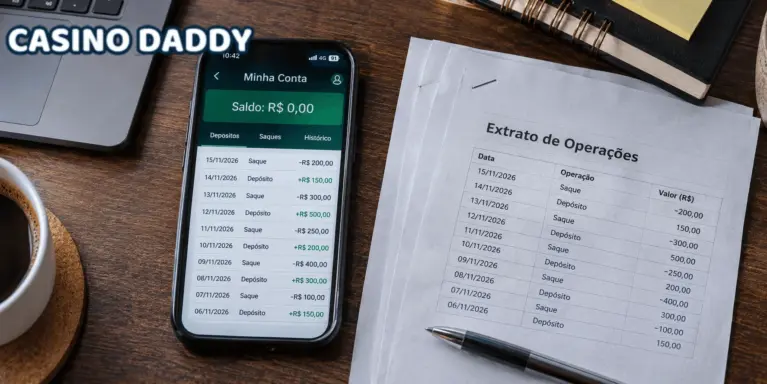
The arithmetic is simple enough. Brazil would set betting refunds against net loss, which the bill defines as deposits minus everything a customer took back out: withdrawals, prizes, chargebacks and reversals, corrected for inflation. Someone who deposited 10,000 reais and withdrew 4,000 would get 6,000 back. The correction accounts for the months that money spent inside the company.
Operators would also produce a complete transaction statement on request, free of charge, inside ten working days. Owners and controlling shareholders carry the liability alongside the company. That stops a platform from dissolving and walking away. No public money enters the calculation, and Abrão treats that as the principle at stake: the sector built the losses, so the sector repays them.
The Case Against It
Udo Seckelmann, a gaming and betting lawyer at Bichara e Motta Advogados, called the proposal a genuine legal aberration. His objection is specific rather than sweeping. He accepts that Brazil can order betting refunds for fraud, withheld money or unpaid prizes, since consumer law already covers that ground. He draws the line at losing bets placed freely, on licensed platforms, under rules the state wrote.
Execution worries him as much as principle. Rebuilding complete financial histories for millions of accounts across dozens of platforms, inside the deadlines the bill imposes, would need infrastructure nobody has. He puts the potential exposure in the billions of reais. Operators cannot find that kind of money after losing their licences and their revenue in the same week. Constitutional challenges would follow quickly, he argues, on proportionality, freedom of enterprise and the protection of completed legal acts.
Why the Gap Exists
The bill answers a hole that Provisional Measure 1,394/2026 left open. Lula signed it on 25 September, banning the operation, offering, intermediation and advertising of fixed-odds betting, and it told companies to return unpaid balances before switching off. Past that the measure said nothing about compensation, so Brazil wrote no rules for betting refunds beyond a leftover balance.
Payment infrastructure has already tightened around the same question. Central Bank resolutions block deposits to betting platforms through Pix, TED and boleto, and permit those channels only for withdrawing funds deposited before the shutdown or for paying restitution. So Brazil already has part of the machinery for betting refunds in place. It sits idle until a law defines what anyone actually owes.
What Happens Next
Nobody should expect a payout. The bill has passed no vote, carries no start date, and sits with two committees that can rewrite it, stall it or let it die. The courts offer no shortcut either. Justice Luiz Fux froze every lower-court case against the shutdown on 8 November, and four constitutional challenges now wait for a ruling with no date attached.
Congress has its own decision to make first, on what becomes of MP 1,394, with a deadline that now stretches into March 2027. Any real push for Brazil to pay betting refunds depends on that answer landing. Until then the bill functions as a signal of political mood, and as notice to the operators that Brazil has not finished counting the cost of what it shut down.

The Author
The Author
Slots and News Reviewer