











Colorado Signs Toughest Sports Betting Law in the US


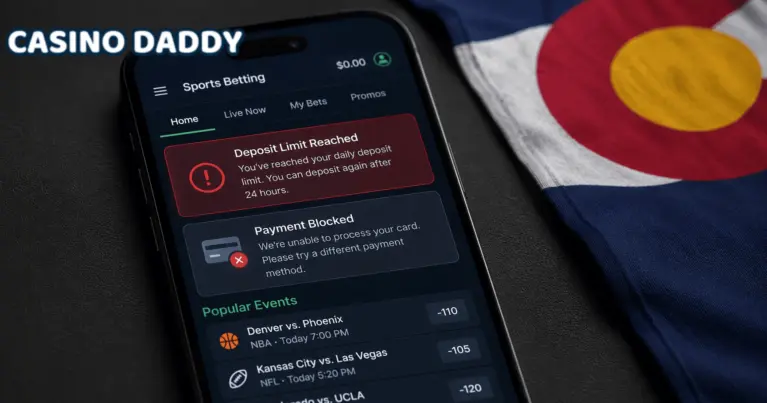
Colorado has enacted what many are calling the most far-reaching sports betting law in the United States. Governor Jared Polis signed Senate Bill 26-131 on June 3, 2026, putting into place a set of consumer protections that go further than any other state has gone so far. The new Colorado sports betting law takes effect on August 12, 2026, and will reshape how licensed operators can do business in the state.
What the Law Actually Requires
The most talked-about provision bans credit card payments for sports betting accounts entirely. Alongside that, the law caps deposits at six within any 24-hour period. Both measures target a pattern regulators and health advocates have flagged for years: bettors spending beyond their means with borrowed money or in rapid succession.
Push notifications and text messages that solicit bets or deposits are now off the table for both operators and their marketing affiliates. Colorado is the first state in the country to prohibit this type of direct outreach. The law also bans promotional language built around phrases like “bonus bets” or “no sweat” offers, and bars any marketing directed at people under 21. Enforcement falls to the Colorado Gaming Control Commission, which can issue penalties of up to $25,000 per violation.
A Bill That Changed on Its Way to the Governor’s Desk
SB 26-131 did not arrive at Polis’s desk in its original form. Earlier drafts included a ban on proposition bets, which are wagers on specific in-game events such as the first team to score or a player’s passing yards. That provision came out after a fiscal analysis projected it would cost the state $2.4 million in annual tax revenue. A proposed advertising blackout during live sports broadcasts was also removed before the final vote.
What remains still carries a projected fiscal impact of around $800,000 per year, driven primarily by the credit card ban. The bill cleared the Senate 20-14 and the House 50-13. That kind of bipartisan margin on gambling regulation is not common. The bill drew support from both Democrats and Republicans, with sponsorship from Senators Matt Ball and Byron Pelton alongside Representatives Steven Woodrow and Dan Woog.
The Scale of What This Law Is Responding To
Colorado’s legal sports betting market has grown fast since it launched in May 2020. Annual wagers have surpassed $6 billion. That growth is the backdrop for SB 26-131, and it makes the consumer protection argument harder to ignore. Public health organization Healthier Colorado found that 73% of state residents believe legalization has worsened problem gambling. The Colorado sports betting law passed, in part, because that concern found a bipartisan audience in the legislature.
Senator Ball put it plainly: the market’s rapid expansion has come at a real cost to family finances, to minors, and to the integrity of sport. Representative Woog echoed that view, framing the law as holding operators to a basic standard of responsibility. The executive director of Healthier Colorado called SB 26-131 the most comprehensive set of online sports betting protections in the country.
Industry Pushback and the Displacement Risk
Not everyone welcomed the signing. FanDuel and DraftKings both pushed back on the legislation during its passage, arguing that tighter restrictions could push bettors toward illegal offshore platforms. Their concern connects to a broader debate about regulated markets: rules that are too strict can shrink the legal space and drive demand underground, where there are no consumer protections at all.
The operators also pointed to Colorado’s $850 million budget deficit. More than 90% of sports betting revenue in the state funds water conservation projects, making any dip in handle a fiscal issue, not just a regulatory one. Those arguments did not stop the bill, but they are likely to shape how the Colorado Gaming Control Commission applies the new rules going forward.
What Changes in August
When the Colorado sports betting law takes effect on August 12, operators will need to have their systems and marketing pipelines updated to comply. The credit card ban requires payment processor changes. The push notification prohibition requires operators to overhaul outreach strategies they have built their retention models around. The $25,000 per-violation penalty structure gives the Gaming Control Commission real teeth to enforce the new requirements.
Colorado has now positioned itself at the front of a conversation that most US states are still having: how much should a legal sports betting market be allowed to do to acquire and retain customers? The answer here is considerably less than before.

The Author
The Author
Slots and News Reviewer