











Germany Gambling Register Hits New Milestones


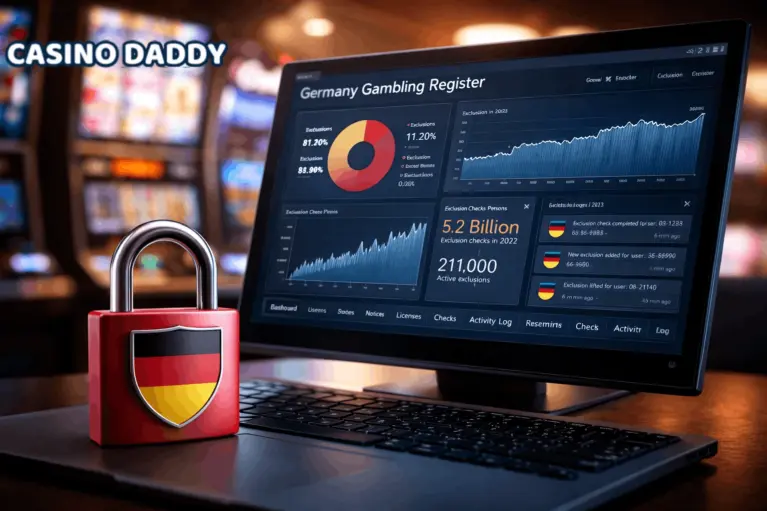
Germany national gambling register and self-exclusion system is showing clear signs of acceleration five years after its introduction. What began as a compliance tool under the country’s modernized gambling framework has evolved into a central pillar of player protection. Recent figures reveal sharp growth in both registrations and operator checks, reflecting deeper integration across the regulated market.
The system, known as OASIS, now processes billions of verification requests annually. That scale highlights how central it has become to daily gambling operations. For regulators, the expansion signals progress in enforcing responsible gambling standards. For operators, it confirms that compliance has shifted from policy requirement to operational constant.
Digital Transformation Drives Participation
One of the most significant developments has been the transition to a fully digital process. Earlier administrative steps required manual handling and paperwork. The shift to a streamlined, paperless system has reduced friction for both players and operators. Players can now submit exclusion requests more efficiently. Processing times have improved, and the system integrates directly into operator platforms. That automation ensures immediate enforcement once a player is registered.
Authorities link the growth in participation directly to this modernization. The easier the process becomes, the more accessible self-exclusion appears to vulnerable players. Removing bureaucratic barriers has encouraged more individuals to take preventive action. At the same time, operators benefit from faster verification checks. Every login or gambling attempt requires confirmation that a customer is not on the exclusion list. The automated system handles these checks instantly, supporting smoother operations while maintaining regulatory integrity.
Billions of Compliance Checks Each Year
The volume of system queries underscores how embedded the register has become. Licensed operators must verify each customer against the database before allowing access to gambling services. That requirement applies to both online platforms and land-based venues.
In the past year alone, the system processed more than five billion checks. That figure reflects continuous, automated validation across thousands of gambling interactions daily. Each check represents a compliance safeguard designed to prevent excluded individuals from participating.
Such numbers illustrate the operational weight of the system. It no longer functions as a peripheral measure. Instead, it sits at the core of Germany’s regulated gambling ecosystem.
The consistency of these checks also signals strict enforcement standards. Operators cannot bypass the system without risking serious regulatory consequences. The mandatory integration ensures uniform application across the market.
A Growing Register of Excluded Players
The register itself continues to expand. More individuals are choosing to exclude themselves, and temporary exclusions remain common. These bans can range from short cooling-off periods to long-term or indefinite exclusions.
The steady increase in registrations suggests heightened awareness of responsible gambling tools. Public campaigns and regulatory communication have likely contributed to this trend. Greater transparency around available safeguards helps normalize self-exclusion as a protective measure rather than a punitive one.
For policymakers, rising participation presents a complex narrative. On one hand, growth signals improved accessibility and awareness. On the other, it reflects persistent gambling harm concerns that require ongoing monitoring.
The register’s expansion also places additional technical demands on operators. Maintaining seamless integration and accurate real-time updates remains critical to system credibility.
Integration Within Germany’s Regulatory Framework
The gambling register operates within the broader structure introduced under Germany Interstate Treaty on Gambling. That regulatory framework standardized licensing requirements across federal states and established stricter consumer protection rules. Mandatory self-exclusion checks form one of several compliance pillars. Deposit limits, identity verification, and advertising restrictions complement the system. Together, these measures aim to balance regulated market growth with player safety.
Five years on, the register’s maturation reflects a regulatory model that prioritizes centralized oversight. The system’s administration under a designated authority has ensured consistent application nationwide. Industry observers note that centralized databases reduce fragmentation risks. A unified register prevents excluded players from simply moving between operators. That interconnected design strengthens overall enforcement capacity.
Implications for Operators and the Market
For licensed operators, the growing scale of the system reinforces compliance as a non-negotiable requirement. Continuous system checks demand robust technical infrastructure and close regulatory coordination. Operators must also invest in responsible gambling communication. Directing at-risk players toward exclusion tools demonstrates regulatory alignment and builds long-term credibility.
At the same time, the strict compliance environment influences market competition. Companies operating outside the regulated framework cannot legally integrate with the register. That limitation exposes structural differences between licensed and unlicensed platforms. Regulators continue monitoring these dynamics closely. Maintaining high standards while ensuring market attractiveness remains an ongoing balancing act.
What Comes Next for Germany’s Gambling Oversight
The momentum behind the gambling register in Germany suggests further digital refinement ahead. Authorities are likely to enhance system performance, improve cross-platform data exchange, and strengthen analytics capabilities. Data insights derived from billions of annual checks could support more targeted prevention strategies. Early identification of risk patterns may become a future priority.
As the regulated market continues evolving, the register’s role will likely expand rather than contract. Five years after launch, it has moved beyond its initial phase and established itself as a foundational compliance mechanism. Germany’s approach now serves as a reference point within Europe’s gambling policy landscape. The coming years will determine how effectively the system adapts to technological shifts and changing player behavior. What remains clear is that centralized oversight and digital integration will continue shaping the country’s gambling environment.

The Author
The Author
Slots and News Reviewer