











Gibraltar Unveils World’s First Prediction Markets Regulation


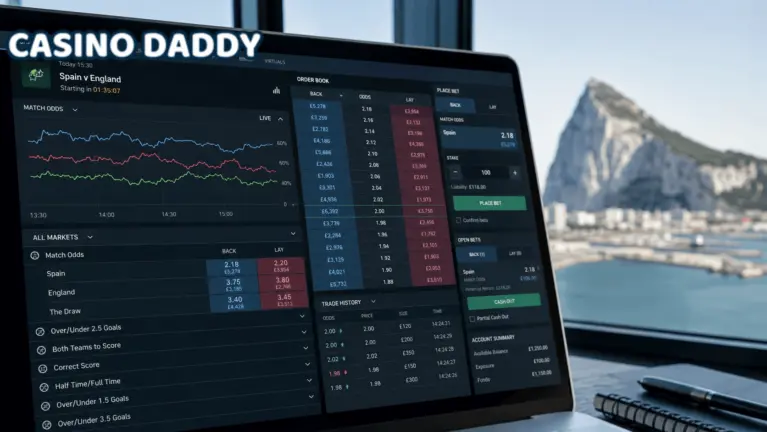
Gibraltar has published a dedicated prediction markets regulation. It becomes the first licensing jurisdiction anywhere to build a standalone legal framework for the sector, rather than folding it into existing gambling or financial rules. The Ministry for Justice, Trade and Industry released the regulations in the Gibraltar Gazette on Monday. They now sit inside the new Gibraltar Gambling Act 2025.
The move follows months of preparation, and two operators already hold licences under the emerging regime. Minister Nigel Feetham led the process. He described it as the product of sustained engagement with operators, investors and industry professionals. The framework, he said, shows regulators can back genuine innovation without loosening their standards.
How Gibraltar’s Prediction Markets Regulation Works
The new rules take what officials call an activity-based and risk-based approach, so obligations scale with the risk a contract or operator presents. The document runs 24 pages. It covers market integrity, participant protection, financial crime prevention, governance, operational resilience and objective settlement.
Every event contract must earn approval and certification from the Gambling Authority before it reaches players. Contracts also need to be clear, capable of objective settlement and resistant to manipulation. Operators carry the burden of building their own internal controls against manipulation, insider dealing and misuse of confidential information. The Authority also keeps the power to block contracts tied to death, serious injury, terrorism, criminal conduct or armed conflict.
An independent supervisory panel now oversees how the regime plays out in practice. Feetham pointed to the panel’s experience with technology-driven markets. He said that experience is why Gibraltar could move quickly once it decided to act.
Two Operators Already in the Door
ADI Predictstreet picked up an early licence back in April. It landed under a betting intermediary category at the time, because the new Act had not yet taken full effect. WagerWire, a California-based platform, followed in June with approval in principle, and now holds the second licence under the dedicated regime.
WagerWire co-founder Travis Geiger said the company wants a combined B2B and B2C product live before NFL preseason. He also wants it running by the start of international football in August. Geiger argued Gibraltar’s move could reset how other jurisdictions think about the vertical, and compared the framework to the taming of a previously lawless market. He pointed to Gibraltar’s long-standing reputation in online gambling licensing, and predicted other regulators would eventually borrow from the same template.
The regulator has also flagged interest from a wider pool of applicants, including several globally recognised businesses. None of those names are confirmed yet. But the volume of interest suggests Gibraltar expects its two current licensees to become a much longer list before the year is out.
Feetham linked the timing to pressure closer to home. UK gambling tax increases have squeezed Gibraltar’s gaming sector, which relies heavily on the UK market. He framed the new regime as proof the territory can adapt fast when its core business comes under strain.
A Different Path from Europe
The rest of Europe has largely moved the opposite direction. Nine regulators, including those in Belgium, France, Germany, Italy, the Netherlands, Poland, Portugal and Spain, coordinated a crackdown on unlicensed prediction markets in June. Their concerns centred on the absence of betting limits and cooling-off periods for players. The EU’s securities regulator also reaffirmed its position on binary-outcome contracts with fixed payouts, so certain products stay under financial rather than gambling oversight.
Feetham acknowledged that no settled international consensus exists on how prediction markets should be classified. Different jurisdictions, he said, will keep reaching different conclusions. Gibraltar’s answer treats the sector as neither pure gambling nor pure finance. Instead, it builds safeguards around market manipulation, conflicts of interest, client asset protection, anti-money laundering compliance and wind-down planning.
That approach puts Gibraltar in a distinct position. Several major European markets restrict or block platforms like Kalshi and Polymarket. Gibraltar, by contrast, has opened a formal front door for the same category of product.
It is betting that clear rules will attract serious operators rather than scare them off. The territory has taken this path before. Its early move into online gambling licensing decades ago shaped how much of Europe eventually approached the sector.
A Real-World Test Ahead
With WagerWire targeting a launch inside weeks, and other applicants reportedly circling, Gibraltar’s prediction markets regulation is about to face its first real volume of activity. The framework looks solid on paper. The rest of the industry will now be watching how it holds up once contracts start trading at scale.

The Author
The Author
Slots and News Reviewer