










NFL Asks Supreme Court to Treat Prediction Markets as Gambling


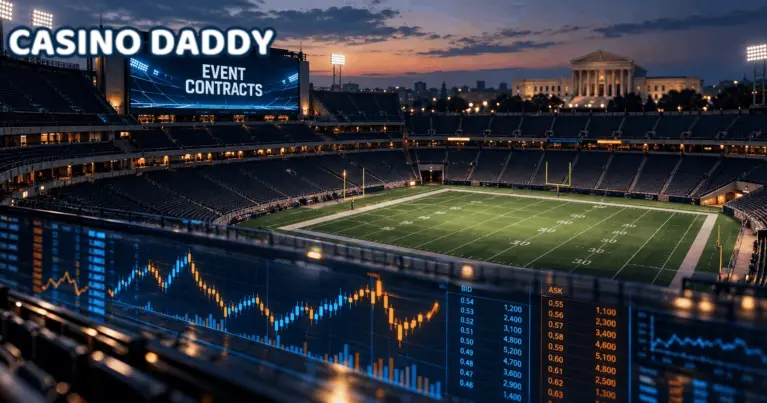
Football season has turned into trading season. On the opening Sunday of this season, NFL games drew $1.8 billion of the $3.3 billion that moved across prediction markets, and the league has decided it has seen enough. This week the National Football League filed an amicus brief with the US Supreme Court, backing New Jersey in its dispute with the exchange operator Kalshi. Its position is blunt: contracts tied to game outcomes are gambling, and gambling belongs to the states.
Half of a $3.3 Billion Sunday Came From Football
The volume figure does most of the work in the brief. More than half of all trading across prediction platforms that Sunday traced back to football, which leaves the league supplying the raw material for a market it has no authority over. Kalshi, Polymarket and a growing list of commodities exchanges all list NFL game outcomes on their prediction markets. None of them holds a gaming licence in a single state.
So the NFL has watched prediction markets build an entire product line on its games, with no agreement in place at any of the exchanges behind it. MLB, the NHL and the USTA have already signed integrity partnerships with Kalshi, which leaves the NFL as the biggest holdout in American sport. Roger Goodell has framed that caution as a choice rather than a delay. “We don’t feel like we have to be the first in this,” the commissioner said, arguing that patience will serve the league better than speed.
What the League Wants Taken Off the Board
The integrity argument is narrower than it first looks. The brief singles out contracts built on outcomes that players, coaches, officials or other insiders could influence or know about ahead of time. Injuries sit in that bracket, and so do officiating calls and individual plays such as a missed field goal. Those markets, rather than straight win-loss contracts, are the ones the league wants gone.
The league says it flagged those categories to the Commodity Futures Trading Commission months ago and has watched NFL contracts stay live on prediction markets ever since. Age limits form the second complaint. Most state-regulated sportsbooks take action from 21, while some platforms open accounts at 18, and the league wants that gap closed before any more NFL money moves through these prediction markets.
Who Gets to Regulate NFL Games on Prediction Markets
Underneath the integrity language sits a constitutional question that has already split the federal appeals courts. New Jersey and Kalshi have spent more than a year arguing over one point: does federal commodities law give the CFTC exclusive authority over sports event contracts, pushing state gambling statutes out of the picture entirely? The brief answers in the opposite direction. Regulating gambling counts among the states’ sovereign police powers, the league argues, and Congress has no obvious authority to strip that away for wagering that happens inside a state’s borders.
Who regulates NFL contracts on prediction markets will shape far more than football. A ruling for Kalshi would put every sports event contract under one federal regime, with the CFTC writing the rules for all fifty states. A ruling for New Jersey would hand each state the power to license, tax or ban the products outright. The league also pushed the Court to move quickly, warning that billions will trade on its games each season and that every month of delay adds consumer harm and integrity risk.
Kalshi and the CFTC Push Back
Neither the exchanges nor the regulator accepts the picture the brief paints of NFL trading on prediction markets. The CFTC says it has engaged with the league since the first day of its rulemaking work, and it points to an information-sharing agreement the league declined to sign. That detail cuts against the central complaint running through the filing, which is that nobody in Washington has been listening.
Kalshi tells a similar story from the other side. The exchange says it has reached out repeatedly on market integrity and received no reply, and it points to CFTC rulemaking already under way as the answer to most of the league’s complaints. Polymarket backs the federal route too. Its pitch is one national standard against what it calls a patchwork of disconnected state laws. Industry groups behind the exchanges add that surveillance, fraud prevention and manipulation enforcement already run across these products every day.
Where NFL Trading on Prediction Markets Goes Next
The Court has not yet said if it will hear the case. Taking it would put the biggest unresolved question in American gambling law on the docket, with a ruling that lands on sportsbooks, state regulators and every exchange listing a sports contract. Football is the reason that question has turned urgent.
NFL games have grown into the largest single category of event contract trading on prediction markets anywhere in the country, and the sport generating all that volume has no seat at the table where the rules get written. The brief is the league’s attempt to claim one. Whatever the Court decides, the $1.8 billion figure is now part of the record, and it is going to be hard for anyone to argue these contracts sit on the margins of the sport.

The Author
The Author
Slots and News Reviewer