










Poland Gambling Tax Debate Heats Up as Black Market Grows


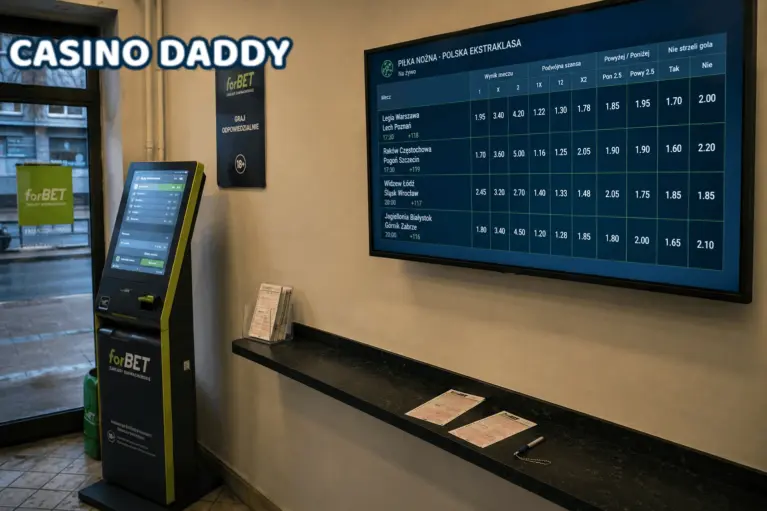
Poland has spent 17 years living with one of Europe’s toughest gambling regimes. The Poland gambling tax system takes 12% of every sports bet placed, charges casino revenue at 50% of GGR, and clips a further 10% from player winnings at source. Operators keep signing up anyway, because the market underneath all of that keeps expanding. That tension now sits at the centre of a reform debate nobody in Warsaw seems ready to start.
A Tax Code Born From Scandal
The current rules trace back to the 2009 Gambling Act. Lawmakers passed it after a political scandal known domestically as Blackjack-gate. Several senior figures in Donald Tusk’s government resigned over leaked recordings that pointed to contact with industry lobbyists about tax plans. No appetite for leniency survived that moment. The Poland gambling tax rates written into the act reflected the political mood far more than commercial logic.
A second wave of reform landed in 2017. It handed state-owned Totalizator Sportowy exclusive control of online casino, along with slot machines placed outside licensed venues. Private operators kept access to online sports betting under a licensing system. The same package gave authorities the power to make payment providers block transactions with blacklisted gambling domains.
Why the Poland Gambling Tax Hurts the Product
Licensed sportsbooks reserve their sharpest criticism for the 12% turnover levy. The state takes its cut before anyone knows who won, so operators price defensively and hold a far wider margin than they would elsewhere. Every zloty staked carries a cost, whatever the outcome. That uncertainty lands straight in the odds.
Market data bears this out. Polish sports betting is on course for roughly 1.62 billion euros in GGR during 2026, drawn from about 5.07 billion euros in turnover. That implies a margin near 32%, well above what players find across most of Europe. The Poland gambling tax structure creates that gap, and customers pay for it every time they place a bet.
Myke Foster, group head of gaming at Fortuna Entertainment Group, calls the turnover tax anti-customer by design. He argues it stops licensed brands from building the product they actually want to offer. Players notice the 10% deduction on their winnings, but few connect the thinner value elsewhere to the same tax code. So the system pushes exactly the customers Poland wants to protect toward sites that pay nothing at all.
The Poland Gambling Tax Reform Blueprint
A detailed alternative has existed for years. Economist and former finance minister Konrad Raczkowski argued in 2021 that the 12% turnover levy works out at somewhere between 55% and 65% of gross gaming revenue. He proposed replacing it with a GGR-based rate of 20% to 25%, which would put Poland closer to the European norm. His case rested on channelisation rather than short-term revenue.
The catch is obvious to any finance ministry. A 20% GGR rate would cut the state’s take by close to half at current turnover levels. Higher payouts and more recycled stakes would claw some of that back over time, but not all of it. So the Poland gambling tax debate keeps stalling on one awkward question about who absorbs the shortfall.
Growth Removes the Urgency
Poland’s market keeps expanding regardless. Several consecutive years of double-digit growth have handed policymakers a ready answer to reform pressure. If Poland gambling tax receipts climb under the current rules, the argument runs, those rules cannot be badly broken. Plenty of liberalised European markets are fighting their own channelisation problems, which only strengthens the case for standing still.
The numbers underneath tell a different story. Total online channelisation sits at about 75%, with sports betting somewhere between 78% and 88%. Online casino trails badly at roughly 59%. A 2024 study estimated that 83% of Polish players held accounts with illegal casino operators, and the unregulated sector doubled in size between 2017 and 2025.
The Monopoly Nobody Wants to Touch
Totalizator Sportowy has operated since 1955 and now returns about 1.29 billion dollars a year to the state. Its representatives argue that opening casino to private licensees would do nothing to the black market. Payment restrictions, in their view, remain the sharper tool. Public opinion appears to back them. A 2025 survey found 50% of Poles supported keeping the monopoly against 16% who opposed it, though the operator itself commissioned that research.
Licensed sportsbooks read the situation very differently. Foster points out that Polish customers already know online casinos exist, find them on social media, and care little about licensing status. Blocking established names such as Fortuna, Superbet and STS from offering casino products simply sends those players somewhere less accountable.
Politics Sets the Clock
Poland gambling tax reform needs parliament, and parliament has other priorities. Defence spending and the war across the border dominate the agenda, leaving gambling reform far down the list. Neither Civic Platform nor Law & Justice shows much warmth toward the sector. Law & Justice created the online casino monopoly. Civic Platform later approved a rise in the player winnings tax from 10% to 15%, though President Karol Nawrocki vetoed it in 2025.
That leaves the 2027 parliamentary elections as the next realistic checkpoint. Only the hard-right Confederation party carries liberalisation on its platform, and it would need a much stronger result to force the issue. Finland opens its own monopoly market to competition next year, and some operators hope a smooth launch there builds momentum. Poland’s monopoly, unlike Finland’s, has shown no interest in arguing for its own retirement.
A Market Bigger Than the Rules
Foster’s summary of the position is blunt. He believes the state should accept that the sector has grown “too big for the state to control”. Poland now runs one of Europe’s fastest-growing gambling markets on a framework written for a much smaller one.
The Poland gambling tax burden keeps legal products expensive while the monopoly keeps the most popular vertical closed. Neither problem fixes itself, and both feed the offshore sites the state says it wants to shut down. Until the political cost of that black market outweighs the comfort of stable receipts, the Poland gambling tax code stays exactly where it is.

The Author
The Author
Slots and News Reviewer