Michigan licensed casinos are the only online casinos that may legally accept players inside the state. The licence comes from the Michigan Gaming Control Board, and it cannot be held by an online brand on its own: every operator must partner with one of Detroit’s three commercial casinos or one of Michigan’s 12 federally recognised tribes.
That structure is why the market is capped at fifteen brands, and why several nationally known names run under a tribal partner in the Upper Peninsula rather than a licence of their own. It also gives players a simple test: if a site is not attached to one of those properties, it is not licensed here.
This page covers what the licence requires of an operator, how to verify that a casino holds one, what protections come with it, and how a licensed site differs from the offshore alternatives the MGCB keeps issuing cease-and-desist orders against. For the wider market picture, including revenue data and how the law developed, see our guide to online casinos in Michigan.
Michigan runs licensing and enforcement through a single body, which makes the chain of responsibility shorter than in states that split the two.
The Michigan Gaming Control Board licenses internet gaming operators, platform providers and suppliers. It also audits games and finances, sets cybersecurity standards, enforces responsible gambling rules, and takes action against unlicensed sites. There is no separate commission handling approvals, as there is in New Jersey.
An online brand cannot hold a Michigan licence alone. It must operate under either one of Detroit’s three commercial casinos, MGM Grand Detroit, MotorCity Casino or Hollywood Casino at Greektown, or under one of the state’s 12 federally recognised tribes. That cap is why the market has fifteen brands rather than the twenty-plus seen in some other states.
Michigan taxes online casino revenue on a graduated scale tied to each operator’s adjusted gross receipts, starting at 20% below $4 million and rising in steps to 28% above $12 million. Revenue funds the Internet Gaming Fund, a compulsive gambling prevention fund, the First Responder Presumed Coverage Fund and the State School Aid Fund.
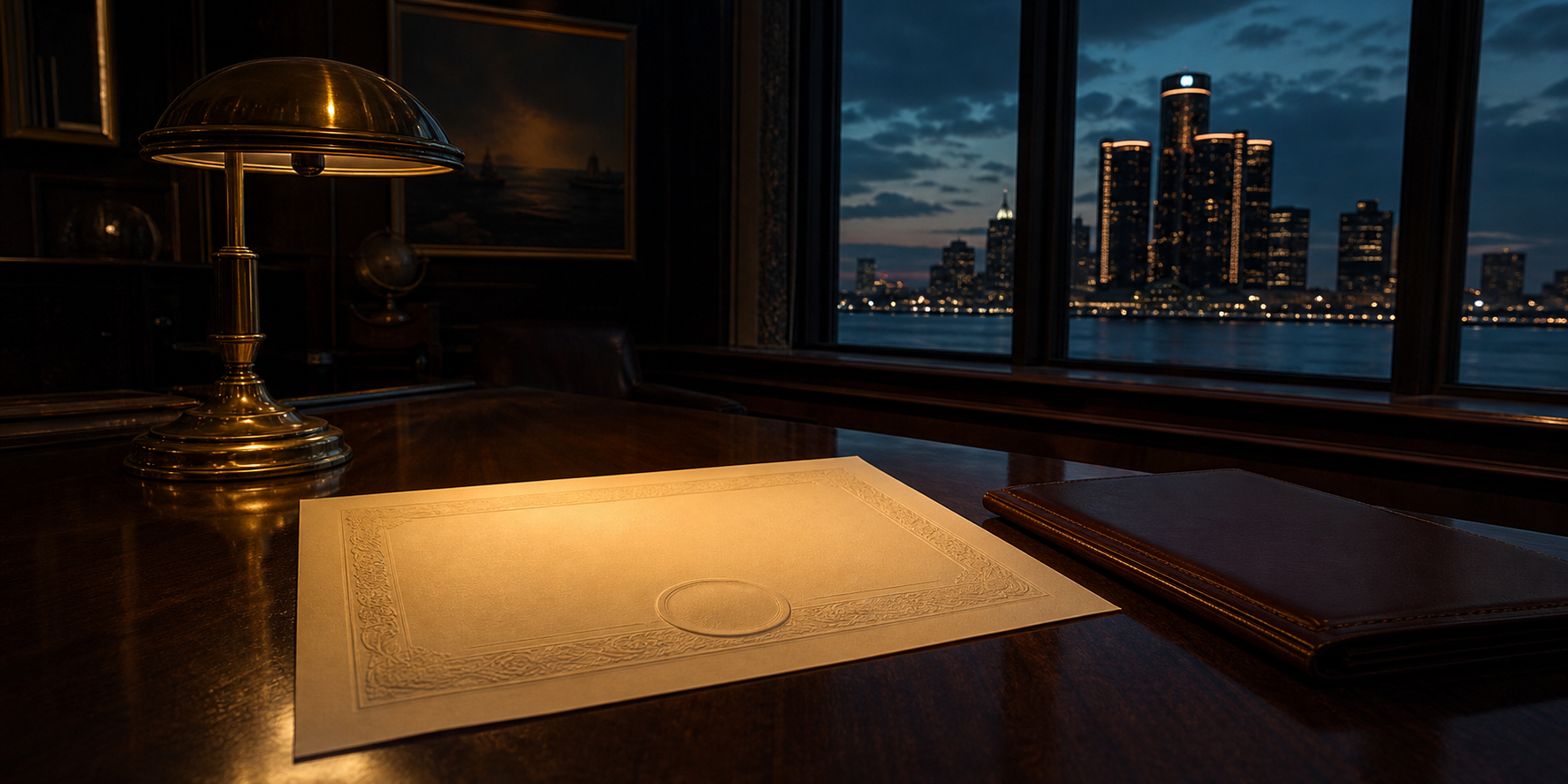
Because every brand runs under a commercial or tribal licence, the quickest check is to look at which Michigan property a site partners with. The list below follows the operators authorised by the Michigan Gaming Control Board.
| Licensed brand | Land-based partner |
|---|---|
| BetMGM Casino | MGM Grand Detroit (commercial) |
| FanDuel Casino | MotorCity Casino (commercial) |
| Hollywood Casino | Greektown Casino-Hotel (commercial) |
| DraftKings Casino | Bay Mills Resort Casino |
| Caesars Palace Online Casino | Turtle Creek Casino & Hotel |
| Hard Rock Bet Casino | Island Resort & Casino |
| BetRivers Casino | Little River Casino Resort |
| Golden Nugget Casino | Ojibwa Casino |
| Fanatics Casino | Northern Waters Casino Resort |
| bet365 Casino | Odawa Casino |
| Horseshoe Online Casino | Sault Ste. Marie Tribe of Chippewa Indians |
| Eagle Casino & Sports | Soaring Eagle Casino & Resort |
| Play Gun Lake | Gun Lake Casino |
| FireKeepers Casino | FireKeepers Casino |
| Four Winds Casino | Four Winds Casino |
The value of an MGCB licence is that the protections attached to it are enforceable, and there is a regulator with both the mandate and a track record of acting.
Licensed operators keep player funds separate from operating capital, and every game and random number generator is audited by the MGCB. The board also sets cybersecurity standards and reviews compliance rather than taking an operator’s word for it.
If a licensed casino treats you unfairly, the MGCB investigates and can fine an operator or move against its licence. That process is the main thing an offshore site cannot offer, whatever its terms and conditions say.
Michigan runs more than one route out. The Internet Gaming and Sports Betting Responsible Gaming Database covers online play across licensed operators, while the Disassociated Persons List covers the Detroit commercial casinos. Both are administered through the MGCB and forms are available on its website.
Between December 2025 and April 2026 the MGCB issued cease-and-desist orders to 45 offshore operators taking Michigan wagers without a licence. That followed more than 40 similar actions the year before, and it is the clearest signal of how the board treats the unregulated market.

Offshore casinos accept Michigan players without holding a state licence. The difference is not usually visible in how a site looks, but in what happens when something goes wrong.
| Michigan licensed | Offshore | |
|---|---|---|
| Regulator | MGCB licence and enforcement | None with jurisdiction over MI players |
| Game auditing | Games and RNGs audited by the MGCB | Varies, often self-declared |
| Player funds | Held separately from operating capital | No state requirement |
| Dispute route | MGCB investigates complaints | Operator’s own process only |
| Self-exclusion | State databases cover all licensees | Not covered |
| Age and location checks | 21+, geolocation enforced | Frequently minimal |
Dual-currency sweepstakes casinos are also closed off in Michigan, though by a different route. Rather than passing a dedicated statute, the MGCB classified them as gaming under existing law and issued cease-and-desist letters from late 2023. The major platforms withdrew during 2024, and balances were lost when sites such as Chumba and LuckyLand closed to Michigan users.
Check which Michigan property it partners with. Every licensed online brand operates under one of Detroit’s three commercial casinos or one of the state’s 12 federally recognised tribes. The Michigan Gaming Control Board publishes the current register of authorised operators, which is more reliable than any badge shown on the operator’s own site.
The Michigan Gaming Control Board handles everything. Unlike New Jersey, where one body grants licences and another enforces them, the MGCB licenses operators, platform providers and suppliers, audits games and finances, sets cybersecurity standards, and takes enforcement action against unlicensed sites.
No. Every online casino must operate under either one of Detroit’s three commercial casinos or one of Michigan’s 12 federally recognised tribes. This is why the state has fifteen licensed brands, the statutory maximum, and why several national names appear under a tribal partner in northern Michigan or the Upper Peninsula.
You can take the complaint to the Michigan Gaming Control Board, which investigates and can fine an operator or move against its licence. That route is the practical difference between a licensed site and an offshore one, where the operator’s own process is the only option open to you.
No, residency is not the requirement. What matters is where you are when you play. Licensed operators run geolocation checks and block access from outside state lines, so a visitor inside Michigan can play while a resident travelling elsewhere cannot. You must also be 21 or over.

The Author
The Author
Site Admin