For a long time, there was no official gambling regulatory authority operating in Spain, and all gambling activities were in a legal grey area. However, the Spanish government decided to take advantage of all the money that flows through the online gambling industry, and introduce regulations to regulate gambling in Spain. As of June 2012, the online gambling market has been officially opened in Spain. The body which regulates gambling-related activities on the territory of Spain is the Spanish Gambling Commission which is part of the Spanish Ministry of Finance.

Casinos with a Spain license operate under the Direccion General de Ordenacion del Juego (DGOJ), the national regulator that has controlled Spanish online gambling since 2011 under Law 13/2011. A Spanish licence is one of the strictest permits in the European market. The DGOJ does not simply sell a licence the way offshore jurisdictions do. It grants one only after an operator proves financial solvency, passes technical certification and meets demanding anti money laundering and player protection standards.
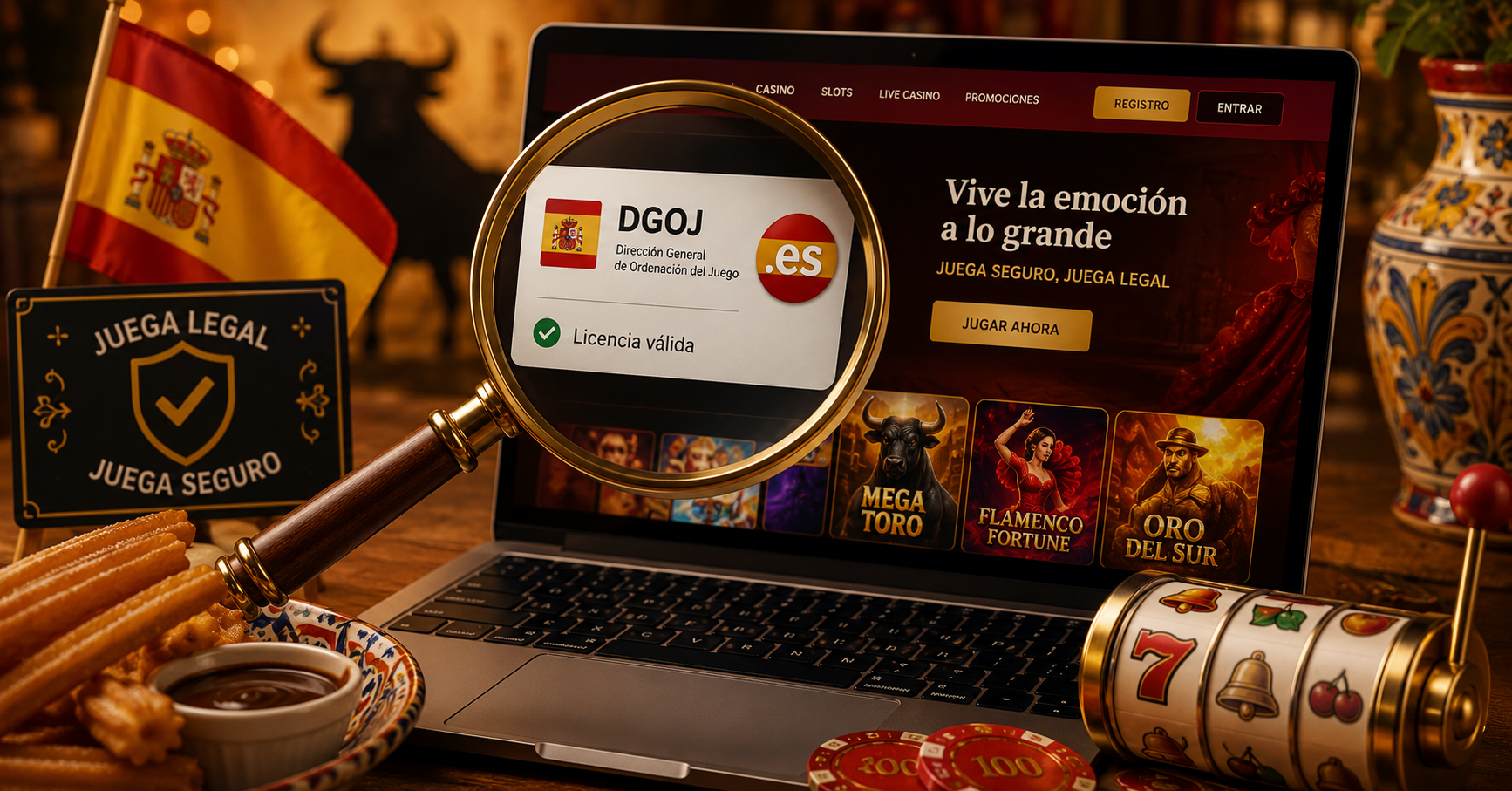
Every legally operating casino aimed at Spanish residents must run on a dedicated .es domain, feed real time data to the regulator and display its DGOJ authorisation clearly. This page explains what a Spain license means, how the DGOJ licensing system is structured, and exactly how you can confirm that a casino holds a valid Spanish licence before you play.
How do I recognise a Spain license?
A casino with a Spain license runs on a .es domain, shows the official DGOJ authorisation and the Juego Seguro logo, and appears in the DGOJ register of licensed operators. If a site only uses a .com domain, hides its licence details or is missing the mandatory Spanish safer gambling section, it is not licensed for Spain regardless of any foreign licence it advertises.
The DGOJ splits its permits into two layers. An operator first needs a general licence, which covers a broad category such as betting, contests or other games of chance and runs for ten renewable years. On top of that, the operator must hold a singular licence for each specific product it offers, for example roulette, blackjack, slots, poker or sports betting. Singular licences are tied to an existing general licence and are granted for shorter terms of up to five years. This layered structure means a fully licensed Spanish casino usually holds several DGOJ permits at once.
A Spain license is designed around consumer protection rather than operator convenience. Licensed casinos must keep player funds in segregated accounts at Spanish or European regulated banks, apply full identity verification, and run certified random number generators that are re audited every two years. The regulator receives a real time data feed from every licensed operator, so bets, payments and balance changes are logged as they happen. For a wider view of the market you can also read our guide to online casinos in Spain.
Players in Spain benefit from national safeguards that come with the licence. Registering in the RGIAJ self exclusion system blocks your access to every licensed operator at once, and the DGOJ PhishingAlert service warns you if someone tries to open an account using your identity. Since Royal Decree 176/2023, operators face tighter rules on promotions, VIP perks and intensive play patterns, with extra protection for young adults. You can browse the full DGOJ register of licensed operators on the official DGOJ website.
Checking a Spanish licence takes only a minute and protects you from unlicensed sites. Start with the casino itself, then confirm the details against the official register.
A genuine casino with a Spain license runs on a .es domain and redirects Spanish traffic to it. Look for the DGOJ authorisation details, usually shown under Juego autorizado or in the footer, along with the Juego Seguro logo, the RGIAJ reference and the 18+ symbol. A visible Juego mas seguro safer gambling section is mandatory. Brands that only appear on a .com domain, or apps missing these Spanish labels, are not licensed for Spain.
The DGOJ keeps an up to date public list of every licence holder with its approved brands and domains. Search for the operator by legal name or domain and make sure the details match the site you plan to use. If the brand or domain does not appear in the register, treat the casino as illegal for Spain, no matter what foreign licences it references. To compare Spain with other jurisdictions, see our overview of casino licenses. For general responsible gambling support you can also visit BeGambleAware.
The Direccion General de Ordenacion del Juego (DGOJ), part of the Ministry of Consumer Affairs, issues and supervises every online casino licence in Spain under Law 13/2011. It handles general and singular licences, audits operators and can sanction or shut down sites that break the rules.
A general licence covers a broad category such as betting or games of chance and lasts ten renewable years. A singular licence sits on top of it and authorises one specific product, for example slots, roulette or poker, for up to five years. A full casino normally holds one general licence plus several singular licences.
Confirm the site runs on a .es domain, shows the DGOJ authorisation and Juego Seguro logo, and includes a safer gambling section. Then search the operator by name or domain in the official DGOJ register of licensed operators. If it does not appear there, it is not licensed for Spain.
No. The Spanish framework requires traceable, clearly identified payment methods, so licensed operators cannot accept direct cryptocurrency deposits. Casinos advertising crypto only banking to Spanish players are operating outside the DGOJ licence.

The Author
The Author
Site Admin