







France Tightens Gambling Advertising Rules Under New ANJ Chief


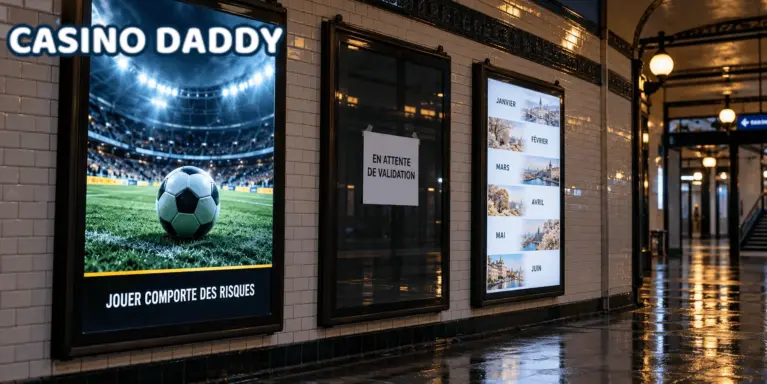
Gambling operators in France will have to plan their campaigns much further ahead. The Autorité Nationale des Jeux, the country’s gambling regulator, now wants ads submitted for review six months before their planned release date, giving it time to assess the material and decide if it clears. Pascal Chèvremont, who took the ANJ presidency in June, confirmed the change after meeting France’s advertising standards chief. The new France gambling advertising rules arrive with the regulator caught between campaigners who want gambling marketing gone altogether and an offshore market that answers to nobody.
What the New France Gambling Advertising Rules Require
Operators must hand a campaign over six months before launch. The ANJ will use that window to assess the creative against standards set by the Autorité de Régulation Professionnelle de la Publicité, which oversees advertising self-regulation across French industries. Christine Albanel, who leads the ARPP, met Chèvremont to confirm how the two bodies split the work. Their formal partnership dates back to 2023.
Something close to pre-approval already existed. Licensed operators have submitted annual promotional strategies to the ANJ for sign-off since 2021, along with six-month reports on planned ad spend. The regulator has shown it will act on what those filings reveal. In 2022 it ordered Winamax to pull a national television campaign, deciding the ads suggested gambling improves social standing.
What changes is the lead time on individual campaigns. Six months is a long runway in a business that builds marketing around fixtures, tournaments and seasonal peaks. Planning cycles will have to stretch well past what most teams are used to, which gives the new France gambling advertising rules more practical bite than a procedural change would suggest.
A New President With a Contested Mandate
Chèvremont took the job after a confirmation hearing that nearly went against him. Members of the National Assembly challenged his previous role running Brasseurs de France, the national brewing trade association. Several pushed to bring gambling under the kind of restrictive advertising law France already applies to alcohol and tobacco, and he survived the vote by a thin margin.
His background sits mostly in public finance. Since 2018 he has served as General Economic and Financial Controller at the Ministry of Economy and Finance, a world away from his predecessor Isabelle Falque-Pierrotin, a jurist who once ran the national data protection authority. She helped design the framework now taking effect, so the handover at the top breaks no continuity on advertising policy.
Why a Blanket Ban Stays Off the Table
Calls for a full prohibition on gambling marketing have grown louder in France, but the regulator keeps declining to go that far. Falque-Pierrotin argued that stripping licensed operators of advertising would clear the field for unlicensed ones, who face no such constraint and would happily absorb the attention. That reasoning still governs the approach.
The numbers give it weight. French gross gaming revenue runs at roughly €14 billion a year across the licensed market. Industry trade body figures put the number of French consumers visiting illegal betting sites at 5.4 million in 2025, up 35% since 2020. Chèvremont has made the illegal market his stated priority, describing a sector full of contradictions where gambling sits under a principle of prohibition yet attracts half the adult population.
Advertising Volume Remains a Flashpoint
Tighter review will not automatically produce fewer ads, though it will almost certainly produce more cautious ones. The ANJ’s review of 2026 promotional strategies found that June and July alone accounted for 21% of operator advertising budgets, a concentration driven by the World Cup. Existing guidelines already cap television and radio at three gambling spots per commercial break across all operators combined.
Player harm data has sharpened the debate. The ANJ identified around 600,000 players as highly likely to be gambling excessively in the second half of 2025, a group making up 8.7% of registered players while generating €1.2 billion in gross gaming revenue. Campaign-level scrutiny looks modest against figures like those. That gap explains why advocacy groups keep pressing for gambling advertising rules in France that go considerably further.
What Comes Next for Operators
France is not working alone on this. Dutch and Greek regulators have both acknowledged how difficult cross-border enforcement has become, with the KSA conceding openly that the Netherlands is too small to tackle unlicensed gambling by itself. Greece has gone the other way, adding staff and resources to push back across jurisdictional lines. Advertising remains the piece regulators can actually control, because licensed operators answer to them and offshore sites do not.
For operators, the practical question is planning. Six months of lead time reshapes how marketing teams budget, brief agencies and react to events nobody can forecast. Campaigns built on short-notice opportunities get much harder to run under the gambling advertising rules France is now applying. The first real test comes when the ANJ starts rejecting submissions, because that is the point where the framework stops being paperwork and starts costing someone a campaign.

The Author
The Author
Slots and News Reviewer