











Chicago Video Gaming Terminals Caught in Mayor’s Repeal Push


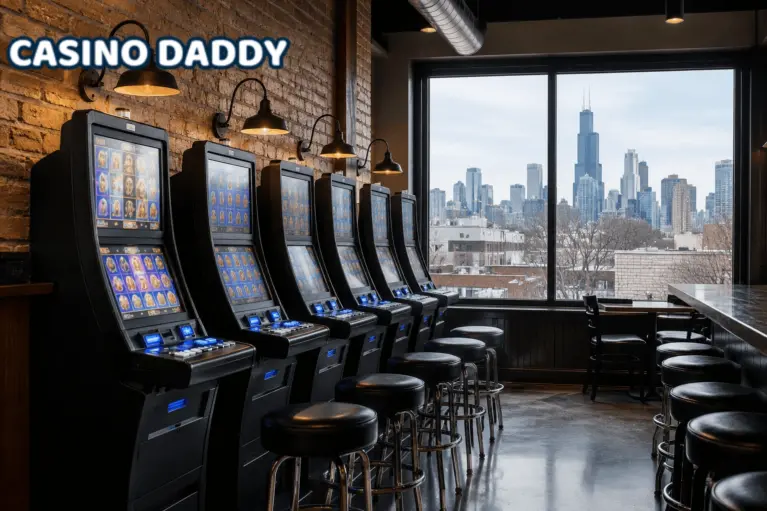
Chicago’s City Council is split. Mayor Brandon Johnson wants to repeal the ordinance that legalized video gaming terminals across the city. That single decision has set off a fight that has grown into something much bigger.
Budget projections, casino contracts, and council politics are all tangled up in the outcome. At the heart of it sits one question. Do Chicago video gaming terminals actually help the city’s bottom line, or are they quietly costing it money?
A Repeal Effort Born From Budget Pressure
Video gaming terminals have been legal across most of Illinois for more than a decade, turning into one of the state’s most active gambling segments outside the Chicago casino market. Chicago kept its own ban in place long after suburbs and small towns embraced the machines, leaving the city as one of the last major holdouts in the state. That history makes the current fight over Chicago video gaming terminals feel especially personal for both sides.
The fight escalated when Johnson’s repeal measure skipped the council’s usual licensing committee and landed in front of a different one instead. Several alderpersons called the move a deliberate attempt to sidestep opponents of the repeal. The maneuver has only deepened tensions among council members who already disagreed on the underlying policy.
Money sits at the center of the disagreement. Chicago’s current budget leans on millions of dollars in projected revenue from licensing video gaming terminals. That revenue would come from bars, restaurants, and similar venues across the city. The projection assumes broad participation from business owners and a smooth rollout, conditions that are far from guaranteed.
Johnson and his allies argue the optimistic numbers leave out real costs. A consultant hired by the mayor’s office reached a different conclusion. Added law enforcement needs and customers shifting away from the city’s casino could turn that projected revenue into a net loss instead. That report has become a central talking point for supporters of the repeal.
Bally’s Casino Deal Adds Pressure to the Debate
Chicago’s agreement with Bally’s adds another layer to the fight. The company is building the city’s first permanent casino. The deal is meant to generate steady revenue while supporting long-term economic development downtown. Bally’s, though, has warned that a wider rollout of Chicago video gaming terminals could cut into those projections.
The company says it may need to renegotiate parts of its agreement with the city as a result. Some council members share that concern, especially those who see the casino project as a long-term anchor for city revenue. Others view the spread of Chicago video gaming terminals differently. They argue that licensing machines in neighborhood bars and restaurants spreads gambling revenue more evenly across the city, which beats concentrating it in one downtown development.
Repeal opponents say reversing course now would require a major shift in support that the current council does not have. That math has not changed in recent weeks. Most members who voted to legalize the machines have shown no sign of changing course, even with Johnson applying pressure from the mayor’s office.
A Patchwork of Local Rules Is Already Forming
The citywide debate has not stopped some wards from acting on their own. Local officials in several areas have already moved to restrict or block Chicago video gaming terminals within their own boundaries. That has created uneven rules from one neighborhood to the next, even before the council settles anything.
That patchwork could persist no matter how the broader council vote turns out. Business owners, regulators, and casino operators all have a stake in how this plays out. None of them can fully plan ahead until the council settles the question. The rules that eventually govern Chicago video gaming terminals will shape gambling access across the city for years to come.
What Comes Next for Chicago Video Gaming Terminals
A full repeal still faces long odds. Johnson’s administration can keep pushing through committee assignments and public pressure, but the council’s existing math still favors keeping the machines legal. The mayor’s consultant report has given repeal supporters fresh ammunition. Still, it has not moved enough votes to change the outcome so far.
For now, Chicago video gaming terminals remain stuck between competing demands. The city needs new revenue. Bally’s needs certainty for its casino investment.
Neighborhood business owners need clear rules they can plan around. Until the council resolves that tension, the machines will stay exactly where they started. They remain legal, contested, and at the center of one of Chicago’s most divisive policy fights this year.

The Author
The Author
Slots and News Reviewer