











New Game

A bigger bonus number doesn’t tell you if you’ll actually clear it, and a flashy homepage says nothing about how fast your withdrawal lands once you’ve won. This is CasinoDaddy’s list of the best crypto casinos in 2026, built on testing instead of marketing spend: coin support, payout speed, and provably fair games that hold up once you actually check them. Every casino here launched or significantly expanded its crypto offering this year, and each one has been scored against the same criteria as the rest of the field.
Crypto casinos move faster than most review sites bother to track. A platform that added stablecoin support last month, or quietly capped withdrawals after a rough quarter, doesn’t always update its own marketing to match. We recheck the casinos below as those changes happen, so what you’re reading reflects what’s actually true right now, not what was true when we first reviewed it. Skip to How We Score for the breakdown, or keep scrolling for the picks themselves.
 Reviewed byNadia Winchester

Crypto Casino
 Rated 90 of 100%
welcome bonus
200% up to €100 + 150 FS

Crypto Casino
Rated 89 of 100%
welcome bonus
100% up to €100,000


Exclusive Bonus
Rated 88 of 100%
welcome bonus
400% up to €4,000 + 400 FS

Crypto Casino
Rated 87 of 100%
welcome bonus
100% up to $1,500 + 150 FS

Crypto Casino
Rated 85 of 100%
welcome bonus
500% up to $10,000


New Casino
Rated 83 of 100%
welcome bonus
250% up to €4,000 + 250 FS

New Casino
Rated 82 of 100%
welcome bonus
550% up to €3540 + 400 FS

New Casino
Rated 81 of 100%
welcome bonus
100% up to €5,000 + 175 FS

Crypto Casino
Rated 55 of 100%
welcome bonus
150% up to €1,300 + 100 FS
A casino can support a dozen coins and still lose points if half its withdrawal claims don’t hold up once you test them. We run every casino on this list through six categories, weighted toward the things that matter most once crypto is actually involved.
| Category | Weight | What We’re Checking |
|---|---|---|
| Coin Support & Transaction Speed | 25% | Number of supported coins, stablecoin availability, average confirmation and payout time |
| Provably Fair & Game Transparency | 15% | Verification quality, how easy the audit trail is to check, which games actually offer it |
| Licensing & Security | 20% | Jurisdiction, audit history, encryption, data handling |
| Game Library & Software Providers | 15% | Depth, variety, provider reputation, release frequency |
| Bonus Value & Fair Terms | 15% | Wagering requirements, game contributions, realistic clearance |
| Support, Experience & Reputation | 10% | Response times, mobile usability, complaint resolution |
This is the single biggest factor in our scoring. A casino that only takes Bitcoin and charges mainnet fees on every deposit isn’t competing fairly with one that supports five coins and settles through a low-cost network. We check how many coins are actually supported, whether stablecoins are part of that list, and how long deposits and withdrawals take in practice rather than what the FAQ page claims.
A “provably fair” label means nothing if the verification tool behind it doesn’t work or doesn’t exist. We test whether a casino’s seeds are genuinely checkable, how many games actually carry the label versus just the lobby’s flagship titles, and how clearly the process is explained to someone who’s never verified a bet before.
Crypto adds a wrinkle to licensing that fiat casinos don’t deal with: custody. A casino holding player funds in crypto needs clear practices around cold storage and how it would handle a breach, not just a license number in the footer. We check the jurisdiction’s enforcement track record alongside how the casino describes its own security setup, since both pieces matter once real money is involved.
Crypto casinos lean harder on crash games, dice, and house-built originals than typical slot-heavy operators, so we weigh that mix specifically rather than just counting total titles. A casino with three hundred slots but no crash game variety doesn’t automatically score lower, but we check whether the library actually matches what crypto players tend to look for.
Crypto bonuses come with a wrinkle fiat ones don’t: a percentage match can shift in real value if the coin price moves before you clear it. We check the actual wagering math, which games count toward clearance, and whether the terms hold up once you read past the headline number.
Crypto support tickets skew toward different problems than fiat ones, like a transaction stuck pending or a wallet address typo. We check how quickly and competently support handles those specific situations, alongside the usual mobile usability and dispute resolution every casino gets tested on.
“Provably fair” gets used in casino marketing almost as often as “huge bonuses,” but it describes something specific and checkable. A genuinely provably fair game produces a result you can verify yourself afterward, using nothing more than numbers the casino already handed you.
Here’s the basic mechanic. Before you place a bet, the casino generates a server seed and shows you its hashed version, a scrambled string that proves the seed already existed without revealing what it says. You provide or receive a client seed too, sometimes random, sometimes one you set yourself. The two seeds combine to produce that round’s outcome. Once the round ends, the casino reveals the original server seed, and you can run both seeds through a verification tool to confirm nothing changed after your bet went in.
In practice, checking this takes about a minute once you know what to look for.
This kind of checking used to require some technical comfort, but most platforms have wrapped it into one-click flows by 2026. That shift is a big part of why provably fair systems are spreading well beyond crash and dice games into broader parts of the crypto casino lobby.
The casino at the top of our ranking won't necessarily be the right one for you. Your priorities, whether that's privacy, speed, or just wanting proof a game wasn't rigged, should shape which pick actually makes sense.
No crypto casino is fully anonymous once real money and licensing get involved, but some ask for far less than others. Look at how much identity verification a casino requires before you can play versus only at withdrawal, and check whether it supports privacy-focused coins or just the major ones. The gap between casinos here is bigger than most players expect.
Large crypto withdrawals run into a different obstacle than large fiat ones. Instead of a bank flagging the transfer, you’re more likely to hit a daily withdrawal cap denominated in crypto that doesn’t move even as the coin’s value climbs. Check whether limits are set in fiat-equivalent terms or in raw coin amount, since a cap that looked generous at one price point can feel tight after a rally. VIP tiers sometimes lift these caps, but usually only if you ask.
Stick to casinos where verification is easy to find and easy to run, not buried three menus deep. Crash, dice, and plinko-style games tend to offer the cleanest provably fair implementations, since the math behind them is simple enough to run fully on-chain.
Crypto wallets and mobile casino interfaces don’t always play nicely together. Slow wallet connections, clunky QR code scanning, and deposit flows built for desktop first all turn a quick session into a frustrating one. If most of your play happens on your phone, prioritize casinos that clearly built their crypto flow mobile-first.
Crypto gambling regulation varies sharply by country, and a casino topping this list might restrict or fully block your region. Always confirm availability and local rules before getting attached to a specific pick. The overall ranking reflects the full offering, but your version of it might look different depending on where you’re playing from.
Not every coin behaves the same way once it hits a casino’s cashier. Speed, fees, and price stability all shift depending on what you’re using, and that affects more than just convenience.
| Cryptocurrency | Typical Transaction Speed | Typical Fees | Best Suited For |
|---|---|---|---|
| Bitcoin (BTC) | 10–60 minutes, depending on network congestion | Variable, often a few dollars | Players who want the coin every crypto casino accepts |
| Ethereum (ETH) | 1–5 minutes on most casino integrations | Lower than BTC, but can spike with network demand | Players who already hold ETH for other crypto activity |
| USDT / USDC | Near-instant on Layer-2 networks | Minimal, often under a dollar | Players who want to avoid price swings between deposit and cashout |
| Litecoin (LTC) | Typically under 5 minutes | Consistently low | Players who prioritize speed and low cost over wide acceptance |
| Dogecoin (DOGE) | Typically under 5 minutes | Very low | Casual players who already hold it or want a lighthearted entry point |
None of this is fixed. Network congestion can slow any coin down temporarily, and fees move with broader market conditions. The table above reflects typical, not guaranteed, performance.
This year has pushed crypto gambling regulation from background noise into something operators can no longer ignore. The EU’s MiCA framework reached full enforcement in mid-2026, and the US GENIUS Act is pushing stablecoin issuers toward reserve audits and reporting standards that didn’t exist a year ago. A handful of jurisdictions have gone further. California banned crypto gambling transactions outright in January 2026, and several Asian markets treat the activity as a flat criminal matter.
The practical effect is a widening gap between operators with the resources to meet these standards and smaller platforms getting pushed toward less regulated territory. Malta and Estonia, both historically popular for crypto casino licensing, have tightened their own requirements to stay aligned with MiCA rather than risk losing access to European players. The casinos that make this list tend to skew toward the compliant side of that split.
A year ago, provably fair was something a handful of crash and dice games offered as a selling point. Industry estimates now put well over half of crypto casino volume running on genuine on-chain provably fair systems, up sharply from where it sat in 2025. Verification has gotten easier too, shifting from manual hash-checking toward one-click tools anyone can run without technical background.
That shift matters beyond the novelty. Casinos that built real verification into their core games are increasingly differentiating themselves from ones still leaning on the label without the substance behind it, and players are getting better at telling the difference.
Bitcoin still gets the headlines, but it’s no longer what most crypto casino players are actually betting with. Stablecoins like USDT and USDC now account for more than half of all crypto casino wagers, a shift driven mostly by the simple fact that nobody wants their bankroll to lose value while they’re deciding whether to keep playing. Layer-2 networks have made stablecoin transactions cheap enough that the speed advantage holds up even on smaller deposits.
This has changed what “fast crypto casino” actually means in practice. A platform that only handles Bitcoin on its mainnet looks slow next to one settling stablecoin transactions through a Layer-2 network in seconds, and that gap shows up directly in how we score transaction speed.
Scoring well on coin support and payout speed doesn’t say anything about whether gambling still feels like entertainment for you, and that’s a separate question worth checking in on regardless of where a casino lands here.
Crypto removes a layer of friction that other forms of online gambling still have. There’s no bank processing delay between deciding to deposit and actually playing, and no card issuer stepping in to flag unusual activity. That speed is part of the appeal, but it also means the natural pauses that slow other players down simply aren’t built in.
If gambling stops being fun, or you’re spending more time or crypto than intended on a regular basis, organizations like GamCare, the National Council on Problem Gambling, and Gambling Therapy offer free, confidential support. Reaching out is a sign of control, not a failure.
Coin support and payout speed aren't what every reader is after. If your priorities point elsewhere, these two rankings might be a better fit.

If crypto isn’t the deciding factor and you’d rather see the strongest casinos overall regardless of payment method, our Best Casinos 2026 page applies the identical scoring system across licensing, game library, bonuses, payments, and player experience.
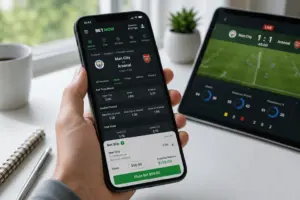
If betting on the match matters as much to you as what’s happening at the tables, this ranking looks at casinos where the sportsbook gets the same level of attention as the casino itself, instead of feeling bolted on as an afterthought.

Crypto casinos compete on a different set of fundamentals than the rest of the industry: how fast a withdrawal actually lands, whether a provably fair badge means anything when you test it, and whether the bonus math still holds up once a coin’s price moves. The picks above represent the best crypto casinos in 2026, chosen through testing rather than headline bonuses, and that ranking will keep shifting as new platforms launch and existing ones adjust their coin support or terms.
Pick based on what you actually need, whether that’s privacy, speed, or wanting to verify results yourself, rather than chasing whichever casino currently sits at the top. CasinoDaddy has always got your back and is here to help you find the best casinos to have fun in!
Scores move whenever something material changes at a casino, not on a set monthly schedule. A coin gets added or dropped, a withdrawal cap shifts, or new player reports come in, and we adjust the ranking once we’ve confirmed it.
Often, yes, especially with stablecoins or fast networks like Litecoin’s. But speed varies a lot by casino and by coin, which is exactly why transaction speed carries real weight in our scoring instead of being treated as a given.
Less than most players assume. Most licensed crypto casinos still require identity verification at some point, especially before larger withdrawals. Provably fair games keep results verifiable, but that’s a separate thing from staying anonymous.
The score adjusts to match. A casino that adds stablecoin support or expands its coin list can move up, while one that quietly drops a previously advertised coin without notice can lose points just as easily.
No. A casino’s position here comes entirely from how it scores across coin support, fairness, licensing, and the other categories above. We do work with some of these casinos through affiliate partnerships, which is standard for review sites, but that relationship has no bearing on where anything lands in the ranking.
Stop playing at that casino and don’t assume it’s a fluke. A mismatch between the revealed seed and the result you were shown means either the verification tool is broken or the casino’s claim was never genuine to begin with. Screenshot what you see, try the check again with a fresh round, and if it still fails, treat that as a serious red flag rather than something to troubleshoot on your own.
We keep an archive of how the crypto casino sector looked in earlier years. These pages are snapshots rather than recommendations, and nothing on them reflects current offers. They are worth a read if you want to understand how quickly this part of the market has changed.
The Author
The Author
Slots and News Reviewer