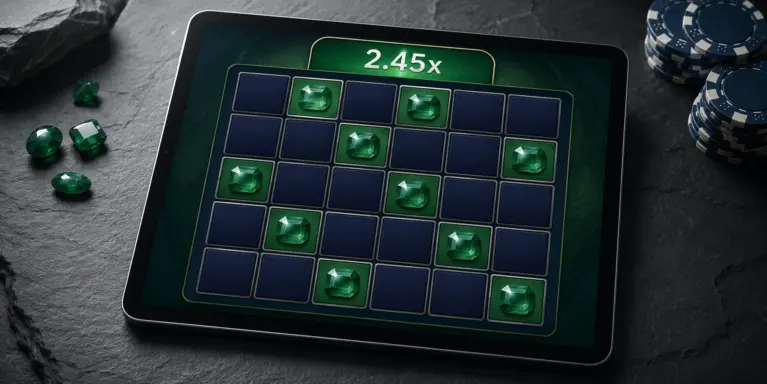
Mines gives you 25 tiles, a handful of buried bombs, and absolutely no way to tell them apart. Every safe tile you flip nudges the multiplier up and tightens the odds on the next one, because the bombs never move and the board only gets smaller. The game asks you the same question until you get it wrong: one more, or take the money? Most players discover their answer somewhere around tile nine, roughly half a second too late.
The format lifts its skeleton from Minesweeper, the puzzle game Microsoft bundled with Windows back when a mouse still felt like a novelty. Casino versions binned the logic-solving and kept the sweaty part. Crypto sites got there first, and the format caught on fast. Rounds last seconds, stakes start tiny, and you set your own risk by deciding how many bombs go on the board. Mines now sits beside Plinko and Dice as a staple of casino Originals libraries.
The maths is friendlier than you’d expect. RTP across the category runs between 96% and 99%, which puts Mines nearer blackjack than the average slot. None of that generosity helps a player who never presses cash out, of course. Mine count sets the risk, but timing decides what you actually walk away with.
 Reviewed byNadia Winchester

New Casino
 Rated 82 of 100%
welcome bonus
550% up to €3540 + 400 FS


Exclusive Bonus
Rated 88 of 100%
welcome bonus
400% up to €4,000 + 400 FS

New Casino
Rated 83 of 100%
welcome bonus
250% up to €4,000 + 250 FS

New Casino
Rated 81 of 100%
welcome bonus
100% up to €5,000 + 175 FS


Crypto Casino
Rated 85 of 100%
welcome bonus
500% up to $10,000

Crypto Casino
Rated 89 of 100%
welcome bonus
100% up to €100,000

Crypto Casino
Rated 90 of 100%
welcome bonus
200% up to €100 + 150 FS

Crypto Casino
Rated 55 of 100%
welcome bonus
150% up to €1,300 + 100 FS

Crypto Casino
Rated 87 of 100%
welcome bonus
100% up to $1,500 + 150 FS

Crypto Casino
Rated 82 of 100%
welcome bonus
200% up to €2,000 + 500 FS

Crypto Casino
Rated 94 of 100%
welcome bonus
150% up to €4,000 + 400 FS

Rated 91 of 100%
welcome bonus
305% up to €1,200

Rated 89 of 100%
welcome bonus
305% up to €1,200
Crypto Casino
Rated 91 of 100%
welcome bonus
100% Deposit Bonus

Rated 91 of 100%
welcome bonus
200% Bonus up to €350
Rated 90 of 100%
welcome bonus
NO KYC REQUIRED

Rated 93 of 100%
welcome bonus
100% up to €100 + 100 FS


Hot Casino
Rated 95 of 100%
welcome bonus
243% up to €5,555 + 243 FS
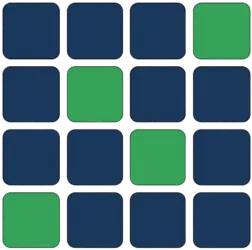
Mines is a grid-based casino Original built on a single decision repeated under rising pressure. The board holds 25 tiles in a 5×5 layout, and a number of those tiles hide bombs. You choose how many bombs go under the grid before the round starts, anywhere from one to twenty-four in most versions. Reveal a safe tile and your multiplier climbs. Reveal a bomb and the round ends with your stake gone.
What makes the game unusual has nothing to do with the theme. Almost every other Original in the category deals in independent events: a Plinko ball drops through the same pegs regardless of what the last ball did, and a dice roll carries no memory of the roll before it. Mines works differently. The bombs are placed once at the start of the round and stay put, so every tile you clear removes a safe option from a board where the danger count never drops. Your third pick faces better odds than your ninth, and the gap widens with every reveal.
That property drives everything else on the page. The multiplier curve climbs steeply because the risk climbs with it, and the game hands you an exit button precisely because the odds turn against you the longer you stay.
A single round moves through four stages, and the whole thing can be over in under ten seconds.
The controllable inputs are short and worth knowing cold, because they’re the only levers on the board:
Everything else sits outside your reach. Bomb placement happens before your first tap, and no tile is safer than another at the moment you choose it. A corner carries the same risk as the centre square. Players who hunt for patterns in the grid are reading tea leaves, and the Strategy section further down explains exactly why that instinct feels so convincing.
The casino version of Mines sits barely three decades away from a game Microsoft shipped to teach people how to hold a mouse. The route between the two runs through a ZX Spectrum cassette, an OS/2 side project, a disputed authorship claim, and a wave of crypto casinos hunting for games they could build in-house. None of it was planned, which makes the destination funnier.
Grid-based mine-avoidance games circulated on mainframe systems through the 1970s, but the first commercial release most historians point to arrived in 1983. Ian Andrew built Mined-Out for the Sinclair ZX Spectrum, published by Quicksilva. Players walked a character across a minefield using numeric hints about nearby danger, closer to a maze crawl than the cell-revealing puzzle that followed. Relentless Logic landed on DOS machines in 1985 and tightened the loop considerably, adding the reveal-and-deduce rhythm that modern players would recognise instantly.
| Year | Title | Platform | What It Added |
|---|---|---|---|
| 1983 | Mined-Out | ZX Spectrum | First commercial mine-avoidance grid game |
| 1985 | Relentless Logic | DOS | Reveal-and-deduce loop using number clues |
| 1990 | Minesweeper | Windows Entertainment Pack | Flags, timer, three difficulty presets |
| 1992 | Minesweeper | Windows 3.1 | Mass distribution to millions of desktops |
| 2021 | Mines | Spribe, licensed casinos | Wagering, multipliers, cash-out button |
Curt Johnson wrote the version that changed everything, and he wrote it for the wrong operating system. His original build targeted OS/2’s Presentation Manager while he taught himself the environment. Robert Donner ported it to Windows, and the pair shipped it in the Microsoft Entertainment Pack in 1990 before it reached Windows 3.1 two years later.
Microsoft had a practical motive for bundling it. Mice were unfamiliar hardware in the early 90s, and the game drilled two specific skills: left-clicking to reveal a cell and right-clicking to flag a suspected mine. Solitaire handled drag-and-drop training in the same release. Millions of office workers learned precise cursor control while believing they were skiving.
Two footnotes deserve a mention. Johnson has acknowledged borrowing the design from an earlier game he could no longer name, while specifically denying it was Mined-Out, so the lineage remains contested to this day. In 2001, a campaign group objected to the landmine theme on behalf of real victims, and some localised releases went out with flowers buried under the tiles instead of explosives.
The casino conversion made one change that mattered more than all the visual reskinning combined. It deleted the numbers.
Minesweeper hands you information after every reveal, and a skilled player deduces the entire board from those clues. Casino Mines gives you nothing. Tiles reveal a gem or a bomb, and no clue about what surrounds them ever appears, which removes the puzzle and leaves the pure probability underneath. That trade turns a game of deduction into a game of nerve, and it makes the format fast enough to run hundreds of rounds an hour.
Crypto casinos ran with it first. Building in-house Originals gave those platforms games they controlled outright, with provably fair verification baked into every round and no licensing fees attached. Mines slotted into those libraries alongside Plinko, Dice and Limbo through the late 2010s. Spribe released a licensed third-party version in September 2021 that carried the format into regulated non-crypto casinos, and the game now appears in Originals sections almost everywhere.
The learning curve here is roughly one round long. Mines strips out everything that slows a game down, so a first-time player can open the grid, place a bet and understand the entire system inside twenty seconds. What follows covers the full sequence, plus the settings most players ignore for weeks before discovering they existed.
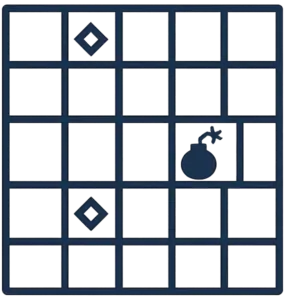
Most versions accept bets from around $0.10 upward, with maximums set by the casino rather than the provider. The stake locks for the whole round and cannot be topped up mid-game.
This is the volatility dial. Spribe’s version allows one to twenty-four mines on the 5×5 grid, and house-built versions offer the same range. Fewer mines means safer clicks and slower multiplier growth.
The board goes live the moment you tap. Bomb positions were fixed before your finger moved, so nothing about your choice influences where they sit.
Each safe reveal updates the current cash-out value on screen. The jump between reveals grows as the board shrinks.
Take the payout at any point after the first safe tile. The button stays live until the round ends.
Hit a bomb and the round closes immediately, with the full board revealed and your stake gone. There is no partial return.
Manual play covers the basics, but most versions bury a handful of tools in the settings panel that change how a session runs.
Speed is the part players underestimate. A Mines round takes ten to fifteen seconds when played manually, and auto mode compresses that further. At three mines and a $1 stake, a focused hour puts a few hundred rounds through the board, which means several hundred dollars of turnover from a session that never felt aggressive.
That pace explains why bankroll pacing matters more here than in games with longer cycles. A slot spin gives you animation time to think. Mines gives you a button, an instant result, and a fresh grid waiting.
Mines runs on one of the most transparent maths models in any casino game. There are no bonus rounds hiding weighted outcomes and no paytable quirks to decode. The entire multiplier structure comes from a single probability calculation, and once you can read it, you can predict what any board will pay before you place a bet.
The game works out your odds of surviving the reveals you have made, then pays you the inverse of that number with the house edge shaved off the top. Say you pick three mines. Your first tile has 22 safe options out of 25, giving you 88%. Survive that and your second faces 21 safe from 24, or 87.5%. Multiply those together and your odds of getting two gems in a row come to 77%. The fair payout for that run is 1 divided by 0.77, which lands at 1.2987x. A casino running 99% RTP multiplies that by 0.99 and offers you 1.2857x. Every multiplier on every board comes from that same calculation. A 97% version simply swaps 0.99 for 0.97 and pays slightly less at every rung.
Mine count is the only volatility control the game gives you, and its effect starts immediately.
| Mines on Board | First Tile Safe | First Tile Payout (99% RTP) |
|---|---|---|
| 1 | 96.00% | 1.03x |
| 3 | 88.00% | 1.13x |
| 5 | 80.00% | 1.24x |
| 10 | 60.00% | 1.65x |
| 15 | 40.00% | 2.48x |
| 20 | 20.00% | 4.95x |
| 24 | 4.00% | 24.75x |
At twenty-four mines the board holds a single gem, so that 24.75x arrives once every twenty-five attempts on average. The payout looks spectacular. The frequency does not.
Survival odds fall off a cliff as you keep going, and the multipliers grow to match. These figures show cumulative survival for a full run at 99% RTP.
| Gems Revealed | 3 Mines | 5 Mines | 10 Mines |
|---|---|---|---|
| 3 | 66.96% / 1.48x | 49.57% / 2.00x | 19.78% / 5.00x |
| 5 | 49.57% / 2.00x | 29.18% / 3.39x | 5.65% / 17.52x |
| 7 | 35.48% / 2.79x | 16.13% / 6.14x | 1.34% / 73.95x |
| 10 | 19.78% / 5.00x | 5.65% / 17.52x | 0.09% / 1,077.61x |
| 12 | 12.44% / 7.96x | 2.42% / 40.87x | 0.009% / 11,314.94x |
Read the ten-mine column closely. Clearing seven gems there pays a genuinely exciting 73.95x, and it happens on roughly one round in seventy-five. Players remember the hit and forget the seventy-four rounds that funded it.
Clearing an entire board produces the biggest number the game can generate, and the peak sits in a place most players never guess. Twelve mines leaves thirteen gems, and thirteen mines leaves twelve, and both of those boards pay exactly 5,148,297x at 99% RTP if you clear every safe tile.
The symmetry is not a coincidence. Payout depends on the number of ways a board can be arranged, and those two configurations produce identical combination counts. Nobody should build a session around it, since the odds of clearing thirteen gems at twelve mines sit near one in five million. It does explain the eye-watering max win figures casinos advertise for the game, though.
Here is the part that catches people out. Mine count changes your volatility dramatically and changes your return not at all.
The house edge sits inside the multiplier formula rather than inside the board layout. Picking more mines buys you variance, and it never buys you value.
Plinko versions differ mostly in presentation. Mines versions differ in ways that change your actual return, sometimes by four percentage points. Grid size, mine range, RTP and even the name on the tin vary between studios, and two entirely separate games currently share a title. Knowing which version loaded before you bet is the single most valuable habit on this page.
The category splits cleanly in two. Crypto casinos that build their own Originals control the maths outright and set the house edge as low as they like, which is why in-house versions carry the highest returns in the format. Licensed studios sell to hundreds of operators and price their games for a wider market, so their returns sit lower.
| Version | Grid Options | Mine Range | RTP | Worth Knowing |
|---|---|---|---|---|
| House-built Originals | 5×5 fixed | 1 to 24 | 99% | Highest returns, full provably fair verification, exclusive to their platform |
| Mines (Spribe) | 5×5 fixed | 1 to 24 | 97% | The most widely distributed version, dated interface, no leaderboards |
| Mines Dare2Win (Hacksaw) | 3×3, 5×5, 7×7, 9×9 | Scales with grid, up to 80 | Configurable | Operators set the RTP band, so published figures vary by casino |
| Turbo Mines (Turbo Games) | 3×3 up to 9×9 | Scales with grid | Around 95% | Lowest return of the mainstream versions |
| Turbo Mines (Galaxsys) | 5×5 fixed | 1 to 24 | Operator-configurable | Turbo mode reveals every cell at once |
| Minesweeper XY (BGaming) | Grid with row structure | Configurable | High | Picks advance row by row rather than freely across the board |
Turbo Games and Galaxsys both ship a game called Turbo Mines, and they are not the same product. The Turbo Games version offers multiple grid sizes and returns around 95%. The Galaxsys version sticks to a 5×5 board and lets operators configure the return, with published figures running as high as 98.89%.
That gap is enormous for two games sharing a title. Plenty of review sites merge the specs of both into a single entry, which produces guides quoting a 98.89% return next to a screenshot of the 95% game. Check the provider name in the game footer rather than trusting the headline figure.
Hacksaw’s four grid sizes look like a cosmetic option and behave like a different game entirely. A 9×9 board holds 81 tiles and accepts up to 80 mines, which leaves a single diamond hiding somewhere on the field.
The trade never changes. More tiles means more reveals before a multiplier gets interesting, and the tension stretches out across a longer round.
Before your first bet, confirm three things:
A player who runs that check has done more homework than most, and it takes about as long as one round of the game.
Mines carries a specific vulnerability that other Originals avoid. Bomb positions get fixed before your first tap, and you never see the board until the round ends, so a dishonest operator could in theory move a bomb under whichever tile you reach for. Provably fair systems exist to make that impossible, and Mines is the format where the guarantee matters most.
The mechanism runs on three inputs. The casino generates a server seed and shows you its hashed version before you bet, your browser supplies a client seed you control, and a nonce counts each round. Those three values feed a shuffle algorithm that scatters the bombs across the 25 tiles. Because the hash is published before the round starts, the layout cannot change afterwards without breaking the hash.
Running a check after a session confirms two things that matter:
The catch is timing. Seeds rotate only between rounds, so you unhash the server seed after finishing with it and verify the completed rounds retroactively. That still works, since a casino cannot know in advance which tiles you’ll choose.
Third-party versions from licensed studios handle fairness differently, relying on certified random number generators and independent lab testing rather than player-side verification. Both approaches are legitimate, and the provably fair verification process breaks down how to run the checks yourself when you want to see the maths rather than trust the certificate.

Mines belongs to a small group of casino games where the published return genuinely competes with table games. House-built versions run at 99%, Spribe’s licensed version sits at 97%, and the weakest mainstream option lands around 95%. That four-point spread costs a player real money over a session, and it depends entirely on which version a casino happens to stock.
Put that in context against the rest of a casino lobby. The average online slot returns somewhere between 94% and 96%. European roulette pays 97.3%, and blackjack with reasonable rules reaches 99.5%. A 99% Mines board sits in blackjack territory without asking you to learn basic strategy, which explains a good deal of the format’s appeal.
Theoretical return describes long-run averages rather than session outcomes, and the difference between versions compounds faster than most players expect.
| RTP | House Edge | Expected Cost per $1,000 Wagered | Cost Across 500 Rounds at $2 |
|---|---|---|---|
| 99% | 1.0% | $10 | $10 |
| 97% | 3.0% | $30 | $30 |
| 95% | 5.0% | $50 | $50 |
Five hundred rounds sounds like a marathon and takes roughly ninety minutes at a relaxed pace. The player on the 95% version pays five times what the 99% player pays for the identical experience.
Here is where Mines separates itself from almost every other casino game. Slots ship with volatility baked in by the studio. Mines hands you the dial and lets you turn it mid-session.
None of those settings changes your theoretical return by a single percentage point. They change how the same return arrives, which affects bankroll requirements enormously.
Published RTP figures assume you eventually cash out. A player who reveals tiles until a bomb ends every round realises a far lower return, because the theoretical figure counts collected wins rather than abandoned ones. The maths cannot pay you for a multiplier you watched climb and never took.
High-mine settings punish that habit hardest. At ten mines, the odds of surviving seven reveals sit near one in seventy-five, so a session built on chasing that outcome burns through a bankroll long before variance evens out. The published percentage stays honest. Your relationship with the cash-out button decides what you actually see.
Search for Mines strategy and you’ll find grid patterns, tile-picking systems, and confident advice about avoiding the centre square. Almost all of it is nonsense, and the reason it feels persuasive is more interesting than the advice itself. Real decisions do exist in this game. They sit somewhere other than where most players look for them.
Every unrevealed tile on the board carries identical odds at the moment you choose it. The shuffle scatters bombs randomly across all 25 positions before you touch anything, and no position receives preferential treatment.
That means the following approaches change nothing whatsoever:
The pull of these systems comes from how human pattern recognition handles randomness. Any winning round produces a pattern in hindsight, and the brain files it as a cause. Lose with the same pattern twice and the mind quietly discards the evidence. Casinos never need to design that trap, because players build it themselves.
Mines creates a particularly convincing illusion of skill because part of the game genuinely has memory. Odds really do shift as you clear tiles, which is unusual and true. Players then extend that logic somewhere it does not apply.
Consider two claims that sound similar:
The first statement describes the actual mechanic. The second borrows its credibility and applies it across rounds, where independence returns in full. Sitting through a losing streak changes nothing about the next board.
Strip out the mythology and two real levers remain.
Martingale, Fibonacci and the rest show up constantly in Mines guides, and auto mode makes them easy to run. They reshape the distribution of your results without touching your expected return.
Doubling after a loss produces frequent small wins and rare catastrophic ones. Eight consecutive losses at three mines happens more often than intuition suggests, and the ninth bet in that sequence needs 256 times your opening stake to recover. Table limits or an empty balance arrive first, and no progression system has ever moved a house edge by so much as a decimal point.
The strategy section covered what does not work. This one covers the practical habits that separate a controlled session from a fast one, and most of them have nothing to do with tile selection.
Casinos rarely advertise which Mines they stock, and the difference between a 99% board and a 95% board outweighs every other decision on this list. Open the game info panel, find the provider and the stated return, and take thirty seconds to compare it against what else the site offers. Some casinos carry three separate versions in the same lobby.
Casino Originals sit awkwardly inside bonus systems, and Mines gets hit harder than most.
A bonus that looks generous on the promotions page can be unusable on the game you actually came for. Read the excluded games list first.
Sessions here get away from people because rounds resolve in seconds. Deciding to play “for half an hour” gives you no meaningful limit, since half an hour holds anywhere from a hundred to four hundred rounds depending on your pace.
Pick a number of rounds instead and a total budget to spread across them. Two hundred rounds at $1 tells you exactly what the session costs at worst. Deposit limits and session reminders help enforce it, and every licensed casino offers both.
Free-play versions run the identical game with the identical maths, which makes them genuinely useful rather than decorative. Spend twenty rounds there testing what different mine counts feel like before committing real money.
Watch for one thing while you do it. Demo mode removes the emotional weight, so your cash-out discipline in free play will be better than your discipline with money at stake. Note where you cashed out, then hold yourself to that number later.
A short list of things that consistently separate players who leave with something from players who do not:
Mines carries a specific risk profile that deserves attention. Rounds resolve in seconds, the cash-out button asks you to make the same decision repeatedly under pressure, and the interface rewards continuous engagement. Those qualities make the game genuinely entertaining. They also make it easy to play far more than you intended.
Speed is the core issue. A session of a few hundred rounds passes quickly, and turnover accumulates without the natural pauses that slower games provide. Track your total wagered rather than your time played, because the two measure very different things.
Certain patterns indicate that a session has stopped being recreational:
Any of these warrant a pause. Several together warrant support.
Every licensed casino provides controls that work when you set them in advance rather than mid-session:
Set these while thinking clearly. Their value comes from being difficult to reverse when you would rather ignore them.
Free, confidential help is available, and reaching out early makes a meaningful difference.
Gambling should stay entertainment funded by money you can afford to lose. If it has become anything else, the services above exist precisely for that situation, and our responsible gambling guide covers the tools and regional resources in more detail.
Mines earned its place in Originals libraries by doing very little and doing it well. Twenty-five tiles, a number of bombs you choose yourself, and a button that ends the round in profit whenever you decide to press it. No bonus rounds, no paytables, no features to decode. The entire game fits in a sentence and still produces sessions people remember.
The maths behind it stays unusually honest. Multipliers come straight from the true odds of the board you built, minus a house edge you can look up. That transparency is rare, and it means the difference between a good session and a bad one comes down to two things you control completely: which version you sit down at, and when you take the money.
Version choice does more work than most players realise. A 99% board and a 95% board look identical on screen and cost you five times as much over the same session. Thirty seconds in the game info panel settles it.
The cash-out button handles the rest. Every round asks the same question, and the answer gets harder to give correctly the longer you stay. Pick your number before the tiles start turning, take it when it arrives, and let the next round start fresh. Mines rewards nerve, but it rewards restraint considerably more.
Both, in specific proportions. Luck decides where the bombs sit, and no tile choice improves your odds. Skill shows up in the two decisions that carry weight: which mine count matches your bankroll, and when you press cash out. Those choices shape your results without changing the underlying maths.
There is no best setting, since every mine count returns the same percentage over time. Three to five mines suits players who want frequent wins and gentle swings. Ten or more suits players chasing bigger multipliers who accept that most rounds will end badly. Match the setting to what your balance can absorb across a few hundred rounds.
No. A shuffle scatters bomb positions before your first tap, and the game gives you no clues about what sits under any tile. Predictor apps and pattern tools sold online cannot access the server seed and cannot see the board. They generate random guesses dressed up as analysis.
House-built versions running at 99% pay 5,148,297x if you clear an entire board at twelve or thirteen mines. Reaching it requires surviving thirteen consecutive reveals against odds near one in five million. Third-party versions cap their maximums lower, with Hacksaw’s release listing 10,000x.
RTP varies by version. A 99% game and a 97% game calculate from identical probabilities and then apply a different house edge, so every rung on the ladder pays slightly less on the lower-return version. Check the provider name in the game info panel to see which one you have.
Provably fair versions let you verify that outcomes were fixed before you played, using seed pairs you can check yourself. Licensed third-party versions rely on certified random number generators tested by independent labs. Both systems work. Unlicensed casinos running neither deserve exactly the suspicion they attract.
The Author
The Author
Slots and News Reviewer