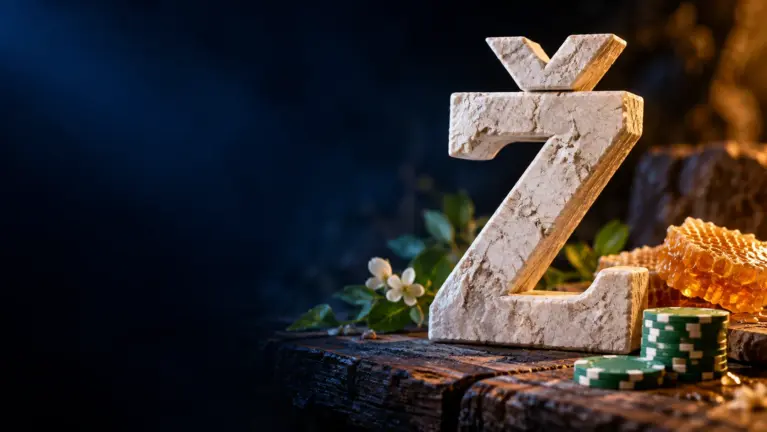
Slovenian is one of the smallest languages you will find in a casino language menu. Most of its speakers live in Slovenia, a country of a little over two million people, with older communities just across the borders in Italy, Austria and Hungary. Just under twenty open casinos in our database offer it.
That rarity is partly about size and partly about law. Slovenia keeps online casino games for a tiny group of domestic concession holders, so a foreign site in Slovenian is aiming at a market it has no licence for. This guide explains who may legally serve Slovenian speakers on each side of the border, and how to tell real Slovenian from a hurried Croatian or machine job.
The list further down shows every casino in our database with a Slovenian version, wherever you happen to connect from. Being listed says nothing about whether a casino may take players where you live, so check the licence rules in your own country before you sign up.
 Reviewed byFred Anderson

Quality Brand
 Rated 95 of 100%
welcome bonus
100% up to €500 + 200 FS + 1 BC
Rated 94 of 100%
welcome bonus
100% up to €500 + 200 FS
Rated 94 of 100%
welcome bonus
100% up to €450 + 250 FS
Rated 93 of 100%
welcome bonus
100% up to €500 + 200 FS

Rated 92 of 100%
welcome bonus
100% up to €500 + 200 FS + 1 BC
Rated 92 of 100%
welcome bonus
100% up to €1,950
Rated 92 of 100%
welcome bonus
100% up to €500 + 200 FS + 1 Bonus Crab
Rated 91 of 100%
welcome bonus
100% up to €450 + 250 FS
Rated 91 of 100%
welcome bonus
500% up to €4,375 + 300 FS
Quality Brand
Rated 89 of 100%
welcome bonus
550% up to €3,454 + 400 FS

Rising Star
Rated 88 of 100%
welcome bonus
450% up to €3,469 + 325 FS


New Casino
Rated 83 of 100%
welcome bonus
250% up to €4,000 + 250 FS
New Casino
Rated 82 of 100%
welcome bonus
450% up to €4,500 + 450 FS
New Casino
Rated 82 of 100%
welcome bonus
550% up to €3540 + 400 FS

Big Bonus
Rated 81 of 100%
welcome bonus
500% up to €3,436 + 400 FS
New Casino
Rated 81 of 100%
welcome bonus
400% up to €15,000 + 400 FS
New Casino
Rated 80 of 100%
welcome bonus
200% up to €1500 + 150 FS

New Casino
Rated 74 of 100%
welcome bonus
550% up to €3400 + 400 FS
Is there a legal online casino in Slovenian for players in Slovenia?
Yes, but only one. Slovenia allows online casino games only with a government concession, and Casino.si, run by the land-based Casino Portorož, is described as the only licensed online casino in the country. Loterija Slovenije and Športna loterija cover lotteries and betting. Foreign sites with a Slovenian version have no concession, the tax authority FURS can have them blocked, and money left in a blocked account may be out of reach.
Online Casinos With Slovenian in the Language Menu
Slovenian From Ljubljana to the Rába Valley
Slovenia Keeps Online Casino for Its Own Concessionaires
FURS Can Block a Site but Not Your Card
Slovenes Across the Border Answer to Rome, Vienna or Budapest
Why Fewer Than Twenty Lobbies Bother With Slovenian
Euro Accounts and Slovenia's Self Exclusion Rule
Dual Forms and Háčeks: Telling Slovenian From a Shortcut
Slovenian is the official language of Slovenia and, since 2004, one of the official languages of the European Union. Nearly all of its speakers live in one small country, which makes it a niche choice for any casino deciding which translations to pay for.
The rest live just over the borders. In Italy, Slovenes are a recognised minority in the provinces of Trieste, Gorizia and Udine, and the language is officially recognised in 32 municipalities of Friuli Venezia Giulia. Austria has Slovene speakers in Carinthia and, in smaller numbers, Styria. Hungary has a small community around Szentgotthárd in the Rába valley, which Slovenes call Porabje.
That map matters more than it looks. A reader in Maribor, one in Trieste and one in Celovec, the Slovenian name for Klagenfurt, can open the same lobby and still live under three different gambling laws.
Gambling in Slovenia still runs on the Gaming Act of 1995, the Zakon o igrah na srečo. Online games need a government concession, and that route is reserved for companies based in Slovenia that already run land-based gambling. Our Slovenia country guide covers the wider market.
Permanent classic games such as lotteries and sports betting can have at most two concessionaires, today Loterija Slovenije and Športna loterija. Table games and slots belong to casinos and gaming halls with their own concessions. Only these businesses may take their games online, which shuts every foreign brand out by design.
Casino Portorož, the land-based casino on the coast, runs Casino.si under its concession, and in 2026 both the Slovenian press and the international trade press called it the only licensed online casino in the country. One legal site against hundreds of foreign ones is the Slovenian market in a sentence.
Enforcement sits with FURS, the Financial Administration of the Republic of Slovenia. When an unlicensed operator ignores a prohibition, FURS can ask a court to order internet providers to restrict access. By October 2026 it had inspected 90 illegal gambling sites this year; 28 operators carried on after a warning, and 21 of those have been blocked.
Set that against the money. Slovenian players sent about EUR 95 million to illegal gambling abroad in 2025, according to FURS data. Unlike Hungary, Slovenia does not stop bank or card payments to unlicensed sites, and the finance ministry says that would need a separate law obliging banks to filter them.
The risk lands on the player. FURS warns that once a site is blocked, Slovenian users may no longer reach the money in their account. Attempts to change the law failed in parliament in 2018 and 2022, and a replacement for the 2010 gambling strategy has been in the works since autumn 2023, so do not expect new licences soon.
Which casinos a Slovenian speaker may use depends on the address, not the mother tongue.
| Where you live | Licensed online casinos | Worth knowing |
|---|---|---|
| Slovenia | Casino.si only | Foreign sites can be blocked by court order |
| Italy (Trieste, Gorizia, Udine) | 52 ADM licences held by 46 operators since 13 November 2025 | One website per licence; over 11,000 domains blacklisted |
| Austria (Carinthia, Styria) | win2day under the current monopoly | A licensing reform reached the European Commission in August 2026 |
| Hungary (Porabje) | A few domestic land-based concession holders | Payment blocking against unlicensed sites since July 2023 |
Our guides to online casinos in Italy and online casinos in Austria cover those markets, and bilingual readers in Trieste may prefer our Italian language casino guide. For a Slovene in Gorizia the licence decides. Whether an ADM site happens to offer Slovenian is a bonus, not a test.
A Slovenian translation costs about as much work as a German one and reaches a fraction of the readers. The one market where Slovenian is the main language is closed to foreign brands, and the minorities in Italy and Austria deal with Italian or German officials every day anyway.
So when an international casino does run a Slovenian version, ask who it is for. Neither the Italian nor the Austrian regime gives a foreign operator much reason to speak Slovenian, which leaves Slovenia itself as the obvious audience: the one place where the site has no concession.
Keep that in mind as you scroll. A place on the list proves the translation exists, not that the casino may serve you, so check its restricted countries and your own licence rules first.
Slovenian speakers share little legally across the border, but most share a currency, and all of them share one blind spot.
Slovenia adopted the euro on 1 January 2007, and Italy and Austria use it too, so most Slovenian readers never pay an exchange fee at the cashier. Porabje is the exception, since Hungary still uses the forint. Read the withdrawal page harder than the deposit page: limits, pending times and verification steps are where a Slovenian version most often slips back into English.
The Gaming Act lets a player exclude themselves for six months up to three years, and the exclusion cannot be cancelled while it runs. FURS counted 5,764 active exclusions in October 2026. It binds Slovenian concession holders, not a foreign site that merely speaks the language.
A few features of Slovenian give a careless job away fast, especially when the text was really written for Croatian readers or fed through a translation tool.
One slip is forgivable. Several are a fair preview of how a Slovenian complaint would be handled.
Inside Slovenia the choice fits on one line: Casino.si for casino games, Loterija Slovenije and Športna loterija for lotteries and betting. Foreign sites in Slovenian have no concession and can be blocked, and a frozen balance is your problem, so we do not recommend them or explain ways around the blocks.
In Trieste or Gorizia, start with an ADM licensed site and accept that it may only speak Italian. In Carinthia win2day is the licensed option until Austria’s reform passes. Slovenes in Porabje live under Hungarian rules that the government elected in April 2026 is expected to revisit.
Wherever you live, treat a Slovenian version as a quality test, never as a licence. Correct dual forms and natural terms mean someone cared.
Foreign sites have no Slovenian concession, so they may not offer games to players in Slovenia, whatever language they use. FURS can ask a court to have them blocked by internet providers, and it warns that players may then lose access to the money in their accounts. We do not recommend them.
Casino.si, run by the land-based Casino Portorož under a government concession, was described in 2026 by both the Slovenian and the international trade press as the only licensed online casino in Slovenia. Lotteries and sports betting come from the two classic game concessionaires, Loterija Slovenije and Športna loterija.
Not at the moment. Blocking works through court orders against websites, not through banks. The finance ministry has said that filtering payments to foreign operators would need a specific law obliging banks to do it, and in October 2026 it had no concrete proposal on the table.
Under Article 9 of the Gaming Act you can exclude yourself for six months up to three years, and the exclusion cannot be withdrawn while it runs. It applies to the Slovenian concession holders. A foreign casino with a Slovenian version is not bound by it, so it offers no protection there.
No. The rules follow where you live. Slovenes in Trieste, Gorizia or Udine fall under the Italian ADM licensing system, and those in Carinthia under Austria’s monopoly, where win2day is currently the only licensed online casino. The language on the site changes nothing about that.
Look for the letters ć and đ, which Slovenian does not use, and for Croatian words such as kockarnica or besplatno where Slovenian would say igralnica and brezplačno. Real Slovenian also uses the dual for exactly two items, so the endings change between two, three and five free spins.
If German or Italian is your second language, the index below takes you straight to those guides and every other one we publish.
44 languages
The Author
The Author
Site Admin