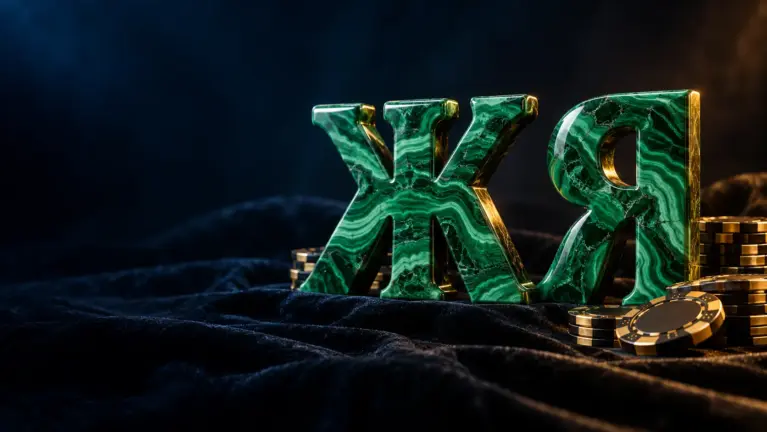
Russian is one of the most common languages in casino lobbies, and the reason is not Russia. Online casinos are banned there, yet Russian is spoken from the Baltic coast to Central Asia, and a single translation reaches players in many very different markets.
That makes this a page about rules more than language. Some Russian speakers live in countries that license online casinos properly, like Latvia, Estonia or Belarus. Others live where online casino play is simply illegal, and we say so plainly instead of pretending otherwise.
The list below shows every casino in our database with a Russian language version, whichever country you are connecting from. Before you sign up anywhere, check what the licensing rules allow where you actually live.
 Reviewed byFred Anderson

Crypto Casino
 Rated 95 of 100%
welcome bonus
100% up to €4,500 + 275 FS

Rated 95 of 100%
welcome bonus
200% up to €1,500 + 100 FS


Fan Favourite
Rated 94 of 100%
welcome bonus
250% up to €2,000 + 200 FS

Crypto Casino
Rated 94 of 100%
welcome bonus
150% up to €4,000 + 400 FS

Rated 94 of 100%
welcome bonus
100% up to €300

Rated 94 of 100%
welcome bonus
350% up to €15,000 + 350 FS

Rated 94 of 100%
welcome bonus
225% up to €1000 + 200 FS

Rated 94 of 100%
welcome bonus
325% up to €2,000 + 200 FS
Rated 94 of 100%
welcome bonus
100% up to 3 BTC/$90,000 + 25 FS

Rated 94 of 100%
welcome bonus
100% up to €1,250 + 125 FS


Quality Brand
Rated 94 of 100%
welcome bonus
100% up to €2,000 + 200 FS
Rated 93 of 100%
welcome bonus
400% up to €2,200 + 350 FS

Rated 93 of 100%
welcome bonus
up to €10,000 in Wheel of Winz

Rated 93 of 100%
welcome bonus
350% up to €15,000 + 350 FS

Rated 93 of 100%
welcome bonus
350% up to €15,000 + 350 FS
Rated 93 of 100%
welcome bonus
400% up to €1,500

Crypto Casino
Rated 92 of 100%
welcome bonus
275% up to €2000
Rated 92 of 100%
welcome bonus
520% up to €2,120 + 1,000 FS
Where can Russian speakers legally play at an online casino?
It depends on where you live, not on the language. Latvia, Estonia, Belarus and Ukraine license online casinos, and in Germany slots and poker run under the GGL licence. Russia, Kazakhstan and Israel do not allow online casinos, so residents there have no legal option. If you live in a licensed market, choose a casino holding that local licence and use its Russian version as a bonus.
Casinos Where You Can Play in Russian
A Lingua Franca From Riga to Almaty
Inside Russia, Online Casino Is Not an Option
Latvia and Estonia: Licensed Markets Where Russian Is Everyday Speech
Belarus, Ukraine, Kazakhstan and Israel Compared
The Russian Speaking Diaspora in Germany and Beyond
Вейджер, Отыгрыш and Other Tells of a Careful Translation
Same Language, Different Cashier
Russian travels further than any border. It is the everyday language for large communities in the Baltics, it holds official status in Belarus and Kazakhstan, it is widely understood across Ukraine and Central Asia, and it travelled with the many families who left the former Soviet Union for Germany and Israel.
That reach explains why close to a hundred casinos we track keep a Russian version. For an operator, one translation covers a dozen markets at once. For the player it means something less comfortable: the language on screen says nothing about whether you may legally sign up.
So this page sorts it by address. The rules for a Russian speaker in Tallinn have nothing in common with the rules in Moscow, Minsk or Tel Aviv, and the sensible choice changes completely with them.
Let us be blunt. If you live in Russia, there is no legal online casino for you, and we do not recommend playing at one. A Russian translation on an international site does not change that.
The only legal online gambling is sports betting with a small number of Russian licensed bookmakers. Since September 2021 every stake with them passes through a single accounting centre, the ETsUP, which replaced the two older TsUPIS payment hubs, and a unified gambling regulator watches the flow of money. Slots, roulette and live blackjack sit outside that system entirely.
The regulator works with the Federal Tax Service to find illegal gambling sites, and amendments adopted by the State Duma in June 2026 give the tax service two working days to decide on a block instead of five. Lawmakers have also backed a national self exclusion register. In early 2026 the finance minister proposed legalising online casinos with a 30 percent tax, but it remains a proposal, so nothing about the ban has changed.
Latvia’s statistics bureau puts Russian as the first language of 37.7 percent of adults, and Estonia’s 2021 census found 29 percent of residents grew up speaking it. Both countries license online casinos, which makes them the clearest legal ground for Russian speakers in the EU.
Latvia requires a local licence for any interactive gambling aimed at people in Latvia, and its law bars residents from playing with unlicensed operators. Since 1 April 2026 licensing and supervision sit with the State Revenue Service, which absorbed the old Lotteries and Gambling Supervisory Inspection and now runs the self exclusion register too. Our guide to online casinos in Latvia covers the local market.
In Estonia the Tax and Customs Board issues the licences and publishes a list of blocked gambling websites. What an Estonian casino licence covers is explained separately.
Four more places with big Russian speaking populations, four different answers.
| Market | Online casino status | What it means in practice |
|---|---|---|
| Belarus | Licensed since 1 April 2019 under Decree No. 305 | Players must be 21 and pass identity checks; tax authorities monitor the operators |
| Ukraine | Legalised in 2020, supervised by the PlayCity agency since 2025 | Payments go through banks, which rules out crypto; the site must load in Ukrainian by default |
| Kazakhstan | Online casinos banned | Banks block payments to listed foreign casinos and payment firms |
| Israel | Illegal apart from the state lottery and sports pools | A district court has held that foreign licensed sites taking Israeli players act illegally |
Ukraine deserves a footnote. Its language law allows other language versions, but the Ukrainian one has to be at least as complete, and the government has told ministries to keep working on a ban of Russian language versions. Do not assume a Ukrainian licensed casino will speak Russian.
Outside the former Soviet Union, the rule that trips people up is simple: your licence follows your address, not your mother tongue.
Germany is home to the largest Russian speaking community in the West, a large part of it ethnic German resettlers and their families. If you live there, the German licensed sites under the GGL are the legal route, with slots and poker licensed nationally. The German market overview has the details. A Russian menu on an offshore site does not make it part of that system.
The Russian speaking community in Israel is large, and Russian language casino ads reach it easily. Israeli law only permits the state lottery and state run sports betting, so treat those ads as offers you cannot legally accept, whatever licence the site waves.
Russian casino slang is settled and borrowed heavily from English, so a native reader spots a lazy version within a minute.
A Russian speaker in Riga pays in euro from a Latvian bank, while a player in Kyiv is restricted to bank transactions at licensed Ukrainian operators. A casino that clones one Russian version across markets usually gets the cashier wrong for both.
In the Baltics, look for the bank based deposits locals already use on Estonian or Latvian sites, and check that withdrawals go back to that account without detours. See euro casinos for the cashier side. Where a state blocks payments to unlicensed casinos, as Kazakhstan does, that block exists for a reason, and we do not help anyone route around it.
One habit worth keeping everywhere: read the withdrawal limits before the bonus, in Russian and then in English. Many sites state that the English terms prevail, so a softer Russian wording will not help you later.
For residents of Russia, Kazakhstan and Israel the honest answer is no online casino at all. In Belarus and Ukraine, stay with sites licensed there. In Latvia, Estonia and Germany, pick a locally licensed casino first and treat the Russian version as a welcome bonus of a different kind.
Ask how long the first вывод средств takes and which documents they want. A reply in natural Russian within minutes says the team is real. A canned English answer, or Russian that sounds machine made, is a preview of the day you have a real problem.
No. Online casino games are prohibited in Russia, and the only legal online gambling is sports betting with licensed Russian bookmakers whose stakes run through the ETsUP accounting centre. The tax service blocks illegal gambling sites, and a Russian translation on a foreign site does not make it legal.
Because Russian is spoken far beyond Russia. Large Russian speaking communities live in Latvia, Estonia, Belarus, Kazakhstan, Ukraine, Germany and Israel, so one translation reaches many markets. Whether a given casino is legal for you depends on the licence rules where you live.
Yes, if the casino holds the local licence. Both countries license online casinos, Latvia through its State Revenue Service since April 2026 and Estonia through the Tax and Customs Board. Check the licence register first, then whether the site offers Russian alongside the national language.
No. Online casinos are banned, and Kazakh banks block payments to a blacklist of foreign casino operators and payment providers. A unified system launched in March 2026 also checks whether a person is allowed to gamble online at all, for example ruling out heavy debtors and self excluded players.
Not necessarily. Ukraine’s language law requires sites serving Ukrainian users to load in Ukrainian by default, and any other version may not contain more than the Ukrainian one. Russian versions are not required by law, and the government has told ministries to keep working on a ban.
Вейджер is the wagering multiplier, for example x30, showing how many times a bonus must be bet before you can withdraw. Отыгрыш is the process of playing the bonus through. A Russian version that uses these terms consistently has usually been checked by someone who knows casino language.
Russian is one stop in the index below, so jump across if you also play in Latvian, German or English.
44 languages
The Author
The Author
Site Admin